
Share this tool:
 |
Description:
CVViZ is an AI recruiting platform for teams that want to reduce manual screening, find better-fit candidates faster, and manage hiring from one system. It combines applicant tracking, AI resume screening, candidate sourcing, resume parsing, interview scheduling, recruitment CRM, automation, and analytics. Its best fit is not a company hiring one person a year. It is more useful when recruiters are dealing with many roles, many resumes, multiple sourcing channels, and a hiring process that needs structure.

CVViZ is a recruiting software platform with an AI-first focus. The product is built around a full hiring cycle: post or source candidates, parse resumes, screen candidates, rank profiles, track applicants, collaborate with hiring managers, schedule interviews, engage candidates, and analyze recruitment performance. Its applicant tracking page describes the platform as more than an ATS, combining sourcing, AI screening, workflow automation, candidate engagement, recruitment CRM, and hiring analytics.
That matters because many hiring tools only solve one piece of the process. A basic ATS helps track applicants. A sourcing tool helps find people. A resume parser extracts data. A CRM helps staffing firms manage candidates and clients. CVViZ tries to connect these pieces in one recruiting workspace.
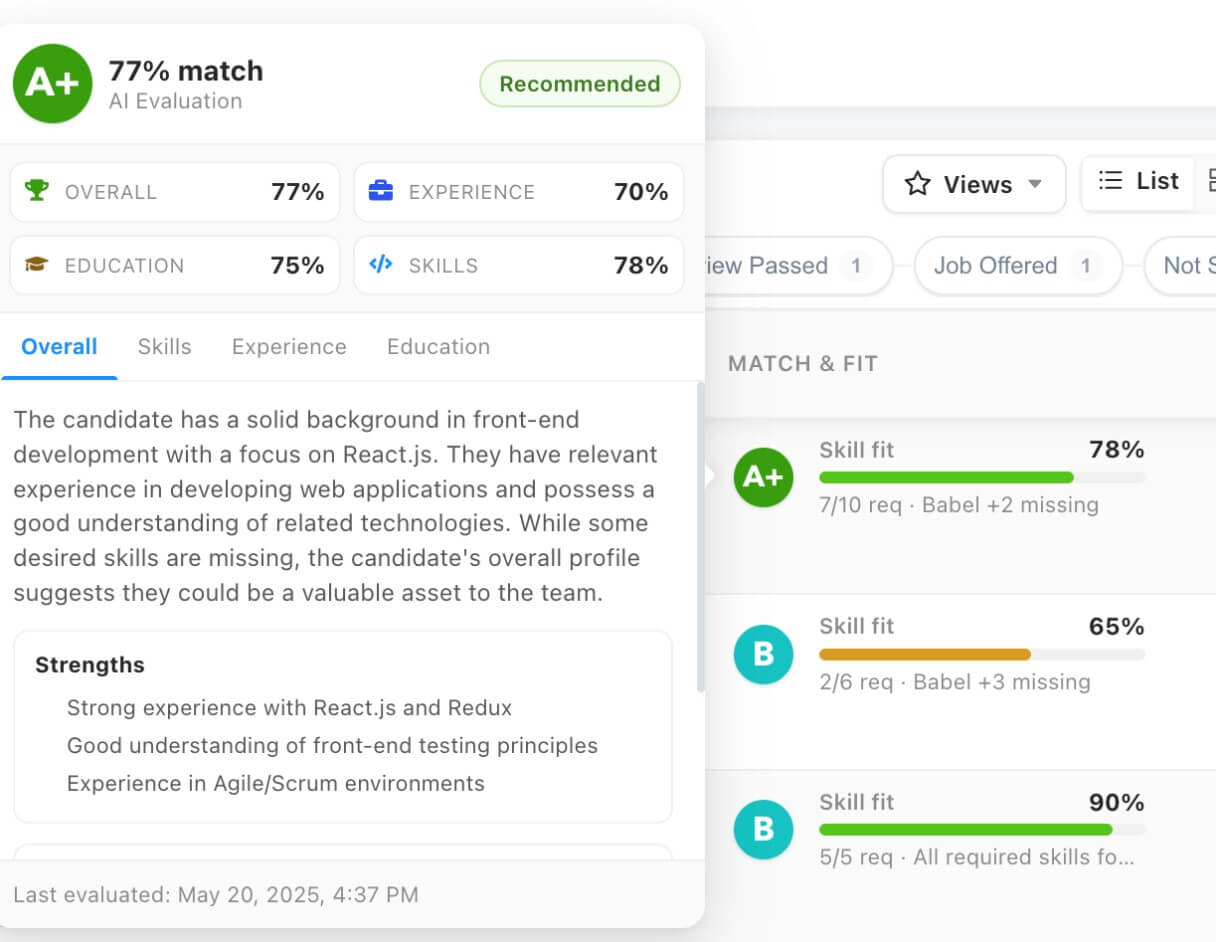
The product’s core AI value is resume matching. CVViZ says it evaluates candidates by skills, experience, job roles, and relevance rather than simple keyword matching. It then ranks and shortlists candidates so recruiters can review the strongest profiles first.
CVViZ is strongest in resume-heavy hiring. If a company receives only a few applications per role, AI screening may not matter much. But once recruiters are looking at hundreds or thousands of profiles, manual review becomes slow, inconsistent, and hard to defend.
The platform is also useful for staffing agencies and recruitment firms. CVViZ includes recruitment CRM features for managing companies, contacts, leads, account managers, emails, notes, documents, tasks, and permissions. It also supports client portals, where clients can post jobs and access candidates with controlled permissions.
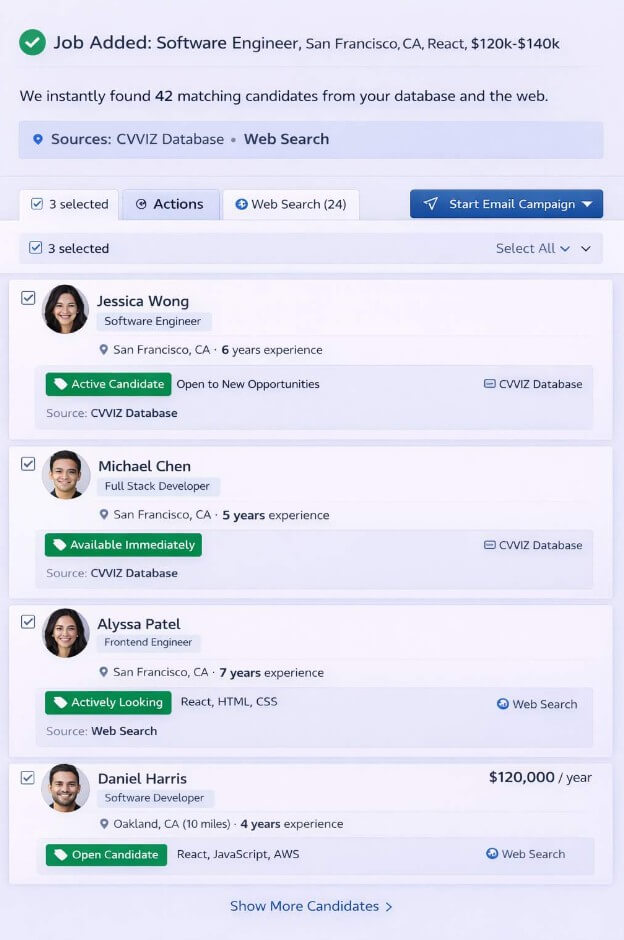
The other strong area is sourcing. CVViZ can recommend sourcing channels based on job industry, role, and location. It also says it can source candidates from job boards, the web, social platforms, GitHub, StackOverflow, Behance, email inboxes, and employee referrals.
| Feature | Practical value |
|---|---|
| AI Resume Screening | Ranks and shortlists candidates using contextual matching based on skills, experience, and job relevance. |
| Candidate Sourcing | Helps recruiters source from job boards, free posting sites, premium channels, social platforms, specialized platforms, the web, and existing databases. |
| Resume Parsing | Extracts structured data from resumes and exports candidate information to CSV, Excel, or JSON, with API use cases for job boards and recruiting platforms. |
| Applicant Tracking | Tracks candidates through hiring stages, supports collaboration, interview feedback, notes, scorecards, and hiring decisions. |
| Recruitment CRM | Gives staffing teams tools for client management, lead tracking, account ownership, email activity, documents, tasks, and client portals. |
| Interview Scheduling and Video Interviews | Supports smart interview scheduling, calendar invites, online video interviews, and a live coding environment for technical hiring. |
The most important part of CVViZ is its screening layer. The tool is designed to understand resumes contextually, compare them to job requirements, and rank candidates in real time. CVViZ describes its ranking as relative, meaning the same candidate may be rated differently depending on the job, company, requirements, and hiring context.
That is the right way to think about hiring AI. A strong candidate on paper is not always the right candidate for every role. A backend developer, engineering manager, support engineer, and solutions architect may all share technical keywords, but the job fit depends on work history, level, domain, tools, and role expectations.
The practical benefit is speed. Recruiters can start with a ranked shortlist instead of a raw pile of resumes. The risk is over-trusting the ranking. CVViZ can help prioritize candidates, but recruiters still need to review context, talk to candidates, and check whether the ranking aligns with the actual hiring bar.
CVViZ’s sourcing tools are useful because hiring often fails before screening begins. Recruiters need enough relevant candidates in the pipeline. CVViZ supports posting jobs to free job boards, using premium and niche job boards, importing resumes through a Chrome extension, finding candidates on the web, sourcing from platforms like GitHub and StackOverflow, and pulling resumes from email inboxes.
The database rediscovery feature is also important. CVViZ says it can identify matching candidates already available in an ATS database when a new role is created. That can help teams re-engage past applicants instead of paying to source the same kind of talent again. This is especially valuable for staffing agencies and fast-growing companies. Old applicants, referrals, silver-medalist candidates, and previously sourced profiles can become useful later if the system can surface them at the right time.
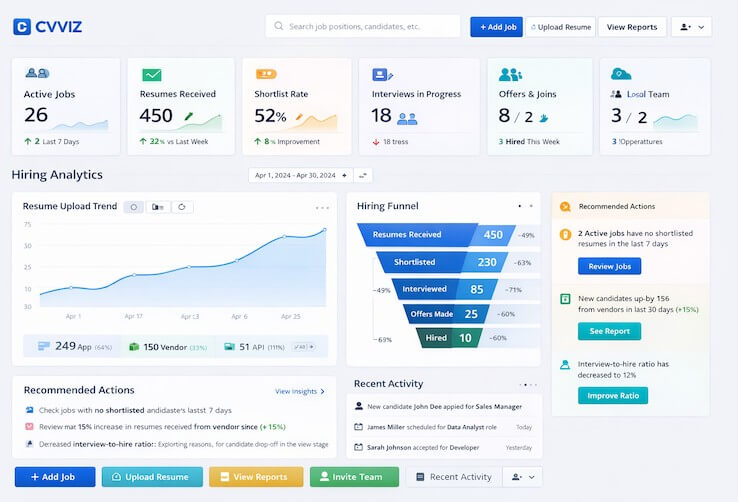
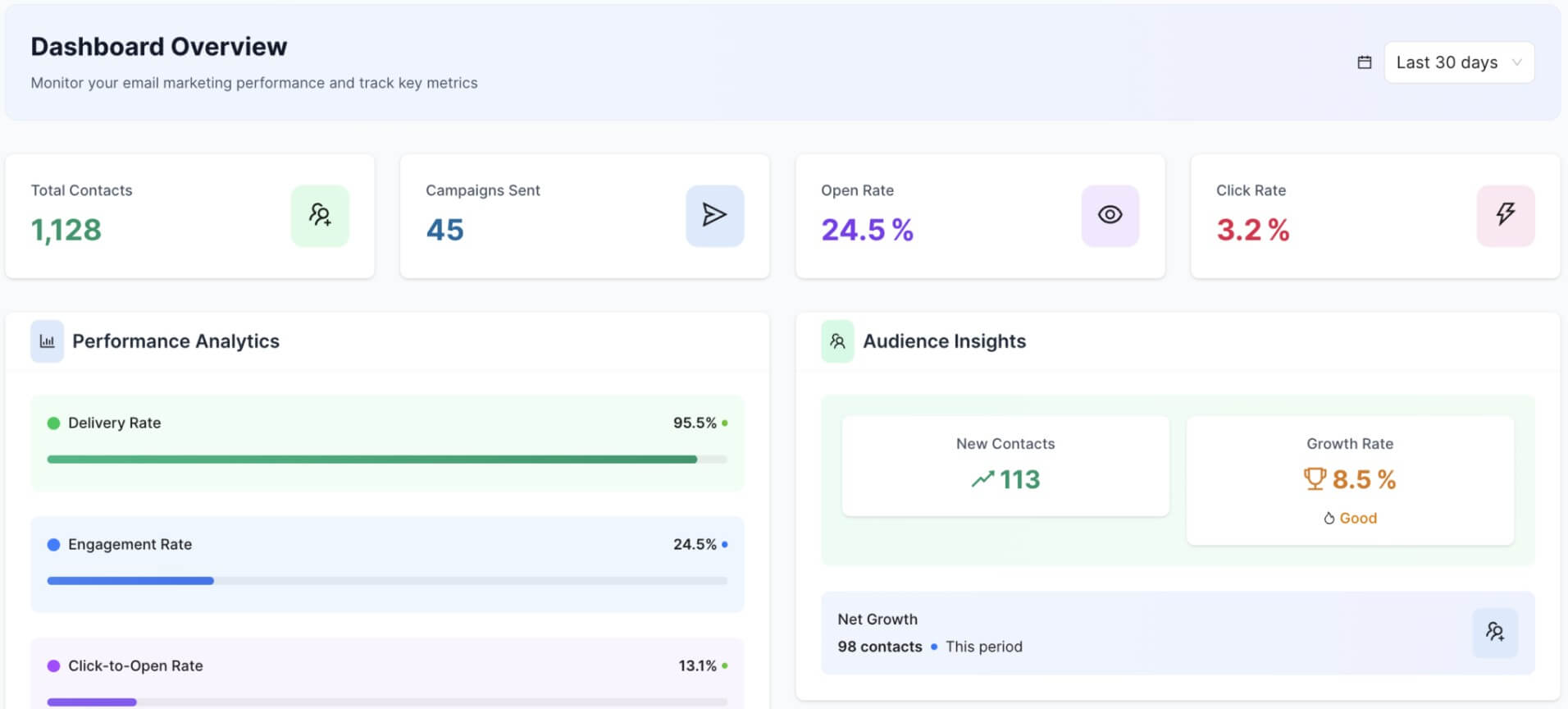
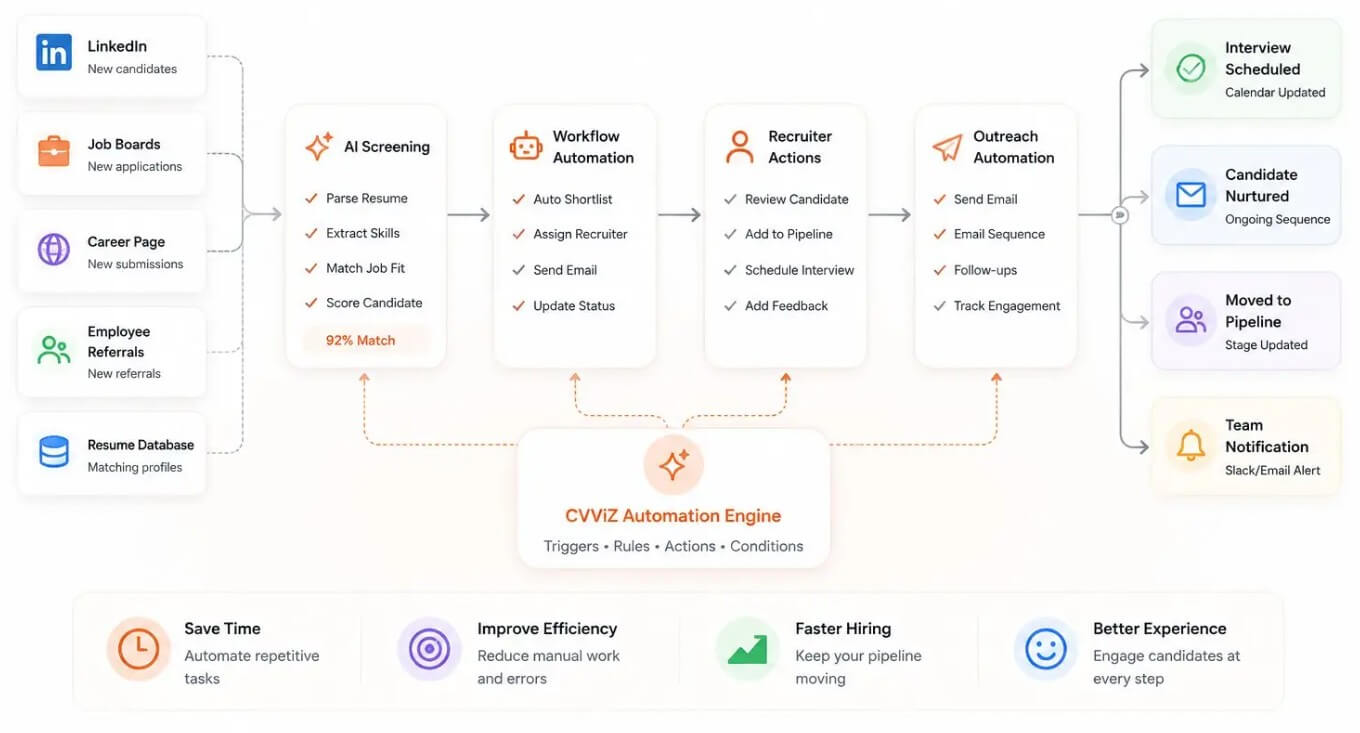
CVViZ’s workflow is built around reducing recruiter admin. A recruiter can create a job, source candidates, collect applications, parse resumes, rank candidates, move them through pipeline stages, schedule interviews, collect feedback, send emails, and track performance.
The platform also includes automation for reminders, task notifications, interview coordination, and personalized email communication based on hiring stage changes or candidate actions.
The learning curve will depend on the team. A small company coming from spreadsheets may need time to set up stages, permissions, templates, forms, and workflows. A recruiting agency may understand the value faster because candidate tracking, client tracking, email history, and task ownership are daily pain points.
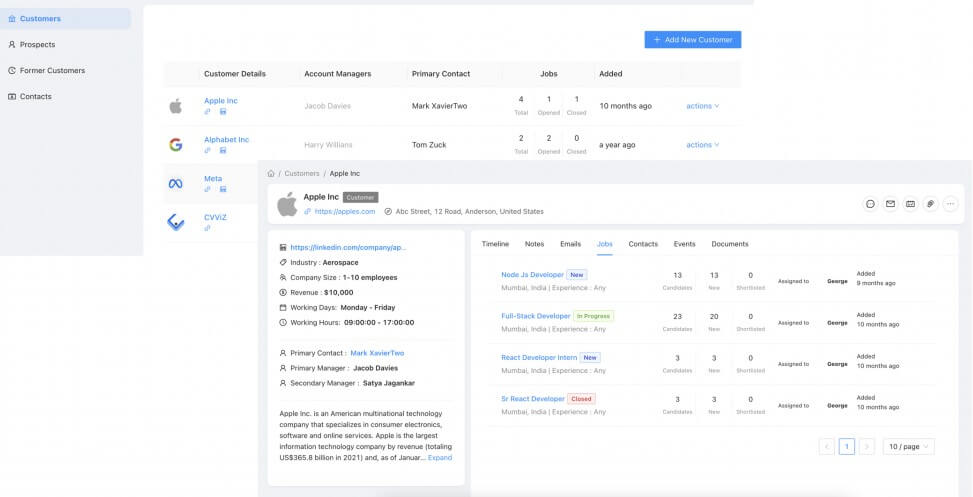
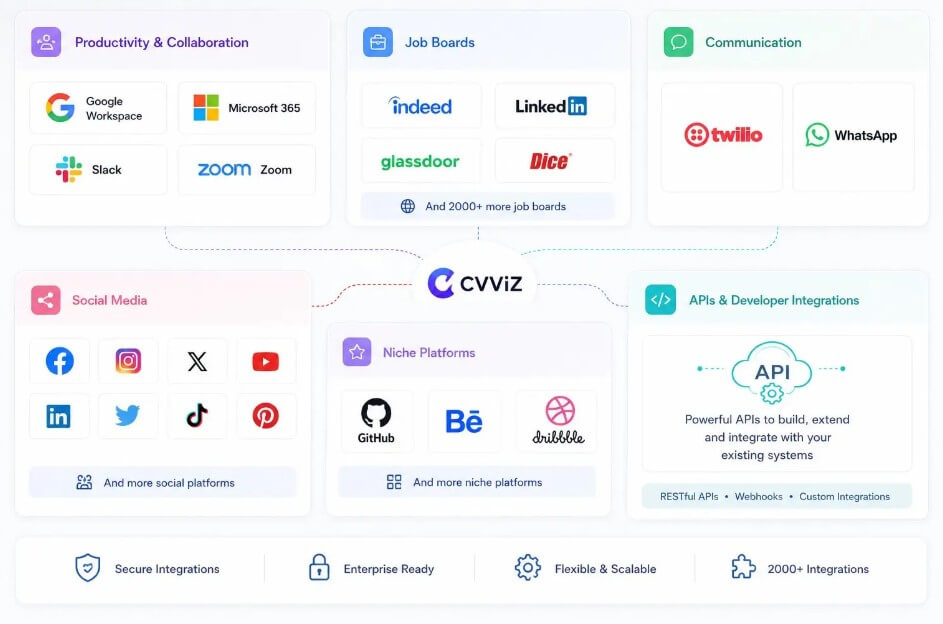
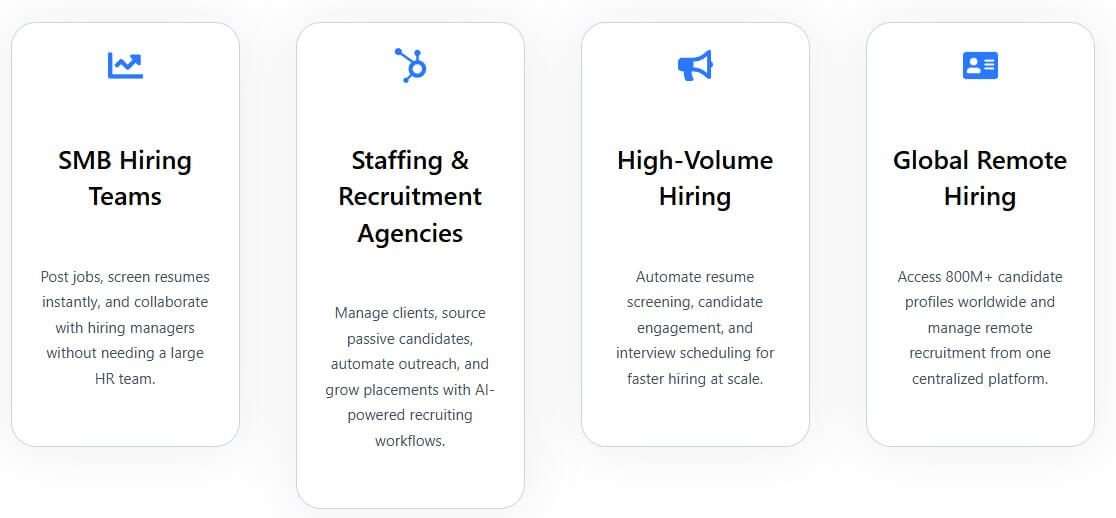
CVViZ is a strong fit for staffing agencies that need both ATS and CRM workflows in one place. The client portal, lead management, account ownership, candidate relationship management, and email tracking make it more agency-friendly than a basic employer ATS.
It also works well for high-volume hiring teams. AI screening, resume parsing, sourcing, interview scheduling, and analytics matter more when hiring volume increases.
Tech recruiting is another good fit because CVViZ can source from specialized platforms and includes a live coding environment for interviews.
Startups and SMBs can also benefit if they are hiring across multiple roles and need to move beyond inboxes, spreadsheets, and scattered job board accounts.
CVViZ is not the lightest recruiting tool. If a company only needs a simple careers page and a place to store applicants, it may feel broader than necessary.
AI screening also needs oversight. Resume ranking can save time, but hiring teams should not treat it as an automatic hiring decision. Job descriptions, screening criteria, candidate data quality, and recruiter feedback all affect results.
The platform’s breadth can also require setup discipline. Sourcing, ATS workflows, CRM, referrals, interviews, and analytics are useful, but only if the team configures them clearly. A messy hiring process will still feel messy inside better software.
CVViZ is best for recruiting teams that want more than applicant tracking. Its strongest value is the combination of AI resume screening, candidate sourcing, resume parsing, workflow automation, recruitment CRM, interview scheduling, and analytics in one platform. It is especially useful for staffing agencies, high-volume recruiters, SMB hiring teams, and companies that want to make better use of both new candidates and existing talent databases. The main caveat is that CVViZ should support recruiter judgment, not replace it. Its AI can help find and rank stronger candidates faster, but hiring still needs clear criteria, human review, and a well-run process.
TAGS: Productivity
Related Tools:

Create, customize, and deploy AI applications
Automates web tasks

Automates complex tasks by creating customizable, scalable digital agents
Provides real-time transcription for meetings and conversations

Organize their inboxes by automating email sorting

Assists in creating classroom content