
Share this tool:
 |
Description:
Upfirst is an AI receptionist for small businesses that still get much of their work over the phone. It answers calls, handles routine questions, collects contact details, books appointments, transfers callers, and sends a summary afterward.
There is nothing especially futuristic about the problem it solves. When everyone is busy, calls go to voicemail. Some callers leave a message; plenty do not.
For a law firm, clinic, restaurant, or home-service company, one unanswered call could mean losing a booking, consultation, or job to the next business on the list.
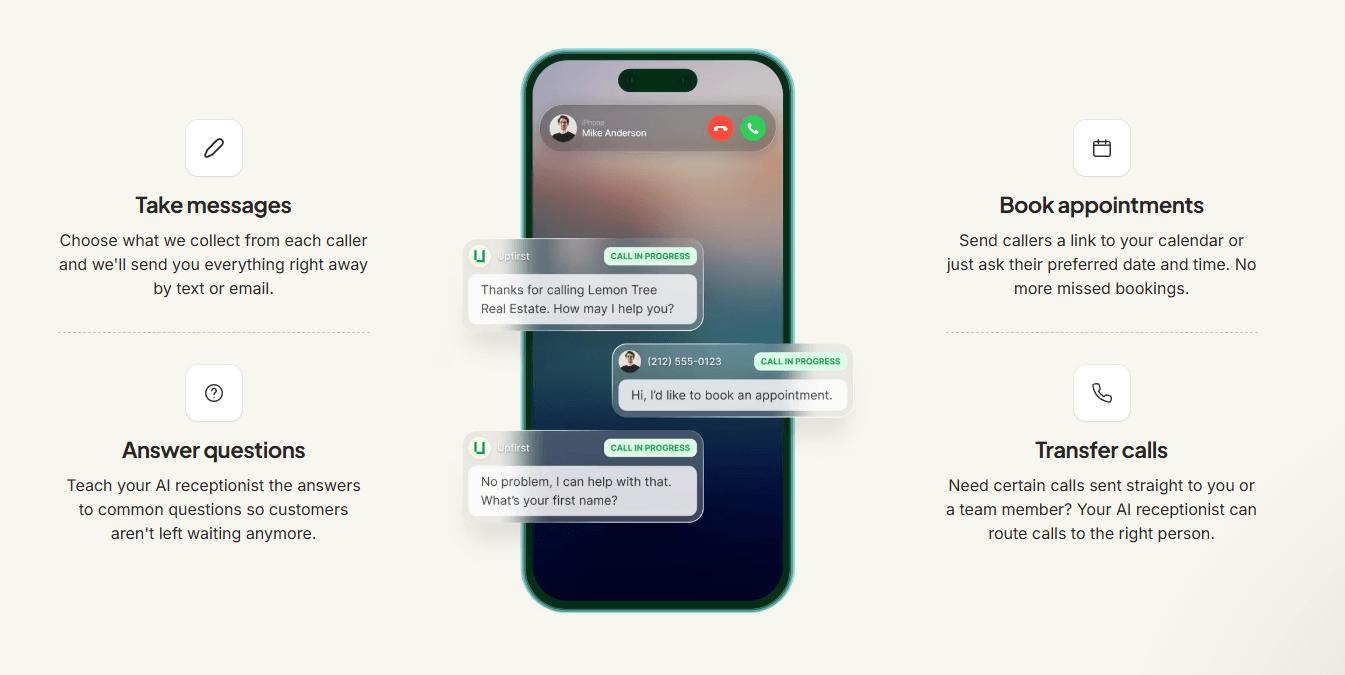
You give Upfirst the essential information about your business, including its opening hours, services, common questions, and rules for handling different calls.
An urgent repair request could go directly to a technician. Someone asking whether you are open on Saturday could get an answer without interrupting an employee. You decide where that line sits.
After the conversation, Upfirst can send a transcript, recording, and short summary. There is no need to replay a five-minute call just to discover that the caller wanted to confirm an appointment time.
Appointment booking is where Upfirst becomes more than an elaborate voicemail system.
It connects with Google Calendar, Microsoft Outlook, Acuity, and Clio, allowing it to check availability and schedule a time before the caller hangs up.
That removes the familiar back-and-forth of missed calls and messages about which times work. It is not glamorous, but it can eat up a surprising amount of the day.
Transfers can be configured too. You can add fallback numbers, send different callers to different people, and use warm transfers so the person answering receives some context first.
Upfirst connects with Zapier, Make, and Clio. Custom actions allow businesses to link the receptionist with their own systems.
Depending on how it is configured, Upfirst could check a customer record during a call, add a lead to a CRM, or start a follow-up process once the conversation ends.
It can also remember details about previous callers. That saves repeat customers from explaining the same issue from the beginning every time they phone.
Upfirst is a sensible fit for businesses where phone calls still lead to appointments, leads, and service requests.
Law firms, home-service companies, property managers, clinics, insurance offices, real estate teams, and restaurants all fit that description. In businesses like these, employees are often too busy serving the customer in front of them to answer the next call.
The clearest uses are after-hours coverage, appointment booking, lead qualification, and filtering simple questions before they reach an employee.
AI receptionists need to know when to step aside.
A routine booking is one thing. An angry customer, an unusual request, a poor connection, or a legally or medically sensitive conversation is another. Those calls should reach a person quickly.
Upfirst also depends heavily on the information you give it. Missing business details and vague routing rules force the receptionist to guess, which is exactly what you do not want on a customer call.
Review the first batch of transcripts closely. The odd and awkward conversations will show you where the instructions need work.
Upfirst is most useful for businesses that want fewer missed calls without hiring a full-time receptionist.
It takes care of predictable work: answering basic questions, booking appointments, collecting details, routing callers, and recording what happened.
It will not replace every conversation with a real person. That is fine. Its job is to keep routine calls moving and make sure the ones that matter do not disappear into voicemail.
TAGS: AI Automation
Related Tools:
No-code AI assistants that automate tasks
Connects apps and services to create automated workflows
Automate workflows and interact with data

Lets you extract structured data from any website

Enables users to build, customize, and deploy AI agents

Turns Google Sheets into intelligent workflows