
Share this tool:
 |
Description:
StarByFace is a celebrity look-alike face recognition tool. You upload a photo, the system detects the face, maps facial points, compares the result with celebrity faces, and returns the closest matches. It is built for entertainment, not identity verification, professional biometrics, or serious image analysis. That distinction matters because the tool is fun when used casually, but less reliable if you treat the match as an objective measure of resemblance.
Here are sample StarByFace uploads and the celebrity look-alike results generated from each input photo.
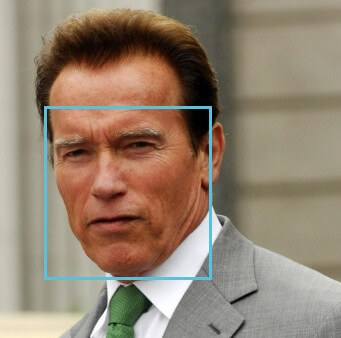
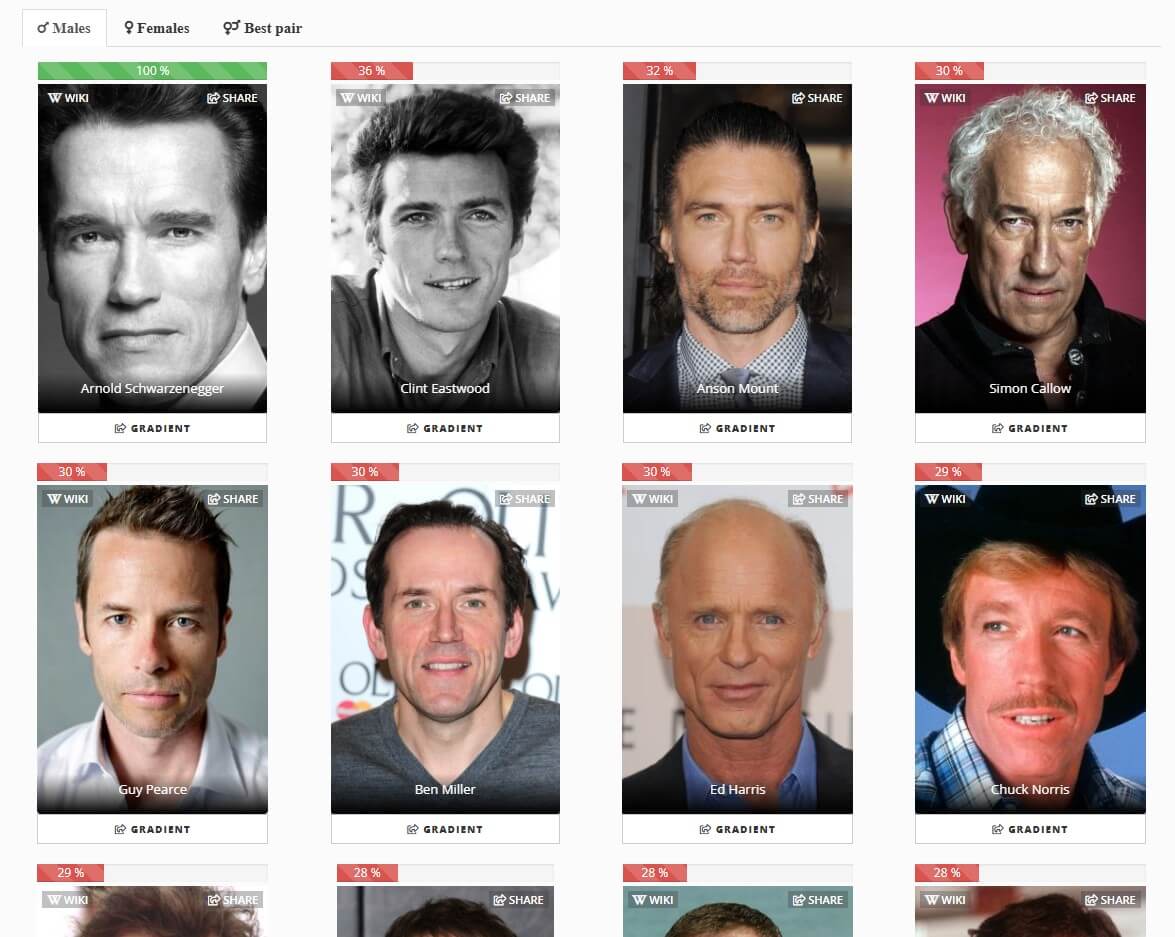
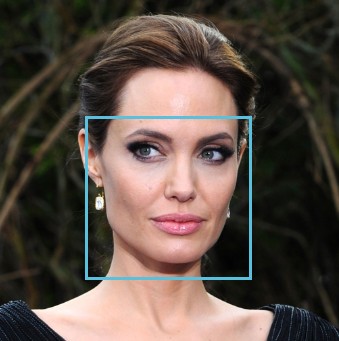
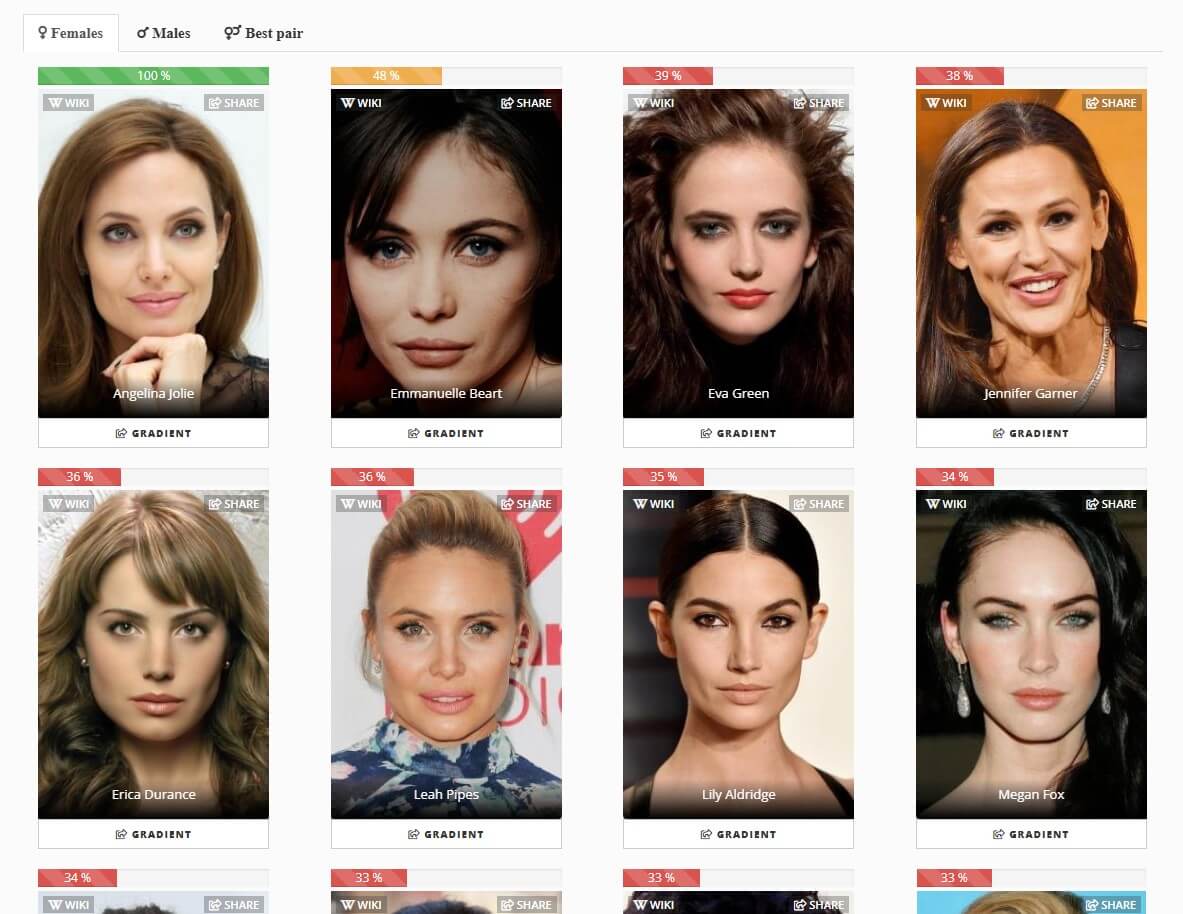
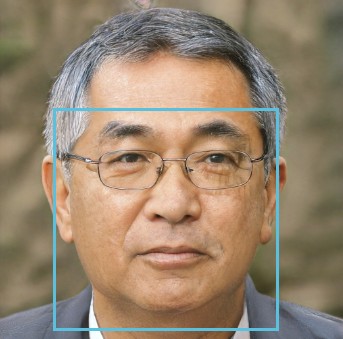
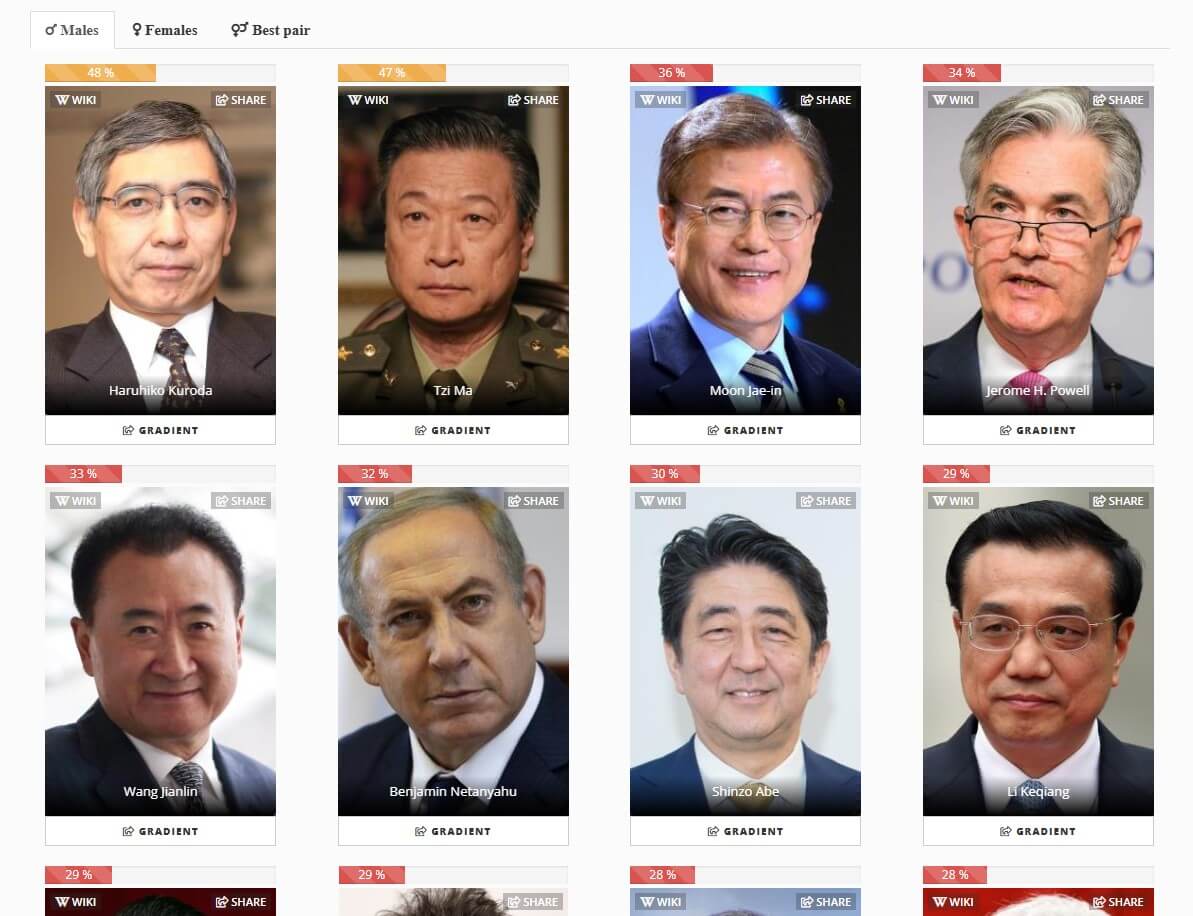
StarByFace is simple by design. It does not ask you to build prompts, tune settings, or manage an editing workspace. The experience is closer to a quick photo game: upload one clear face, wait for the system to process it, then see which celebrities it thinks you resemble.
The official site recommends using a photo with only one person, a clearly visible face, and preferably a frontal angle. It also says recognition accuracy depends on the resolution and quality of the face image. That is an important caveat because many “bad” results from tools like this come from poor inputs: side angles, shadows, sunglasses, cropped faces, low-resolution selfies, heavy filters, or group photos.
The workflow has three steps.
First, you upload a photo. The tool expects one person in the image, with the face easy to detect.
Second, StarByFace detects the face and creates what it calls a facial pattern. Its site says the system locates key face components such as eyebrows, eyes, nose, mouth, and position.
Third, a neural network compares the detected face pattern with celebrity faces and suggests similar matches.
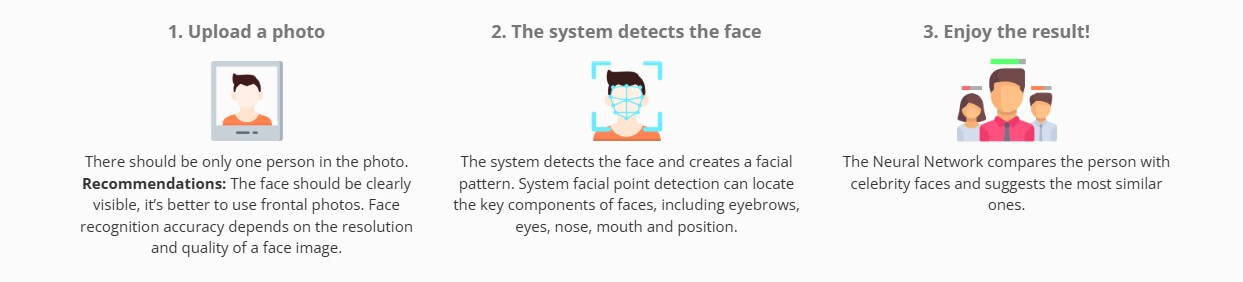
That workflow is easy to understand, which is part of the appeal. You do not need design skill, image editing experience, or account setup knowledge to understand what the tool is trying to do.
| Feature | What It Does | Why It Matters |
|---|---|---|
| Photo upload | Lets users upload a face image for analysis. | Keeps the experience fast and accessible. |
| Face point detection | Detects facial components such as eyes, nose, mouth, eyebrows, and position. | Gives the system a structure to compare against celebrity faces. |
| Celebrity matching | Compares the uploaded face with celebrity faces. | Produces the main look-alike result. |
| Gender filters | The web version includes options such as Males, Females, and Best pair. | Gives users some control over match categories. |
| Share option | Lets users share results if they choose. | Useful for social and entertainment use. |
| Mobile apps | Available through major app stores. | Makes the tool easier to use from a phone selfie. |
StarByFace is strongest as a low-friction entertainment tool. It is easy to try, easy to explain, and easy to share. That makes it a good fit for social posts, party games, creator content, short videos, or casual curiosity.
The web app is especially useful for quick testing because the process is visible on the page: upload, detect, compare, result. The mobile apps add convenience for people who want to use selfies directly from their phone. The Google Play listing describes the app as using AI and facial recognition to compare your face with thousands of famous faces and return close celebrity matches. It also lists sharing results and a wide celebrity database as key features.
StarByFace also benefits from being narrow. It does not try to be a full photo editor, avatar generator, or beauty app. The whole experience is built around one question: “Which celebrity do I look like?” That clarity helps.
- Social media content: StarByFace can be used for quick posts, reactions, or “celebrity twin” content.
- Friend group entertainment: It works well as a casual game because the results can be funny, flattering, surprising, or debatable.
- Creator hooks: Short-form creators can use it for comparison videos, trend content, or audience engagement.
- Profile-photo experiments: Users can test how different lighting, angles, hairstyles, or expressions affect the celebrity matches.
- Light brand engagement: Entertainment pages, lifestyle creators, and community accounts can use it for simple audience interaction, as long as they handle privacy and consent responsibly.
- Use a clear, front-facing photo. Avoid sunglasses, hats that cover the face, strong filters, extreme angles, and heavy shadows.
- Try more than one photo. A neutral selfie, a smiling photo, and a different lighting setup may produce different matches.
- Use one person per image. The site specifically recommends photos with only one person, which helps avoid detection errors.
- Do not treat the result too seriously. Celebrity matching depends on the available celebrity database, the model’s comparison logic, and the quality of your uploaded image.
Privacy matters more here than with many casual web tools because users are uploading face photos. StarByFace’s website says it does not store uploaded photos and that photos are deleted after recognition, except when the user chooses to share the result. It also says the website collects usage data such as IP address, referring URL, browser cookie, and browser type, but not personal information such as name or email during normal website use.
The mobile privacy policy says the app uses user-selected photos to detect a face and find similar famous people. It states that uploaded photos are not stored, while generated share images may be stored when the user clicks the share button. It also notes the use of third-party services such as Google Play Services, AdMob, and Firebase Analytics.
That is reassuring, but users should still be careful. Any face-upload tool deserves caution, especially for photos of children, other people, or anyone who has not given permission.
The biggest limitation is accuracy. StarByFace can produce fun matches, but look-alike results are not scientific judgments. The Google Play listing itself says results may vary based on photo quality and algorithm accuracy, and that the app is intended for entertainment purposes only.
The celebrity database also shapes the results. If the closest real-life resemblance is not in the database, the tool has to choose from available faces. That can lead to odd matches.
Another trade-off is consistency. Different photos of the same person may return different celebrities. That is normal for face-matching entertainment tools because lighting, pose, expression, age, camera distortion, and hairstyle can all influence the pattern.
StarByFace is best for users who want a quick, fun celebrity look-alike result without learning a complex AI tool.
Its strongest value is the simple upload-and-match workflow, face point detection, celebrity comparison, mobile access, and shareable results.
The main caveat is accuracy: use it as an entertainment tool, not as a serious face analysis system. For the best experience, upload a clear front-facing photo, try a few variations, and treat the results as a playful comparison rather than a final answer.
TAGS: AI Detection
Related Tools:

Identifies and monitors copyright violations related to music
Compares photos to celebrity look-alike

Verifies authenticity of audio files

Identifies wether images are AI-generated

Identifies AI-generated content on web pages

Verifies authenticity of online content