

Share this tool:
 |
Description:
Sieve is no longer best understood as a video API tool. Its current positioning is much bigger and more specialized: it is a multimodal data lab that supplies high-quality video, audio, image, editing-pair, and interaction data for frontier AI teams. The company now focuses on helping AI labs and enterprise research teams get training-ready datasets, evaluation sets, and environments at scale.

Sieve provides data infrastructure for companies building advanced multimodal AI systems. That means the product is not a consumer app, a creative editor, or a simple self-serve annotation tool. It is closer to a data partner for teams building models that need to understand video, audio, images, software interactions, robotics-style environments, and world behavior.
The official site describes Sieve as “the multimodal data lab,” with hundreds of petabytes of curated multimodal data and support for high-quality video, editing pairs, and synchronized audio-visual data. Its About page says the company builds the data and environments frontier AI labs use to train next-generation multimodal systems.

That matters because the buyer is not a solo creator looking for a quick AI output. The buyer is more likely an AI research team, enterprise AI lab, robotics group, media-generation company, or startup training models that need large volumes of reliable, labeled, rights-aware, high-signal data.
Sieve’s background helps explain the product. In a March 2026 post, the company said it originally started with developer tools for computer vision, then moved into video understanding and editing APIs with capabilities such as auto-resizing, translation, scene detection, object tracking, and speaker tracking. By early 2025, Sieve says those APIs were being used in production by creative tools, social platforms, and media companies.
The shift came when research teams started using those APIs as annotation systems for large video datasets. Sieve concluded that model progress could make many standalone API products less durable, so it moved toward supplying datasets end-to-end instead. That is the key context. Sieve is not just offering tools around media anymore. It is packaging sourcing, indexing, filtering, annotation, QA, and secure delivery into a data workflow for model builders.
Sieve’s workflow has five main layers: source, filter, index, annotate, and deliver. The company says it captures and aggregates multimodal data from real-world, digital, and simulated environments; scores it for semantics, rights, artifacts, task quality, and other factors; indexes billions of videos, images, audio clips, and interaction traces; adds labels and metadata; then packages the result for secure delivery.
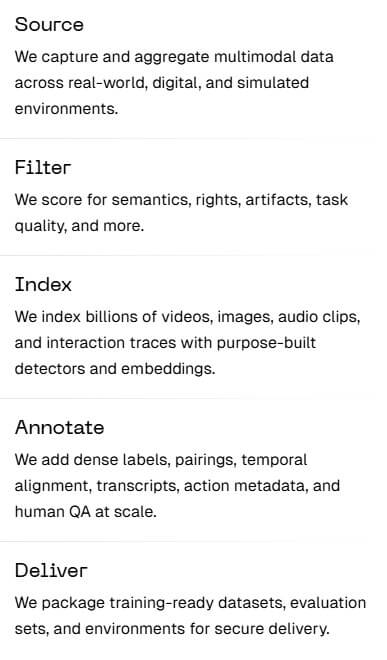
| Layer | What it means in practice |
|---|---|
| Source | Collects or aggregates data across physical, digital, and simulated environments. |
| Filter | Scores media for quality, rights, relevance, artifacts, and task fit. |
| Index | Makes large-scale media searchable using detectors and embeddings. |
| Annotate | Adds transcripts, dense labels, pairings, action metadata, and human QA. |
| Deliver | Packages datasets, evaluation sets, and environments for secure handoff. |
This workflow is useful because multimodal data is difficult to manage manually. Video, in particular, creates huge volume quickly. Sieve’s reintroduction post says the company operates on hundreds of petabytes of video and argues that collection, indexing, filtering, QA, and annotation at that scale must be software systems rather than manual service workflows.
Sieve’s strongest value is targeted multimodal data curation at scale. It is not just collecting “a lot of video.” It is trying to deliver data that matches specific research needs.
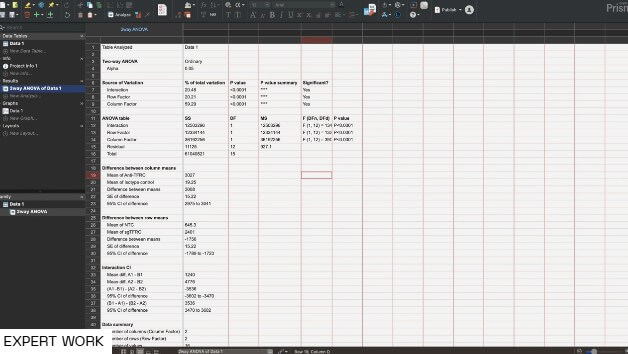
That can include coherent scenes with clean motion, before-and-after editing pairs for controlled generation, synchronized speech and sound, object labels, action metadata, camera signals, UI events, and custom schemas.
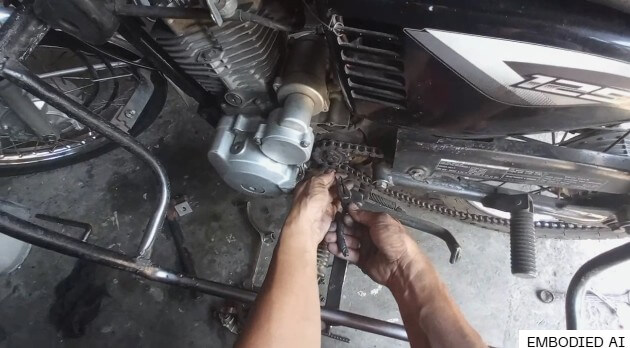
This is especially important for model categories where generic web-scale scraping is not enough. A video model may need specific motion patterns. A robotics model may need action-oriented data. A computer-use agent may need UI interaction traces. A generative editing model may need paired examples showing what changed before and after an edit. Sieve’s value is in shaping the dataset around those needs instead of handing over a broad, messy media dump.
Sieve covers video, audio, image, editing pairs, and interaction data for AI training and evaluation.
The company says it indexes billions of media assets and interaction traces with purpose-built detectors and embeddings.
Sieve can capture targeted real-world, digital, and simulated workflows based on a team’s model goals.
The platform supports captions, transcripts, object labels, temporal alignment, action metadata, camera signals, UI events, and custom schemas.
Sieve describes quality control across contributor qualification, automated validation, dataset-level checks, final human review, and model-improving QA loops.
The official site mentions filtering, licensing, consent, retention, permission requirements, encryption, custom retention, secure transfer, and SOC 2 Type 2 controls.
Sieve is best for AI teams building or improving multimodal models. Strong use cases include video generation, video editing models, visual understanding, robotics, world models, computer-use agents, evaluation sets, audio-visual alignment, and datasets that require precise scene, action, or temporal labels.
It also makes sense for companies that need rare or specific data slices. For example, a team may need footage with particular camera behavior, clean object motion, matched audio, UI interaction traces, or before-and-after editing examples. Sieve’s pitch is that its searchable corpus and filtering systems can narrow large inventories into research-ready datasets faster than a reactive manual sourcing process.
Sieve’s biggest limitation is accessibility. This is not a lightweight tool for small teams that want to upload a file and get an instant result. The workflow is consultative: explore capabilities, receive samples, scope the dataset or environment, define volume and metadata needs, then receive delivery.
The second trade-off is that Sieve’s value depends on how clearly the customer can define the model need. If a team does not know what data distribution, labels, rights, quality thresholds, or evaluation goals matter, Sieve can help shape the project, but the process will still require serious research input.
The third limitation is transparency for casual buyers. Public pages explain capabilities, but they do not provide a full self-serve catalog or simple app-style workflow. That is reasonable for enterprise data work, but it means Sieve is harder to evaluate from the outside than a normal SaaS product.
Sieve is best for advanced AI teams that need high-quality multimodal data, not for users looking for a simple AI video or audio app. Its strength is the full data pipeline: sourcing, filtering, indexing, annotation, QA, compliance, and secure delivery at large scale.
The main caveat is that it is built for serious model-development workflows, so teams need clear data goals, technical buyers, and enough research maturity to use custom multimodal datasets well.
TAGS: Productivity
Related Tools:

Lets you ask business questions and instantly get insights
Simplifies creation of visual content for marketing

Automatically plans and organizes your schedule

Enhances efficiency in Excel and Google Sheets

Automates content creation and improves writing

Enhances note-taking by integrating AI models