
Share this tool:
 |
Description:
Epsilla is an AI Agent-as-a-Service platform for building domain-specific chat agents and smart search systems on top of private company data. Its main value is not just that it can connect an LLM to documents. It gives teams a more complete workflow: create a knowledge base, configure an agent, connect model providers, evaluate responses, and deploy the result without building the full RAG stack from scratch.
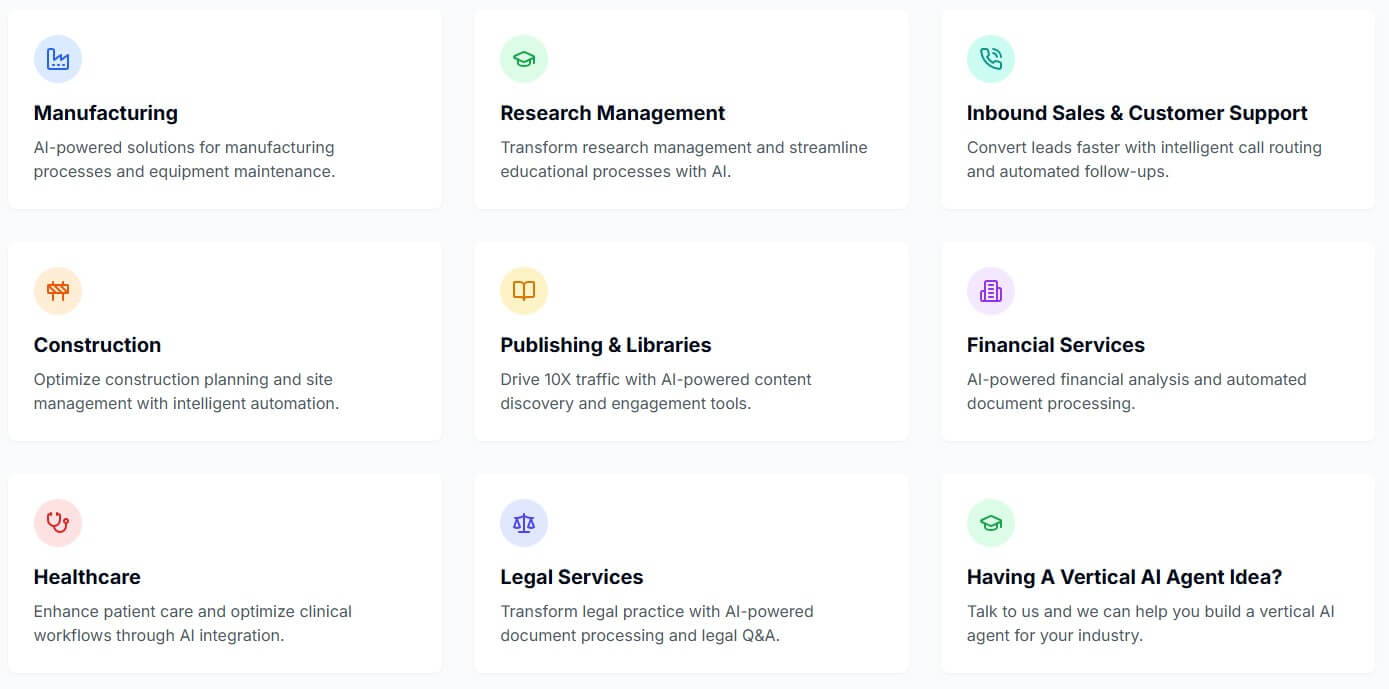
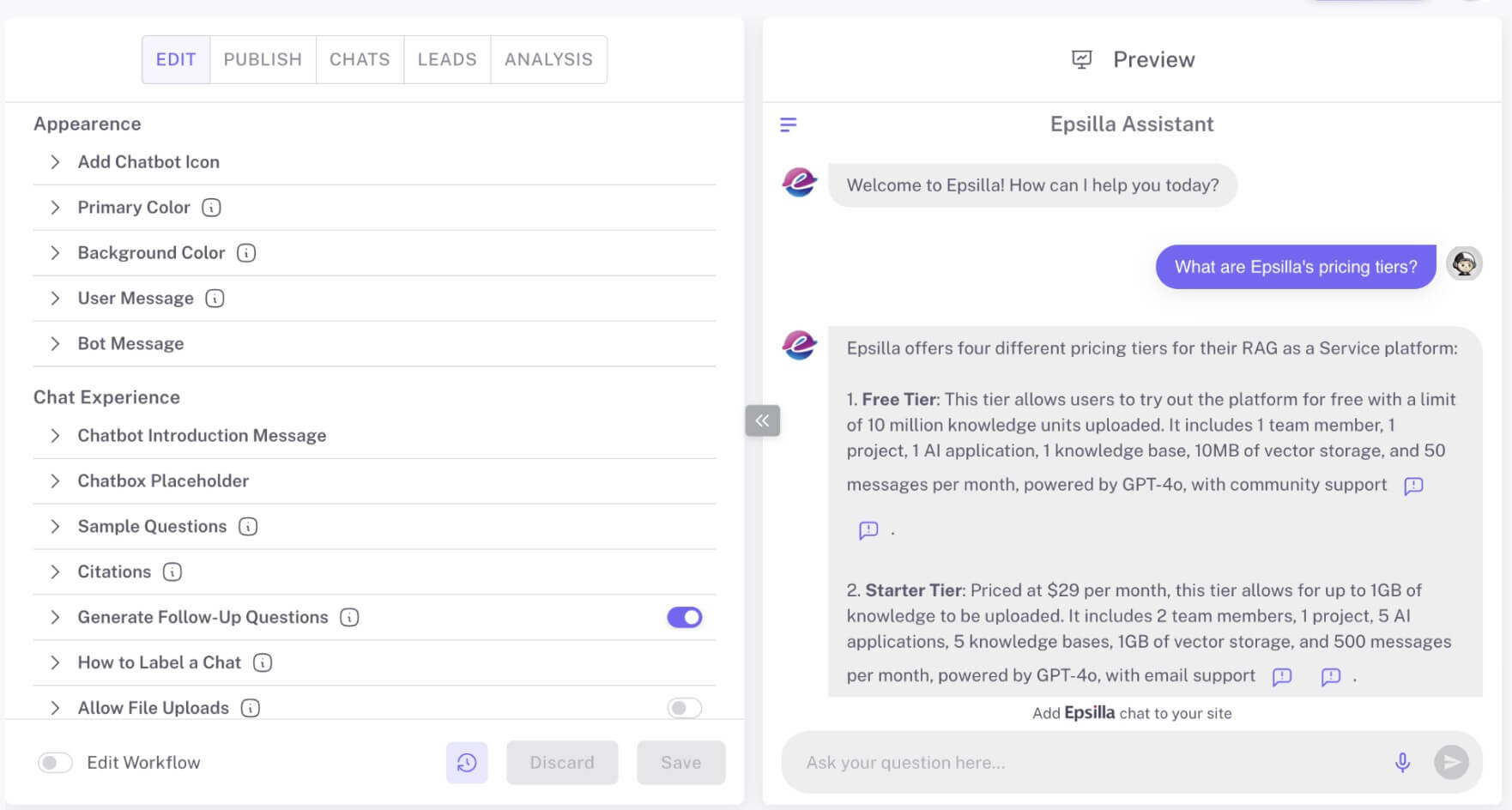
Epsilla started with vector database infrastructure, and that still matters, but the current product is broader. The public positioning now centers on vertical AI agents: agents built for a specific company, industry, process, or knowledge domain. The homepage describes Epsilla as an Agent-as-a-Service platform for building and deploying customized AI agents with no infrastructure complexity.
The clearest way to understand it is as a managed RAG and agent platform. RAG means retrieval-augmented generation, where the AI pulls relevant information from a knowledge base before answering. In practical terms, that means Epsilla is useful when a generic chatbot is not enough because the answers need to come from private documents, internal policies, product data, research files, technical manuals, or other controlled sources.
The product currently supports two main application types in its documentation: Chat Agent and Smart Search Agent. A Chat Agent answers questions and holds conversations based on a knowledge base, while Smart Search is designed to return reliable answers with linked sources.
Epsilla is strongest when the problem is not “generate text,” but “answer accurately from our data.” That difference matters.
A normal chatbot can draft, summarize, and reason from its general model knowledge. Epsilla is more useful when the system needs to work inside a defined information environment. That might be a legal research database, a product support library, an internal operations manual, a research archive, a construction document set, or a healthcare workflow with controlled knowledge.
The strongest fit is teams that want production-style AI agents without stitching together a vector database, document parsing, embeddings, retrieval logic, prompts, model routing, evaluation, and hosting on their own. Epsilla’s homepage highlights no-code agent building, RAG as a service, scalable infrastructure, multi-tenancy, and flexible deployment options including managed SaaS, private cloud, and on-premise installation.
| Feature | Practical value |
|---|---|
| No-Code AI Agent Builder | Lets teams build agents through a platform workflow instead of writing everything from scratch. |
| RAG as a Service | Connects agents to enterprise knowledge bases so responses can be grounded in private data. |
| Knowledge Base Management | Supports sources such as local files, websites, Google Drive, S3, Notion, SharePoint, Google Cloud Storage, Azure Blob Storage, Confluence, and Jira in the documentation navigation. |
| Chat and Smart Search Applications | Supports both conversational agents and search-style applications with linked sources. |
| Model Provider Integrations | Allows connection to LLM and embedding providers such as OpenAI, Anthropic, Mistral, Jina AI, and Voyage AI through API keys. |
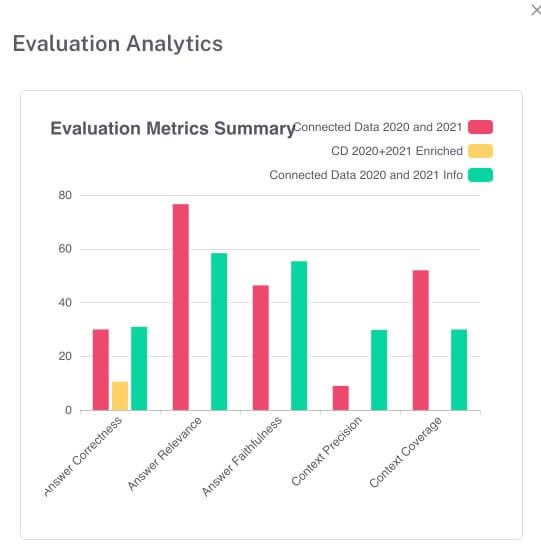
| Evaluation Workflow | Includes an evaluation system for testing agent response quality over time using scenarios, human-labeled answers, and LLM-based scoring. |
This feature set makes Epsilla more serious than a lightweight chatbot widget, but more approachable than building a custom agent stack from scratch.
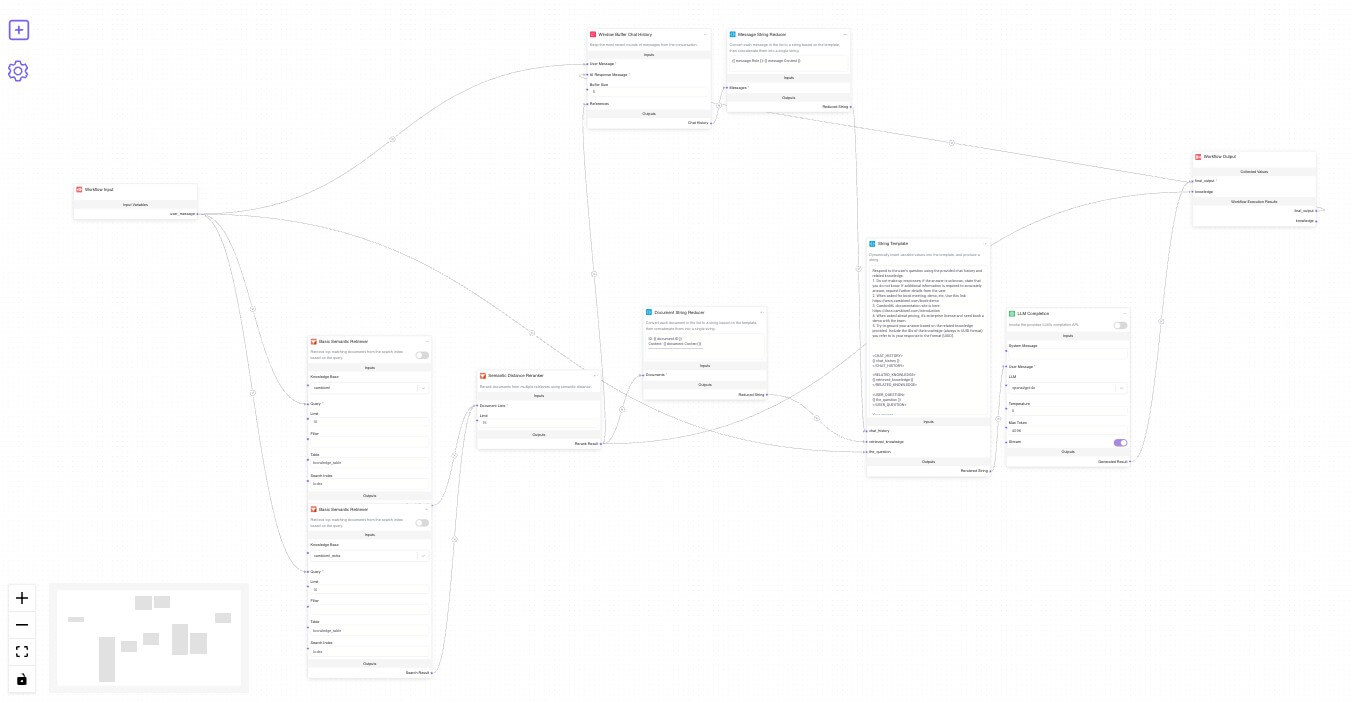
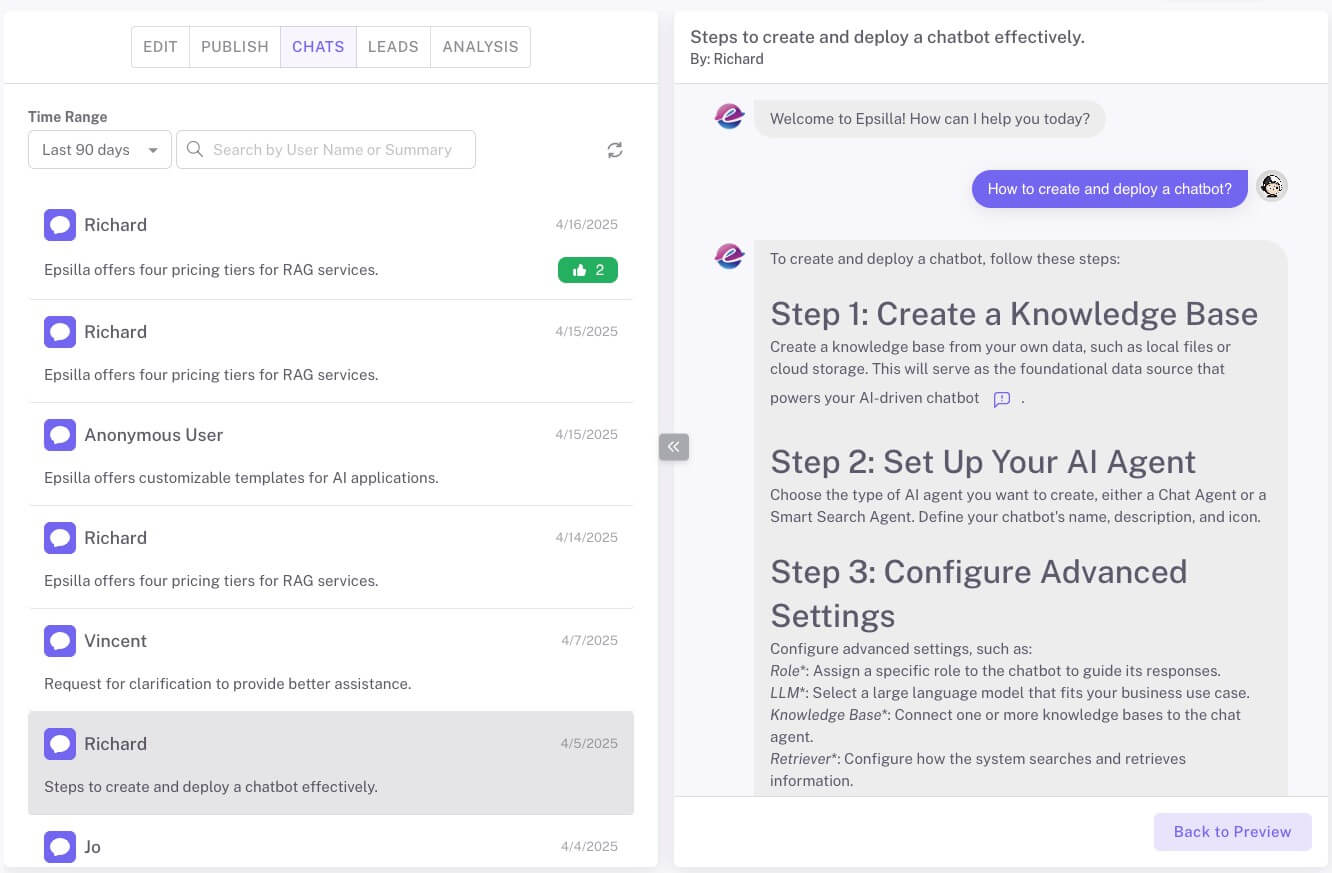
The Epsilla workflow is built around a few steps: create or connect a knowledge base, build an application, configure the agent, connect model providers if needed, test it, evaluate it, then publish or deploy it. That is much easier than a full custom RAG build, but it still asks users to think carefully about their data.
The knowledge base layer is the part to treat seriously. Epsilla’s documentation covers data sources, parsing, embeddings, chunking, metadata, auto sync, and storage inspection. Those are not cosmetic settings. They affect answer quality. A clean, well-structured knowledge base will usually produce better results than a folder full of messy PDFs, duplicated files, vague page titles, and outdated content.
The model integration setup is also practical. Epsilla lets users bring API keys for model providers, then use those models across the platform once validation succeeds. That gives teams more control than a closed chatbot builder, especially if they already have preferred LLM or embedding providers.
| Layer | What it does | Why it matters |
|---|---|---|
| Knowledge Base | Stores and indexes private data | The agent is only as useful as the information it can retrieve |
| Chat Agent | Answers questions conversationally | Best for assistants, support bots, and internal Q&A |
| Smart Search | Returns answers with linked sources | Useful when traceability matters |
| Model Integrations | Connects LLM and embedding providers | Gives teams flexibility over model choice |
| Evaluation | Tests agent quality over time | Helps catch weak answers before deployment |
| Vector Database | Provides semantic search foundation | Supports retrieval, memory, and similarity search |
This layered setup is the main appeal. Epsilla is not just an interface wrapped around an LLM. It gives teams a more complete operating system for private-knowledge agents.
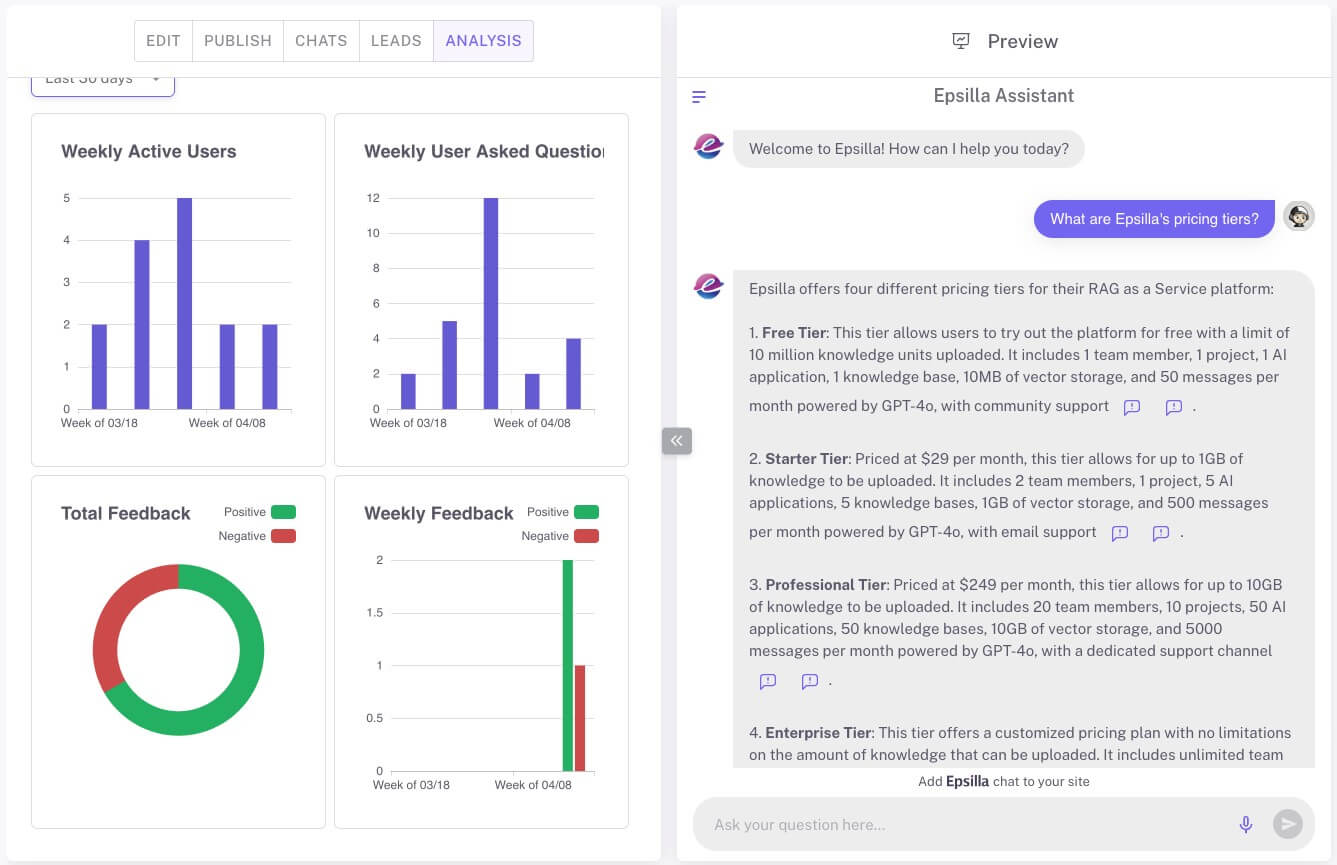
Epsilla is a strong fit for internal knowledge assistants. Companies can use it to help employees search policies, onboarding material, technical docs, project files, or internal research without manually browsing folders.
It also fits customer support and inbound sales workflows, especially when answers need to come from product documentation, FAQs, CRM notes, or help center content. The homepage lists inbound sales and customer support as one of its vertical solution areas.
Research management is another natural use case. Epsilla has a dedicated education and research management positioning, where the goal is to connect research data and improve discovery across institutional knowledge.
Legal, financial services, healthcare, construction, manufacturing, publishing, and libraries are also listed as vertical solution categories on the official site. These make sense because they all involve large knowledge sets, recurring questions, and a need for more grounded answers than a general chatbot can provide.
Epsilla sits between no-code chatbot builders and developer-first vector database stacks.
Compared with a basic chatbot builder, Epsilla has stronger RAG, knowledge base, evaluation, and deployment depth. Compared with pure vector databases such as Pinecone, Weaviate, Qdrant, or Milvus, Epsilla is more application-oriented because it includes agent and smart search workflows, not just storage and retrieval infrastructure.
Compared with building your own LangChain or LlamaIndex stack, Epsilla reduces setup work. The trade-off is that you accept more of Epsilla’s platform structure. For many teams, that is the point. For advanced AI teams that want full control over every retrieval, ranking, routing, and evaluation step, a custom stack may still be more flexible.
- Start with one narrow use case. A broad “company brain” agent sounds appealing, but it is harder to evaluate. A support policy assistant, legal document Q&A tool, research search assistant, or product documentation bot is easier to measure.
- Clean the knowledge base before judging the agent. Remove outdated files, split huge documents when needed, and use metadata where it helps retrieval.
- Use Smart Search when source traceability matters. Use Chat Agent when the experience needs to feel more conversational.
- Run evaluations before publishing widely. Epsilla’s evaluation framework is important because AI agents can sound confident even when retrieval is weak or the knowledge base is incomplete.
Epsilla is not the simplest option for someone who only wants a quick chatbot on a website. The platform is more useful when knowledge quality, retrieval, model choice, evaluation, and deployment matter.
It also depends heavily on data preparation. If your documents are outdated, inconsistent, poorly formatted, or full of conflicting answers, the agent will inherit those problems. RAG improves grounding, but it does not automatically fix bad source material.
There is also some platform complexity. Epsilla is easier than building everything manually, but teams still need to understand knowledge bases, embeddings, chunking, model providers, and evaluation at a practical level.
Finally, model flexibility is a strength, but it can add decisions. Teams need to choose which LLMs and embedding models fit their accuracy, latency, governance, and security needs.
Epsilla is best understood as a private-knowledge AI agent platform, not a generic chatbot tool. Its strongest value is the way it combines knowledge bases, RAG, chat agents, smart search, model integrations, evaluation, and deployment options into one workflow. It is best for companies, research teams, support teams, and domain-heavy organizations that want AI agents grounded in their own data. The main caveat is that Epsilla will only perform as well as the knowledge structure behind it. For serious private-data agents, that makes it worth considering early.
TAGS: Productivity
Related Tools:
Creates customized educational assessments

Provides customizable email templates

AI meeting assistant that tracks participation

Helps users explore biomedical and life sciences research

AI-powered Telegram bot
Streamlines note-taking, task organization, and insight generation