

Share this tool:
 |
Description:
Magical AI has changed shape over time. It is no longer just a browser writing helper or text expansion tool. The current product direction is much more focused on agentic AI automation: AI agents that can move data between systems, process documents, fill forms, handle workflow steps, and automate operational work, with a clear emphasis on healthcare revenue cycle and administrative tasks.
The simplest way to understand Magical today is as an automation platform with two related layers.
The first layer is the familiar Magical browser extension. That product is built around text expansion, autofill, messaging shortcuts, and data entry automation across websites and apps. The Chrome listing describes it as a text expander and autofill automation app used for messages, forms, spreadsheets, customer support, sales work, recruiting, and other repetitive web tasks.
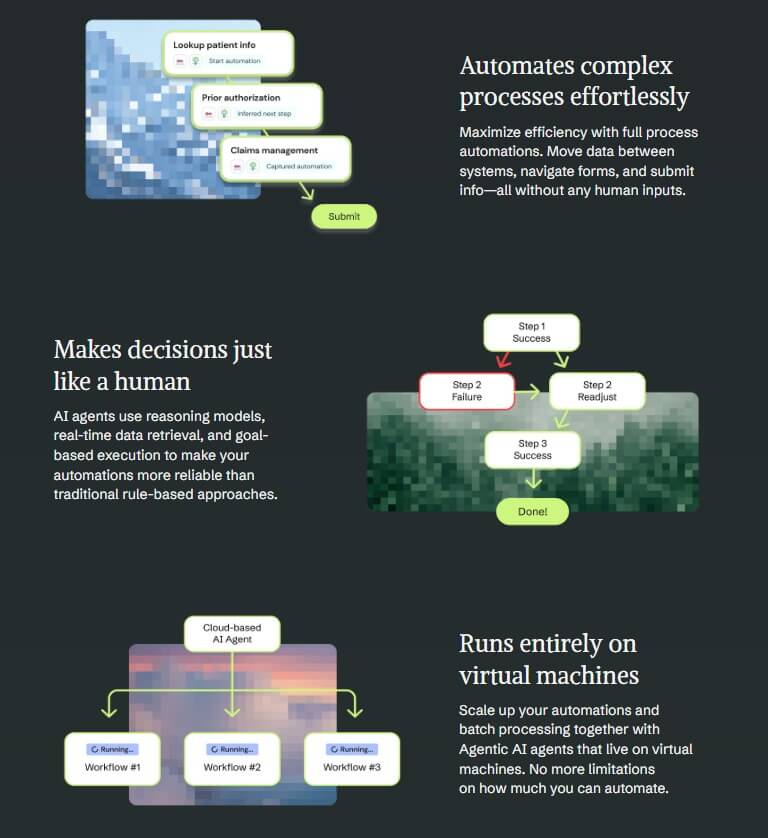
The second layer is Magical’s newer agentic AI platform. This is the more important part if you are reviewing the tool from the current Agentic AI page. Magical describes its AI agents as systems that use reasoning models, real-time data retrieval, and goal-based execution to make automations more reliable than traditional rule-based approaches. The company also says these agents run on virtual machines, which means the automation can operate at higher scale than a user-driven browser extension.
That distinction matters. Magical is not just “AI that writes replies.” In its current positioning, it is closer to an AI workforce for structured, repetitive operations.
Magical is strongest when work is repetitive, browser-based, and rules-heavy but still messy enough that normal automation breaks. That includes copying data between systems, extracting information from PDFs, filling online forms, transforming dates or text, handling exceptions, and completing multi-step workflows across apps that may not have clean integrations.
The healthcare focus is especially clear. Magical’s healthcare page says its agents are trained on healthcare operations and can automate revenue cycle workflows end to end. It also highlights use cases such as prior authorizations, claims management, payer portal tasks, PDF extraction, phone calls, and moving patient data between systems.
This is an important shift. Many automation tools are general-purpose. Magical looks increasingly specialized around operational teams, especially in healthcare, where people spend large parts of the day moving information between EHRs, payer portals, billing systems, spreadsheets, and internal dashboards.
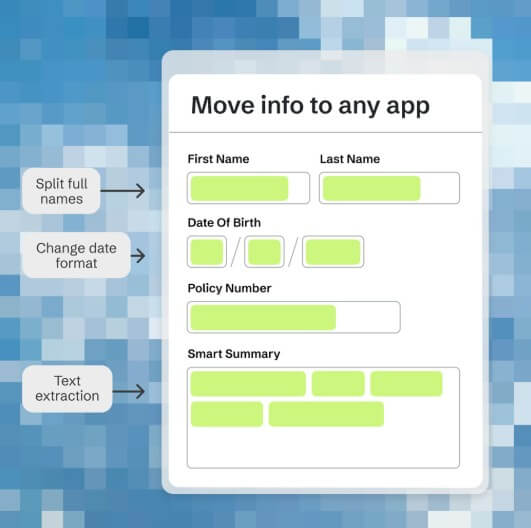
Magical can move and transform data between apps, including date conversions, text extraction, formatting, field mapping, and cleanup.
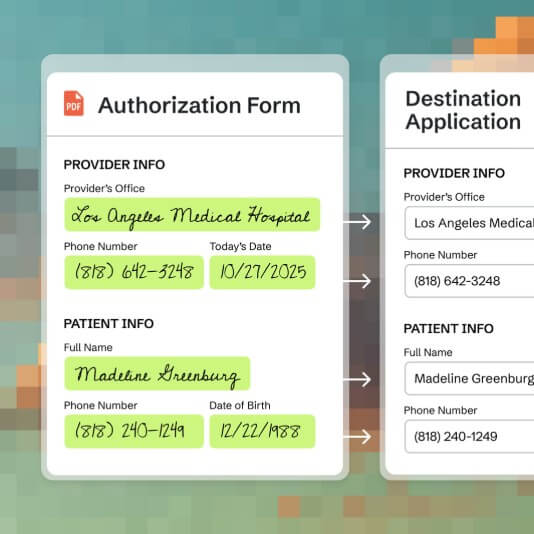
The Agentic AI page says Magical can extract data from PDFs and populate online forms, including use cases like medical records and insurance forms.
Magical promotes self-healing workflows, error handling, and adaptive behavior when apps or interfaces change.
Its agentic AI automations can run on virtual machines, which supports scale and batch processing beyond a single user’s local browser.
Magical’s Agentic AI page lists daily automated testing and detailed automation logs as reliability features.
The extension still supports text expansion, autofill, and repetitive data entry across web apps without requiring formal integrations or APIs.
The workflow depends on which Magical product path you mean.
For the extension, the setup is simple. Install the Chrome or Edge extension, create shortcuts or templates, and use Magical inside the sites where you already work. The help center describes Magical as a productivity app for speeding up repetitive messaging and data entry without integrations or APIs.
For agentic AI, the workflow is more enterprise-like. Magical’s agents are not just personal shortcuts. They are trained or configured around specific workflows, then deployed to execute steps across systems. A Magical blog post says its agents operate directly inside web-based systems or desktop applications, including EHRs, payer portals, practice management tools, pharmacy platforms, document systems, clearinghouses, scheduling centers, and internal dashboards.
That setup is one of the product’s main advantages, but also a place where buyers should pay attention. Magical’s pitch is that it can automate without the long integration work that slows down traditional enterprise automation. The company says its agents can operate where humans work, rather than depending on API access, SSO integration, HL7 feeds, or middleware.
For teams with messy systems, that is appealing. For teams that prefer highly controlled API-first automation, the browser or desktop execution model may require more governance and testing.
The strongest argument for Magical’s agentic AI is adaptability. Traditional automation is often brittle. It can fail when a button moves, a page changes, a form field is renamed, or a document layout varies. Magical’s Agentic AI page says its agents can adapt to changes, handle edge cases, and continue running reliably through self-healing workflows and error handling.
That is the right problem to solve. In real operations, especially healthcare administration, work rarely follows a perfect script. A payer portal may return a different screen. A PDF may use a different layout. A claim may need a special exception. A human knows how to adjust. Magical is trying to give automations more of that judgment layer.
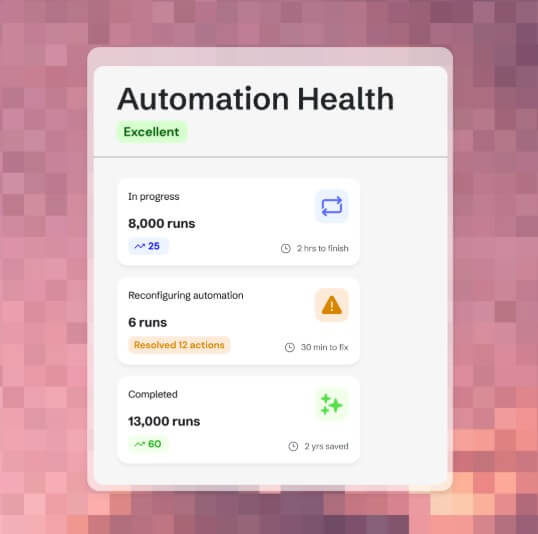
Still, “agentic” should not be read as “set it and forget it.” Any system that takes actions in live business systems needs monitoring, audit logs, review paths, and escalation rules. Magical’s emphasis on daily automated testing and automation logs is a good sign because reliability is not only about the AI model. It is about operational controls.
There is one important naming issue. Older Magical AI help pages described AI Assist features for generating messages inside Gmail, LinkedIn, and similar tools. However, the current help center includes a May 2025 update saying those particular AI features are no longer available in the Magical extension, while Magical is still investing in smarter AI transformation and fully agentic workflows.
That means users should not evaluate Magical today as a simple AI email writer. The extension still matters for autofill and text expansion, but the current AI story is more about operational automation and agents.
Magical AI is a strong fit for healthcare operations teams handling prior authorizations, claims, eligibility checks, payment posting, referral management, benefits verification, and revenue cycle workflows. Magical’s AI Agent Library lists healthcare-focused agents for areas such as prior authorizations, payment posting, referral management, benefits verification, and revenue integrity.
It is also useful for teams with heavy data entry across systems: customer support teams, recruiting teams, sales operations, admin teams, and back-office staff that copy information from one place to another all day.
The lighter extension is best for individual and team productivity. The agentic AI product is better for higher-volume workflows where repeatability, monitoring, and reliability matter.
The first limitation is category clarity. Magical can mean the browser extension, the older AI Assist experience, or the newer agentic AI platform. Buyers should make sure they are evaluating the current product that matches their use case.
The second trade-off is operational risk. AI agents that act inside live systems need clear permissions, logs, exception handling, and human oversight. Magical mentions logs, testing, security, and healthcare compliance, but teams still need to validate the fit against their own policies and workflows.
The third limitation is fit. Magical makes the most sense for repetitive operational work. It is less useful if you only need occasional writing help, lightweight note-taking, or a general chatbot.
Magical AI is best for teams that want to automate repetitive operational work across messy web apps, forms, PDFs, and internal systems. Its strongest value is the move from simple autofill and text expansion toward agentic AI workflows that can transform data, process documents, handle exceptions, and run at scale.
It is especially relevant for healthcare revenue cycle and administrative operations. The main caveat is that the product’s current AI direction is different from its older AI writing features, so users should evaluate it as an automation and agent platform, not just a browser writing assistant.
TAGS: Productivity
Related Tools:

Organizes personal digital content

Transforms video content into polished, SEO-friendly blog posts

Provides features for managing PDF documents

Designed to automate data analysis and preparation

Enhances productivity for researchers
Summarizes online content