
Share this tool:
 |
Description:
PodSnap.AI is an AI podcast summary tool for people who follow more podcasts than they can realistically listen to. Instead of asking users to open a separate podcast app, search for episodes, and decide what to play, PodSnap.AI sends concise text and audio summaries of new episodes straight to the user’s inbox.
PodSnap.AI is best understood as a podcast monitoring and summarization service. You create an account, choose the podcasts you want to follow, and receive key insights when new episodes are published. The official site describes the workflow in three steps: create an account, follow podcasts, and learn from summaries delivered to your inbox, either immediately or as a weekly digest.
That makes it different from a normal podcast player. PodSnap.AI is not trying to replace Spotify, Apple Podcasts, or YouTube as your listening app. It is more of a filter. It helps you decide which episodes are worth your time and which ones can be understood through a short recap.
The product supports summaries across more than 4.2 million podcasts and offers both text and audio summaries. That broad coverage is important because podcast discovery is fragmented. Some shows live mainly on Apple Podcasts, some on Spotify, some on YouTube, and many listeners follow shows across several platforms.
PodSnap.AI produces written summaries so users can scan the main points before deciding whether to listen.
The platform also provides audio recaps for users who prefer to listen to the shortened version while commuting, walking, or doing light work.
Summaries can be sent directly by email, which makes the tool useful even if the user does not want another app to check.
Users choose the podcasts they want to track, then receive summaries for new episodes as they come out.
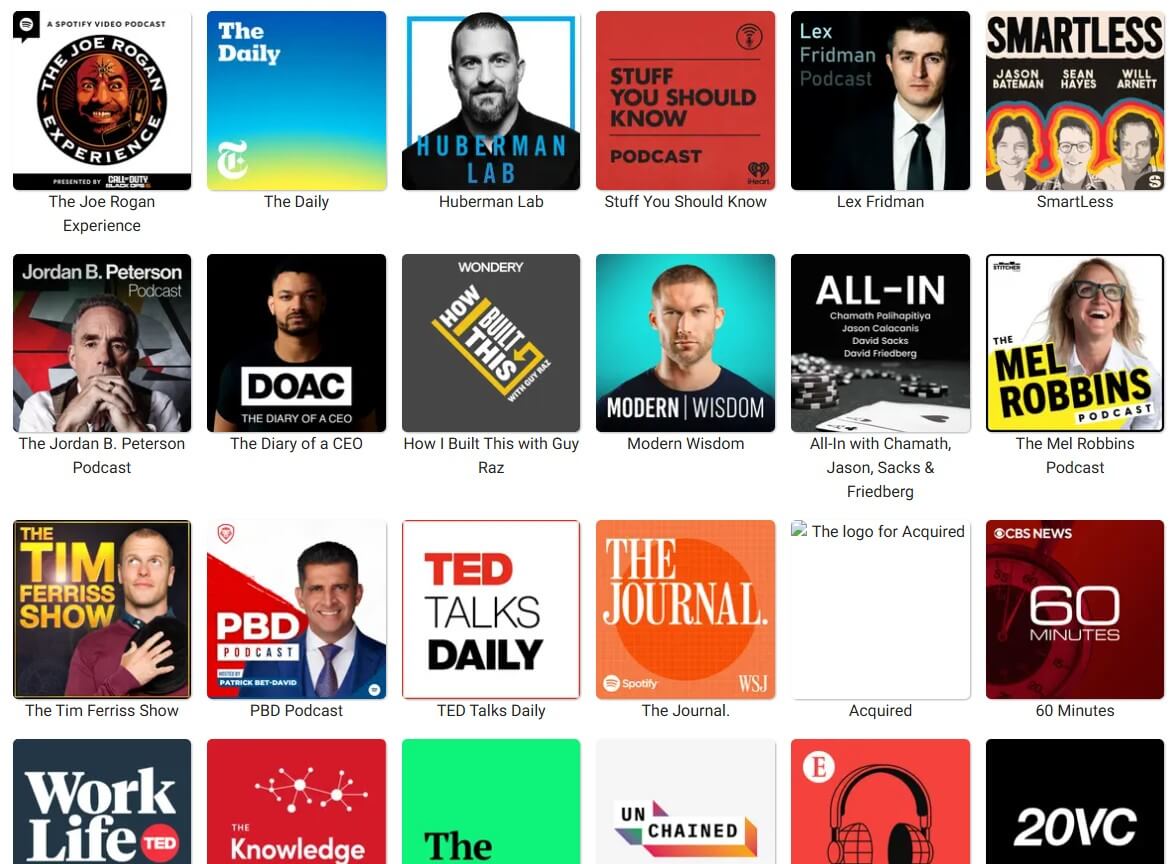
PodSnap.AI highlights a group of 24 featured podcasts, including major shows such as The Daily, Huberman Lab, The Diary of a CEO, Acquired, WorkLife with Adam Grant, and others.
PodSnap.AI also offers a YouTube Video Summarizer that can provide a transcript and summary for a YouTube video.
PodSnap.AI is strongest for podcast triage.
That may sound modest, but it is the real problem the tool solves. Many people subscribe to more shows than they can finish. A single week can bring long interviews, news recaps, business podcasts, science episodes, crypto discussions, founder interviews, productivity shows, and personal development content. Listening to all of it is not realistic.
PodSnap.AI gives users a quick way to answer a simple question: “Is this episode worth my full attention?”
That makes it useful for busy listeners who do not want to abandon podcasts, but also do not want their queue to become a guilt list. A summary can be enough for light-interest episodes. For more important episodes, it can help users decide where to spend 45 minutes or two hours.
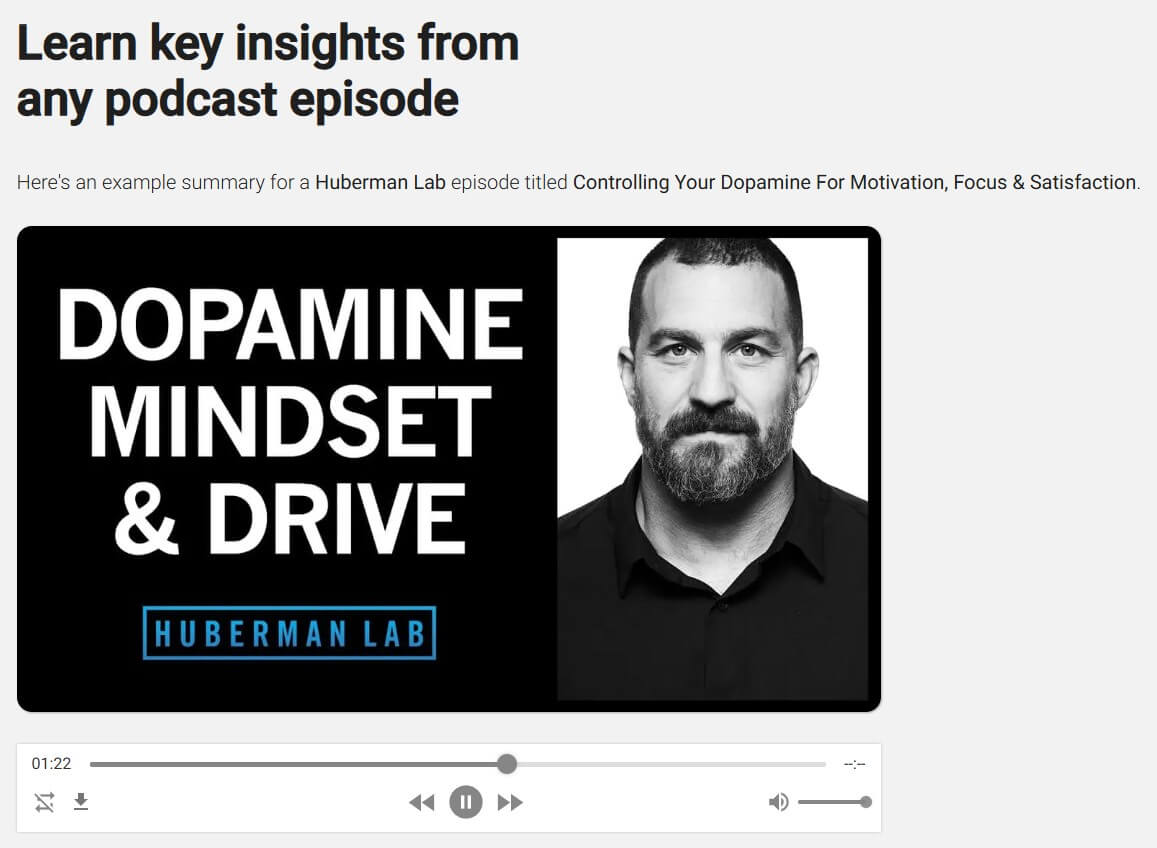
PodSnap.AI’s example summary format gives a good sense of how the product works. Its sample Huberman Lab summary includes speaker identification, an “About the Episode” section, key takeaways, top quotes, and a transcript view with timestamps.
That structure is practical. A short paragraph summary is useful, but it often misses the texture of a long podcast. PodSnap.AI’s format gives readers more ways to skim. The “About the Episode” section explains the overall topic. Key takeaways pull out the main lessons. Quotes preserve notable lines. The transcript view gives users a path back to the original content.
This is especially useful for education, business, science, and interview podcasts, where the value is often spread across many ideas rather than one simple conclusion.
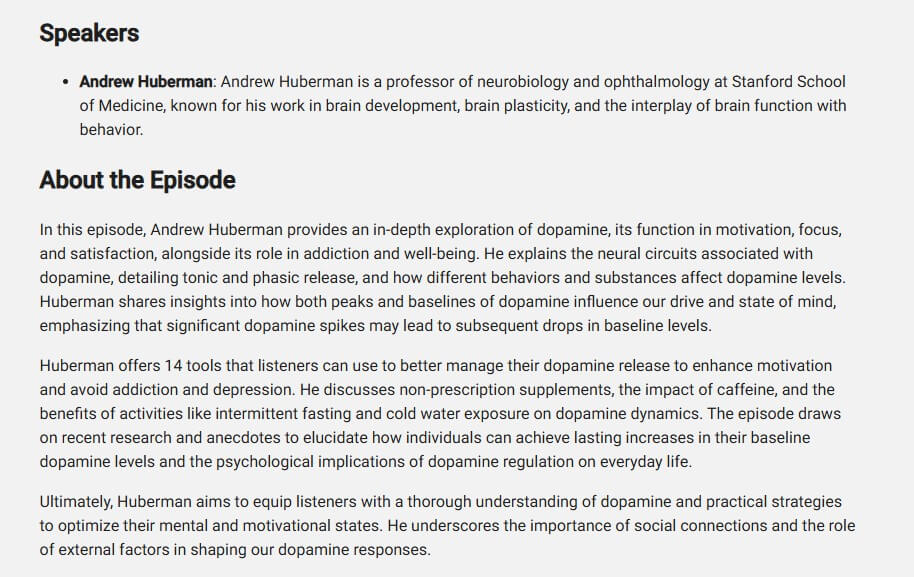
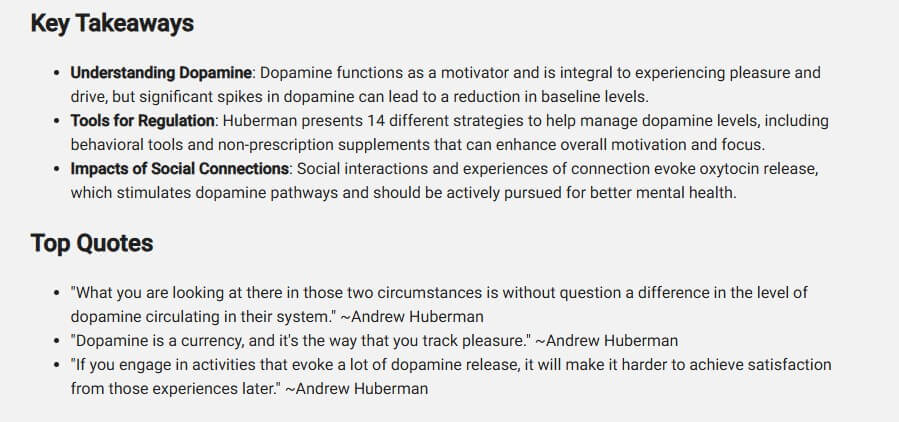
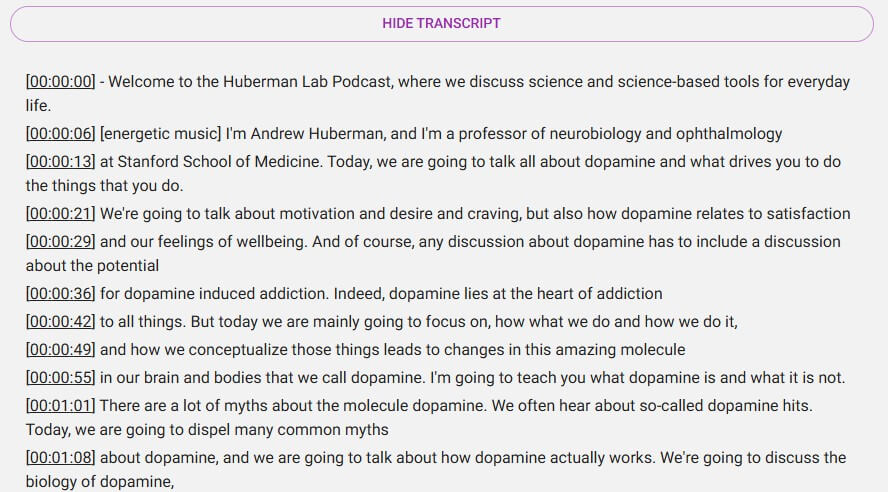
The best part of PodSnap.AI’s workflow is that it does not ask users to change too much. The basic flow is close to a newsletter. Follow the shows you care about, then let summaries arrive where you already check information.
That is a smart design choice. Many AI summary tools fail because they require too many extra steps. Copy the link, paste it into a tool, wait for processing, save the result, and then remember to read it. PodSnap.AI reduces that friction by watching for new episodes and sending the recap automatically.
The product is also useful because it supports both immediate updates and weekly digest-style consumption. Immediate summaries are better for news, markets, tech, and current events. Weekly digest delivery is better for users who want a calmer way to review their favorite shows.
- Busy podcast listeners: PodSnap.AI is a good fit for people who follow many shows but only have time to listen to a few full episodes each week.
- Professionals tracking industry podcasts: Founders, investors, marketers, analysts, and operators can use summaries to keep up with business, technology, finance, and startup podcasts.
- Students and lifelong learners: Educational podcasts can be easier to review when the main points, quotes, and transcript are available in one place.
- Newsletter writers and researchers: PodSnap.AI can help users monitor podcast conversations for themes, guest ideas, notable quotes, and emerging topics.
- Podcast fans who want better filtering: Some episodes deserve a full listen. Others only need a quick recap. PodSnap.AI helps users separate the two.
PodSnap.AI sits in a different lane from full podcast apps. Spotify, Apple Podcasts, Pocket Casts, and YouTube are mainly for listening. PodSnap.AI is mainly for deciding what deserves listening time.
It also differs from general AI summarizers. A general tool can summarize a pasted transcript or URL, but the user still has to do the work of finding and submitting each episode. PodSnap.AI’s advantage is the automated follow-and-deliver workflow.
Compared with podcast apps that include built-in AI summaries, PodSnap.AI’s main strength is inbox delivery. The main trade-off is that it is not a complete listening environment. Users who want playback, highlights, notes, episode chat, and listening history in one app may prefer a podcast app with AI features built in.
- Start by following only your highest-value podcasts: If you add too many shows at once, the inbox can become another queue to manage.
- Use audio summaries for shows you follow loosely: They are useful when you want the gist but do not need every detail.
- Save full listening time for episodes with strong summaries: If the recap has useful ideas, the full episode is more likely to be worth it.
- Check transcripts when accuracy matters: Summaries are helpful, but nuanced claims, technical advice, health topics, financial discussions, and direct quotes should be verified against the original episode.
- Use the YouTube summarizer for long video podcasts: It is a useful side workflow for shows that publish video-first episodes.
- PodSnap.AI’s biggest limitation is that summaries are still summaries: They can help users understand the main ideas, but they cannot fully capture tone, disagreement, humor, pacing, or the deeper context of a long conversation.
- The tool is also less useful for people who already listen to every episode of a small number of shows: If you only follow two podcasts and rarely skip episodes, the value is lower.
- Another trade-off is that AI summaries can miss nuance: This matters most for medical, scientific, legal, political, and financial content. PodSnap.AI can help users decide what to listen to, but it should not be treated as the final authority on sensitive topics.
- Inbox delivery is convenient, but it can also create clutter: If users follow too many podcasts, the tool works best when treated as a filter, not as a way to consume every possible show.
PodSnap.AI is best for podcast listeners who want to stay informed without spending hours inside every episode.
Its strongest value is the simple follow-and-deliver workflow: choose podcasts, receive text and audio summaries, scan the key ideas, and decide what deserves a full listen.
The main caveat is that PodSnap.AI is a podcast filtering tool, not a replacement for thoughtful listening. It is most useful when you use it to manage attention, catch important episodes, and keep up with more shows than your schedule would normally allow.
TAGS: Podcast
Related Tools:
Enhances audio recordings by removing unwanted sounds
Generates concise, human-reviewed summaries

Enhances online communication by eliminating background noise
Simplifies video and podcast editing

Turns customer calls into podcast-style audio summaries
AI tool that generates personalized daily podcasts