
Share this tool:
 |
Description:
Anyword is not really competing to be the smartest general chatbot. It is trying to be a marketing-specific AI layer that helps teams write, optimize, and judge copy based on likely performance before publishing. That makes it more useful for demand gen, paid social, lifecycle, product marketing, and web teams than for people who just want a general-purpose writing assistant.
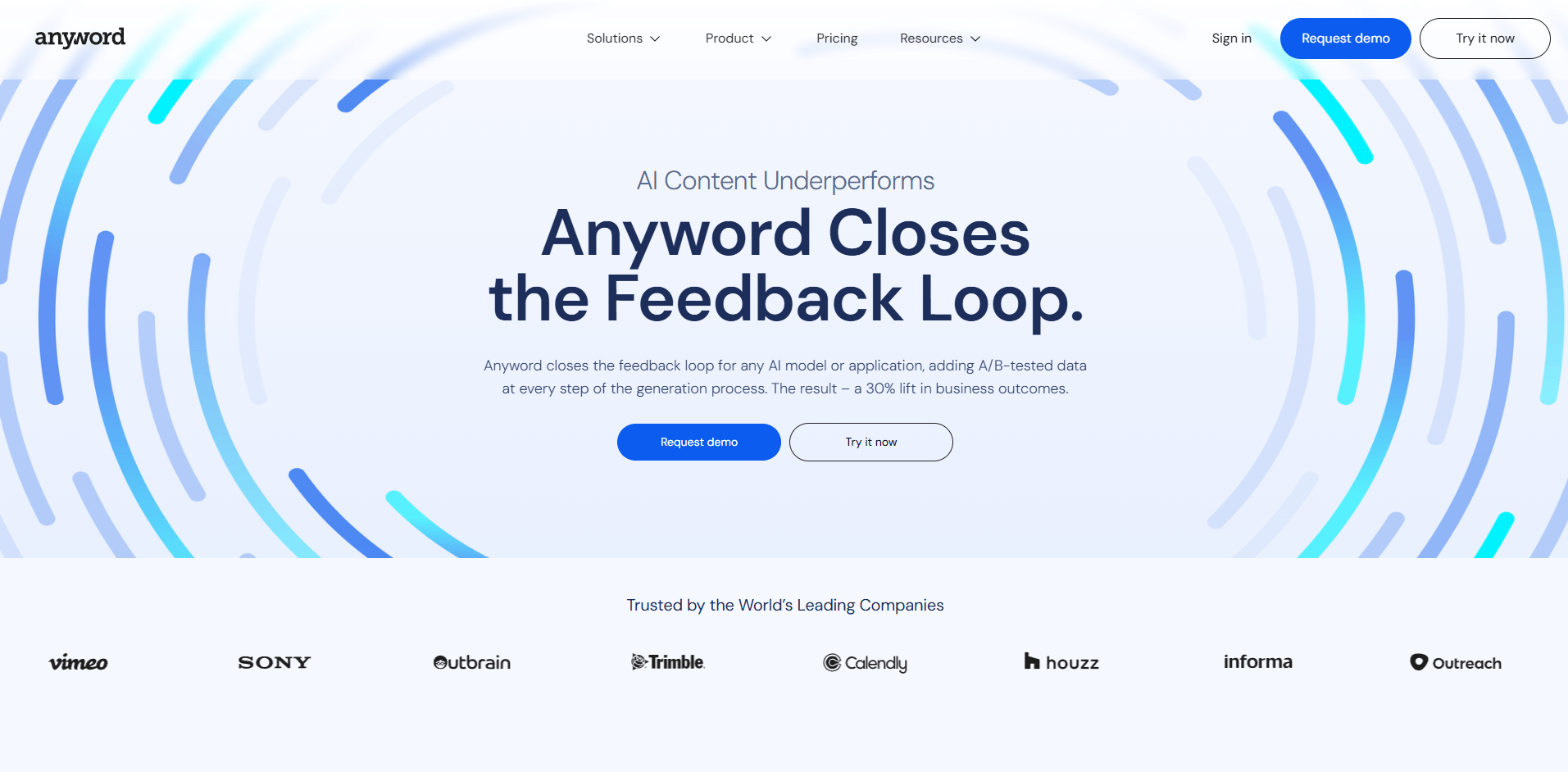
The clearest way to understand Anyword is as three connected systems.
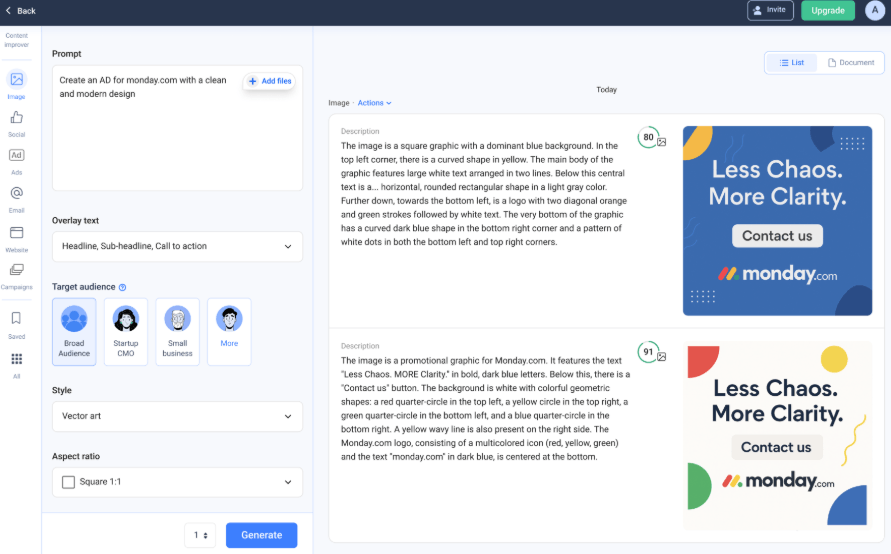
First, it is an AI writing environment for marketing content. The platform includes a data-driven editor, templates and prompts, blog workflows, and content generation tools built around common marketing outputs rather than open-ended chat alone.
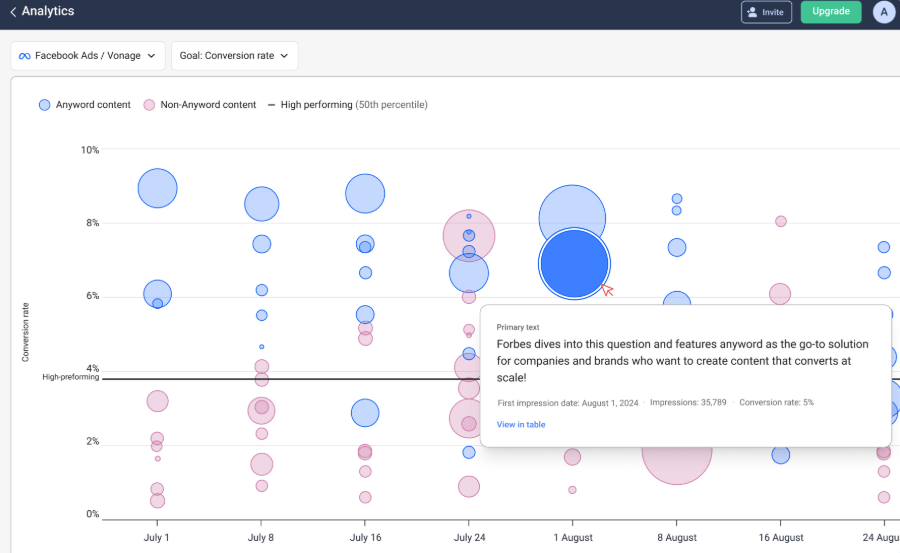
Second, it is a prediction and optimization layer. Anyword says its core differentiator is performance prediction: scoring content variations based on audience, goal, and channel, then helping teams choose stronger options before launch. On its homepage, the company says its prediction system identifies the better-performing variation with 82% accuracy, versus 52% for GPT-4o in its benchmark.
Third, it is a brand and data layer for marketing teams. Anyword lets teams centralize brand voice, audiences, messaging rules, and performance context, then use that inside the native product, browser extension, integrations, and API.
That combination is why Anyword feels different from a generic AI writer. It is less about “write me something decent” and more about “help me produce messaging that sounds like us and has a stronger chance of working.”
Scores content variants before publishing and is the main reason to choose Anyword over a general AI assistant.
Compares your published content against Anyword’s A/B-tested data set to surface improvement opportunities across channels.
Centralizes tone, guidelines, audiences, messaging, and reusable brand context so outputs stay more consistent.
Works with tools like ChatGPT, Gemini, Notion, Google Docs, Canva, LinkedIn, and more through integrations and the Chrome extension.
Personalizes site messaging and tests higher-performing variants for different visitors.
Offers API access, performance RAG, private models, custom integrations, SSO, and enterprise security controls for larger organizations.
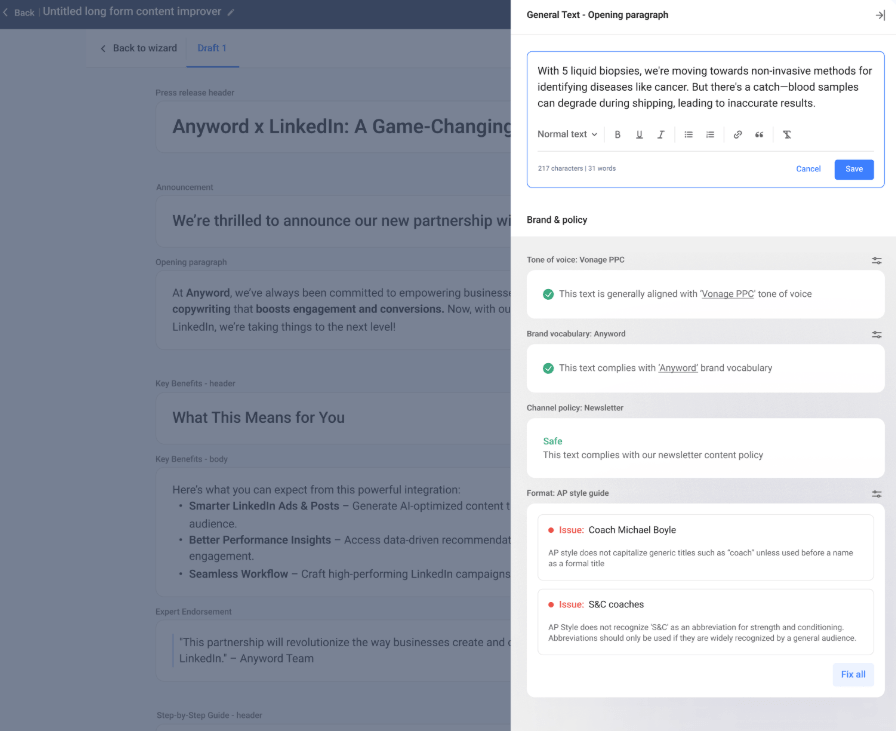
Anyword is strongest when copy quality is not enough by itself.
A lot of AI writing tools can generate acceptable first drafts. Anyword’s value starts when a team wants guidance on which message to run, how to align content with brand rules, how to reuse past campaign learning, and how to push AI outputs into live marketing systems. That is a much narrower but more practical promise.
This is especially useful in channels where small wording differences materially affect outcomes: ad copy, landing pages, email subject lines, social posts, product messaging, and website personalization. The platform’s language and product pages consistently point toward measurable GTM use rather than general creative writing.
In practice, Anyword looks more like a marketing operations tool than a blank chatbot.
The usual flow is: define brand context, set audiences and rules, generate or rewrite content, review prediction scores and performance suggestions, then push that work into the channels or tools your team already uses. If you are on higher tiers, you can go further by feeding historical campaign data, benchmarking against past copy, or using website automation and custom models.
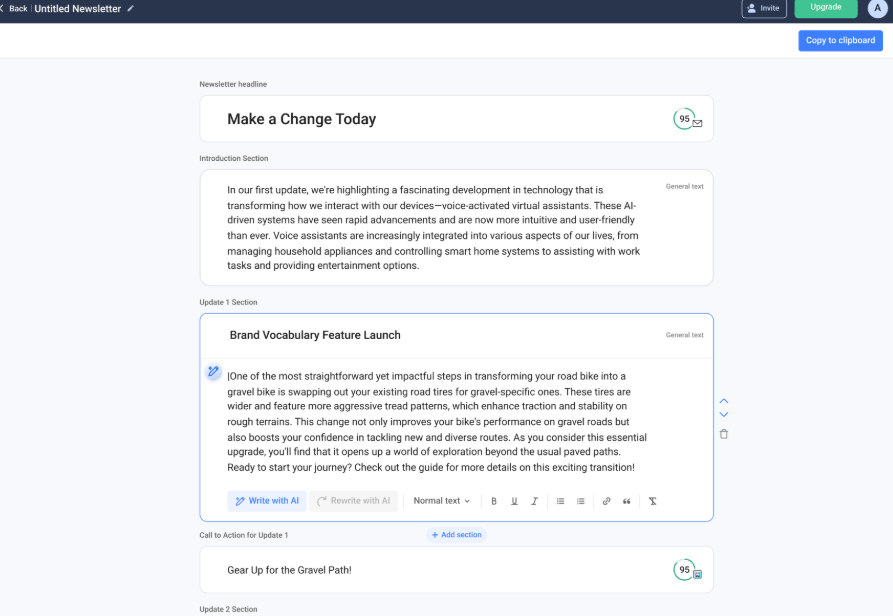
That workflow is one of Anyword’s best qualities. It gives marketers a more structured way to use AI than a normal assistant does. Instead of hoping the prompt is good enough, you get some system-level guardrails: brand voice, target audiences, scoring, and content intelligence.
The trade-off is that it is not the lightest or simplest tool for casual users. If all you want is a quick paragraph draft, ChatGPT or another general assistant may feel faster. Anyword becomes more worthwhile as soon as content performance, cross-team consistency, and repeatable workflows matter more than raw generation speed. This is an inference based on Anyword’s product design and positioning.
| Layer | What it does | Who it matters for |
|---|---|---|
| Data-driven Editor | Generates and scores copy variations before publishing | Solo marketers and teams doing day-to-day copy work |
| Content Intelligence | Compares live or published content with Anyword’s data set and surfaces lift opportunities | Teams optimizing existing campaigns and content libraries |
| Brand Voice | Stores brand rules, audience profiles, tone, and messaging context | Teams that care about consistency across writers and channels |
| Chrome Extension / Integrations | Brings Anyword into external writing tools and marketing platforms | Teams that do not want to stay inside one app |
| Website Automation | Personalizes website messaging and tests variants | Demand gen and web teams |
| API / Enterprise | Adds predictive scoring, RAG, private models, and custom integration options | Large companies and product teams building internal AI workflows |
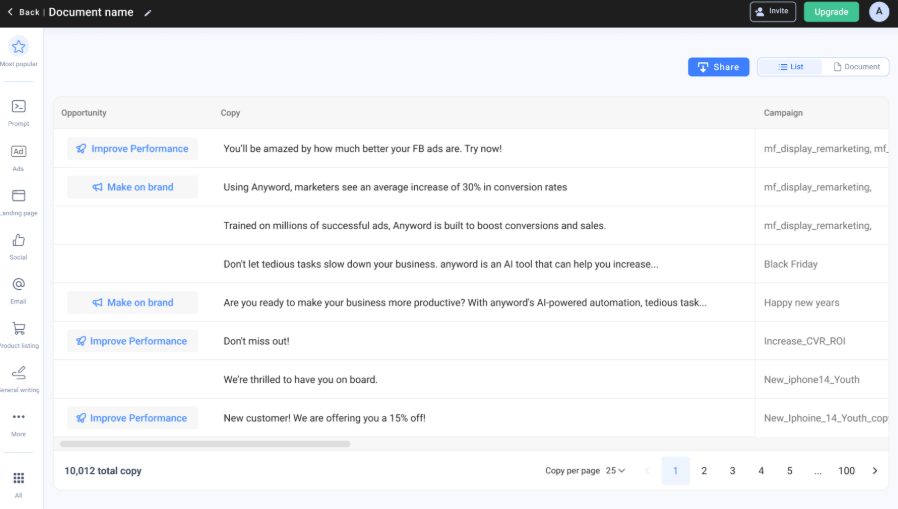
Anyword makes the most sense for:
- Performance-focused paid and lifecycle copy. This is probably the clearest fit, because scoring and variation testing matter more there than in long-form thought leadership.
- Brand-sensitive team writing. If multiple people are producing ads, email, landing pages, or social copy, the brand voice layer is genuinely useful.
- Marketing teams that already use other AI tools. Anyword is built to plug into external copilots and writing environments, not just replace them.
- Website messaging optimization. The website automation angle is one of the more practical differentiators in the stack.
- Enterprise GTM teams. The API, custom models, private model option, security posture, and role controls are clearly aimed at larger organizations.
Anyword is less compelling for pure long-form writing quality than it is for message optimization.
That does not mean it cannot write long-form content. It can, and it has blog-focused tooling. But the strongest reason to pay for Anyword is not that it writes prettier prose than every other AI writer. It is that it adds marketing structure around the writing. If your work is mostly essays, deep research, scripting, or broad creative ideation, its biggest advantages may feel underused. This is an inference from the product’s public positioning, plan structure, and feature emphasis.
There is also a natural trust question around performance scoring. Any prediction system can be useful without being magic. Teams should treat the score as decision support, not as a guarantee. Anyword clearly leans on this layer as its main differentiator, so whether that fits your workflow is the key product decision.
- Set up brand voice and audience context early. Anyword’s public materials make it clear that a lot of the platform’s value comes from using brand rules, copy banks, target audiences, and historical context rather than treating it as a blank writer.
- Use Anyword where wording changes have measurable consequences. Paid ads, email, landing pages, and website messaging are stronger first use cases than generic blog drafting.
- If your team already writes in ChatGPT, Docs, Notion, or Canva, start with the extension and integrations instead of forcing everyone into a new writing habit.
- For larger teams, the value is higher when you connect performance data and past campaigns. That is where custom models, benchmarks, and talking points start to matter.
- Anyword is specialized, and that is both its strength and its limitation.
- It is stronger than a general assistant when your problem is marketing performance. It is weaker as an all-purpose AI workspace. The platform’s best features also stack up more clearly on higher tiers, which means some of its most differentiated capabilities are not really the entry-level experience.
- There is also some product-surface sprawl now: editor, content intelligence, website automation, extension, integrations, API, business, enterprise, private models. That is good for serious teams, but it means the product is less immediately simple than tools that only do one thing. This is an inference based on the current public product structure.
Anyword is best understood as a marketing intelligence layer wrapped around AI writing. Its core advantage is not just generating copy, but helping teams create on-brand messages, compare options, and work with predictive performance signals before publishing. That makes it most valuable for paid media, lifecycle, web, product marketing, and larger GTM teams that care about measurable message quality, not just speed.
The main caveat is simple: if you do not need scoring, brand governance, channel intelligence, or marketing integrations, Anyword may feel heavier than necessary. But if you do need those things, it is one of the clearer purpose-built alternatives to using a generic AI assistant for marketing work.
TAGS: Copywriting Content Creation
Related Tools:
Generates and optimizes marketing content

Automates digital content creation
Versatile video editor that enhances production
Writing assistant that improves text clarity and translations

Generates SEO-friendly articles for niche websites

Simplifies copywriting on webpages