
Share this tool:
 |
Description:
Yuna AI is an AI-powered emotional wellness coach built for on-demand support, stress management, mood tracking, and guided skill-building. It sits in a careful middle ground: more structured than a general chatbot, but not a licensed therapist, medical device, or substitute for professional care. Yuna’s own notice says it is not meant to diagnose, treat, cure, or prevent any disease or condition, and is intended for users 18+.

Yuna’s strongest use case is everyday emotional support. It is designed for moments when someone wants to talk through stress, overthinking, low mood, workplace pressure, or a hard personal moment without booking an appointment.
The product is built around availability. Yuna describes the coach as available 24/7, with users able to connect by chat or voice without waitlists or scheduling. For individual users, that makes it useful as a quick emotional reset tool. For employers, the value is different: Yuna gives teams access to private AI-guided support while giving organizations aggregated well-being trend data rather than individual conversation access.
That last point matters. Mental wellness tools can become uncomfortable fast if employees think HR can see what they say. Yuna states that it does not expose individual conversations to HR, while workplace leaders can view usage, engagement, and aggregated team well-being trends.

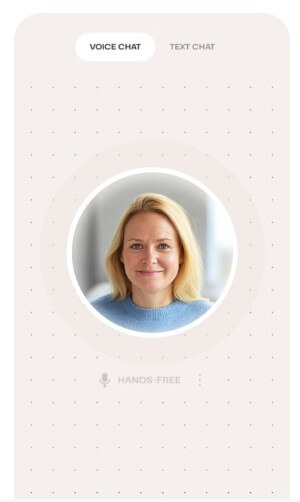
Users can talk with Yuna through chat or voice when they need support, not only during office hours.
Yuna includes voice dialogues, which can feel more natural for users who process emotions better by speaking than typing.
Yuna helps users monitor emotions and identify patterns over time, which is useful for self-awareness rather than one-off venting.
The platform includes short evidence-backed sessions, including DBT-inspired support, to help users recharge and build resilience.
For employers, Yuna provides real-time usage, engagement, and aggregate team well-being trends in one platform.
Yuna says it can pause conversations and provide crisis resources when language suggests potential crisis risk.
Yuna’s workflow is simple by design. A user starts by sharing how they feel, then chooses whether they need support or more active coaching. Yuna says it customizes sessions around the user’s current emotions and goals, which makes the experience feel closer to guided reflection than a blank chatbot window.
That is the right approach for this category. A mental wellness app should not require complex setup. The user may open it while stressed, tired, or emotionally overloaded. The less friction, the better.
For individual users, the app is likely most useful as a daily or weekly check-in habit. For workplace users, the bigger workflow is organizational: employees receive private support, while leaders get broader well-being signals. This is not a replacement for an employee assistance program or licensed care, but it can fill a lower-friction support layer between “I’m fine” and “I need formal help.”

Yuna puts a lot of emphasis on privacy, which is necessary for this type of product. The company says conversations are encrypted and private, and its product page says individual conversations are not shared with an employer.
There is also an important nuance. Yuna’s site markets HIPAA-aligned privacy and SOC 2 Type II certification, while its Terms of Service state that Mindframe Inc. is not a HIPAA “Covered Entity” because Yuna is a mental wellness tool rather than a healthcare provider. The same terms say the company has implemented a security and privacy framework designed to align with HIPAA safeguards.
That distinction is worth keeping in the review. It is stronger to say Yuna is security-conscious and HIPAA-aligned than to treat it like a clinical healthcare provider. The privacy policy also says Yuna encrypts personal data at rest and in transit, uses a dedicated environment for sensitive personal data, and conducts security reviews, while still noting that no security measure can be guaranteed perfect.
| Use Case | Why Yuna Fits |
|---|---|
| Daily stress support | Good for short, private conversations when users need help calming down or sorting thoughts. |
| Workplace well-being benefits | Useful for companies that want scalable support without exposing individual employee conversations. |
| Mood tracking and reflection | Helps users notice emotional patterns instead of treating every session as a one-off chat. |
| Skill-building exercises | Works well for users who want guided techniques, not just open-ended conversation. |
| Low-barrier coaching | Better suited to everyday stress and habit support than clinical diagnosis or treatment. |
The main limitation is also the most important one: Yuna is not therapy. It may be helpful for stress, reflection, and emotional skill-building, but it should not be positioned as a replacement for a licensed clinician, especially for crisis care, severe symptoms, trauma treatment, diagnosis, medication questions, or complex mental health conditions. Yuna’s own product page states that it is not a licensed therapist or medical provider.
The second limitation is trust. Even with encryption and privacy policies, users are sharing sensitive emotional data with an AI system. Some people will be comfortable with that. Others may prefer a human professional, a peer support group, or a tool that stores less personal context.
The third limitation is emotional nuance. AI coaching can respond quickly and calmly, but it can still miss context, over-reassure, repeat patterns, or misunderstand what a person is truly asking for. That matters more in mental wellness than in a normal productivity app.
- Use Yuna for specific emotional moments rather than vague check-ins: “I’m anxious about a meeting and need help calming down” will usually lead to a more useful session than “I feel bad.”
- Use the mood-tracking side consistently: The value grows when users can see patterns over time.
- For employers, explain the privacy model clearly before launch: Adoption will depend on whether employees believe their individual conversations stay private.
- Do not use Yuna as the only support option: It works best as a first layer of support, not the whole well-being strategy.
Yuna AI is strongest as an always-available emotional wellness coach for everyday stress, reflection, mood tracking, and workplace well-being support.
It is best for individuals who want low-friction guidance and organizations that want scalable support without giving HR access to private conversations.
The main caveat is serious but clear: Yuna is not a therapist, not a medical service, and not a substitute for professional care when clinical support is needed.
TAGS: Self Improvement
Related Tools:

Generates personalized prayers

Analyzes skin health and provides assessments for various skin conditions.
Offers virtual health assistance and expert medical consultations

Provides scientific and health-related answers
Facilitates English language learning

Helps families plan meals and organize household needs