

Share this tool:
 |
Description:
Sequenzy is an AI-powered email marketing platform built with SaaS and developer-first teams in mind. It brings campaigns, automations, transactional emails, smart segments, billing-event triggers, AI-generated sequences, and API access into one system. The main idea is practical: instead of stitching together one tool for newsletters, another for transactional email, another for billing-triggered messages, and another for AI copy, Sequenzy tries to make email operations work from one place.
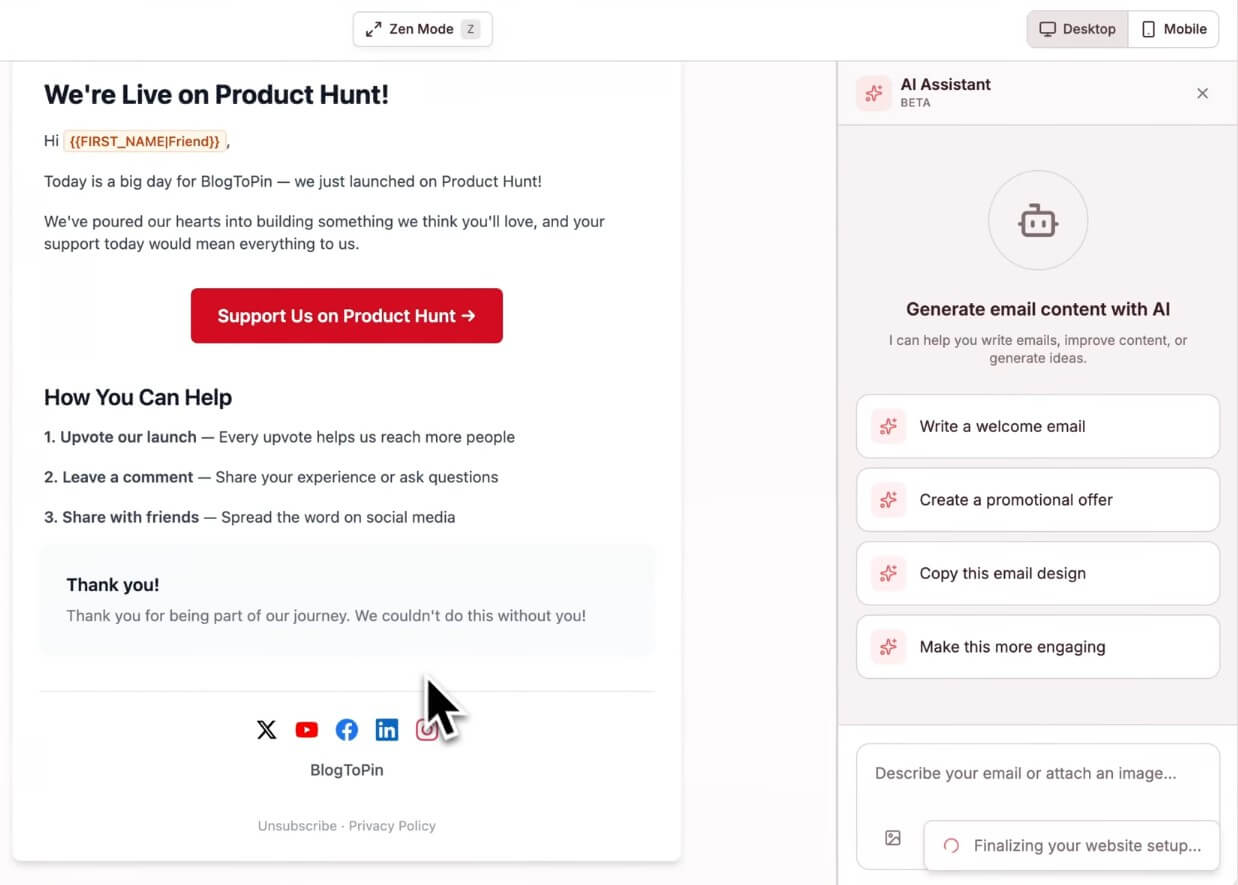
Sequenzy is strongest when email is tied to product and revenue behavior. That is the clearest difference between it and a general newsletter platform.
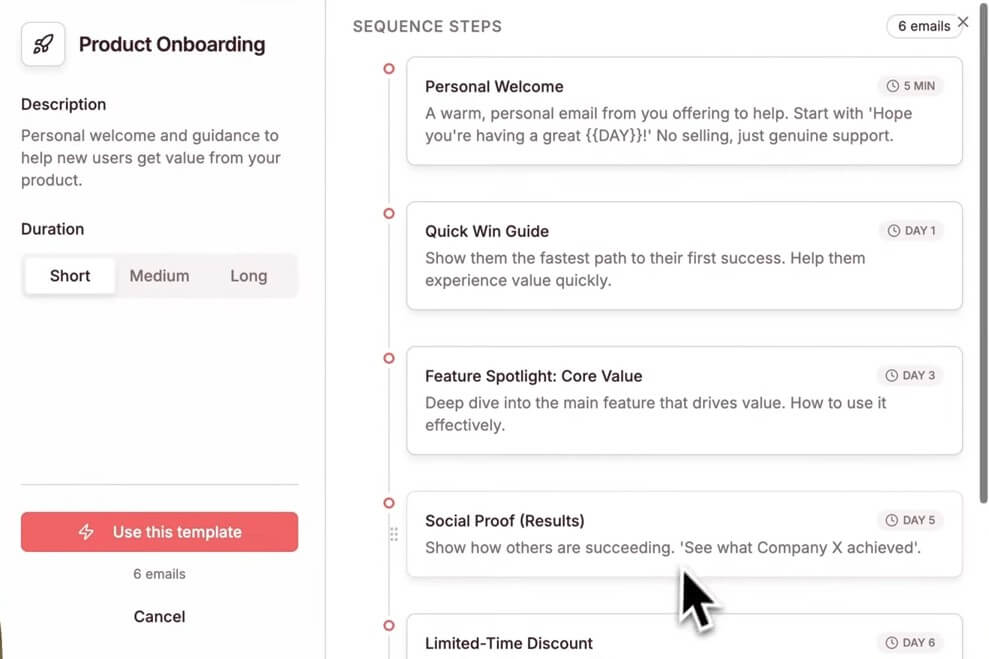
A SaaS team does not only need to send announcements. It needs trial onboarding, activation nudges, failed payment recovery, cancellation follow-ups, upgrade emails, product updates, usage-based segmentation, and transactional messages. Sequenzy’s official materials position it around that exact mix: campaigns, automations, transactional email, AI-powered sequences, Stripe integration, MCP for AI assistants, smart segments, and a developer-friendly API.
That makes it more useful for product-led teams than for creators who only send weekly newsletters. The platform is at its best when the customer journey has stages, triggers, and business outcomes attached to it.
| Area | What It Helps With |
|---|---|
| AI Sequences | Generate multi-step email flows for onboarding, win-back, dunning, and campaigns |
| Campaigns | Create and send one-off email campaigns |
| Transactional Email | Send product and account emails through a developer-friendly API |
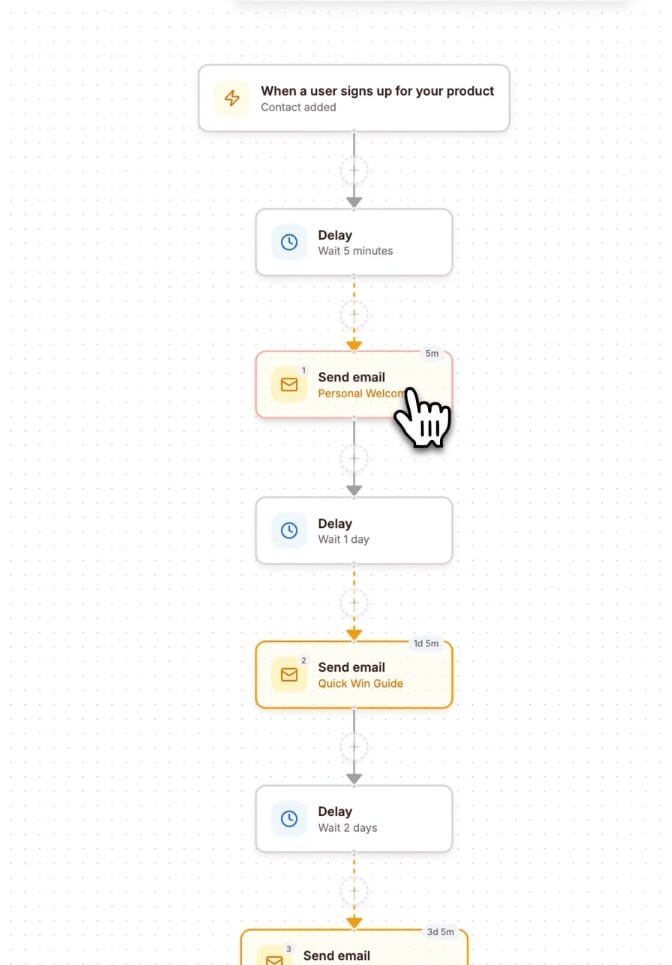
| Automations | Build workflows based on subscriber behavior and events |
| Smart Segments | Target users by attributes, activity, billing status, or engagement |
| Billing Integrations | Trigger emails from Stripe, Paddle, Lemon Squeezy, and other payment events |
| MCP Agent Access | Let AI tools manage campaigns, subscribers, automations, and reports |
| Analytics and Attribution | Track email performance, goals, and revenue impact |
The most interesting part of Sequenzy is not just that it has AI writing tools. Many email platforms now have some form of AI copy generation. Sequenzy goes further by exposing email marketing operations through MCP, so compatible AI agents can manage campaigns, subscribers, sequences, automations, and analytics through conversation.
That means a user can ask an AI agent to create an onboarding sequence, draft a product update, tag a group of high-value subscribers, build a win-back flow, or pull campaign stats. Sequenzy says its MCP layer includes 30+ tools across sequences, campaigns, subscribers, templates, and reporting.
This is useful because email work often involves many small dashboard tasks. You create a segment, write copy, set delays, choose triggers, test the email, check stats, and adjust. Sequenzy’s agent workflow is designed to compress those steps. The dashboard still matters for review and oversight, but the AI layer can handle more of the setup work.
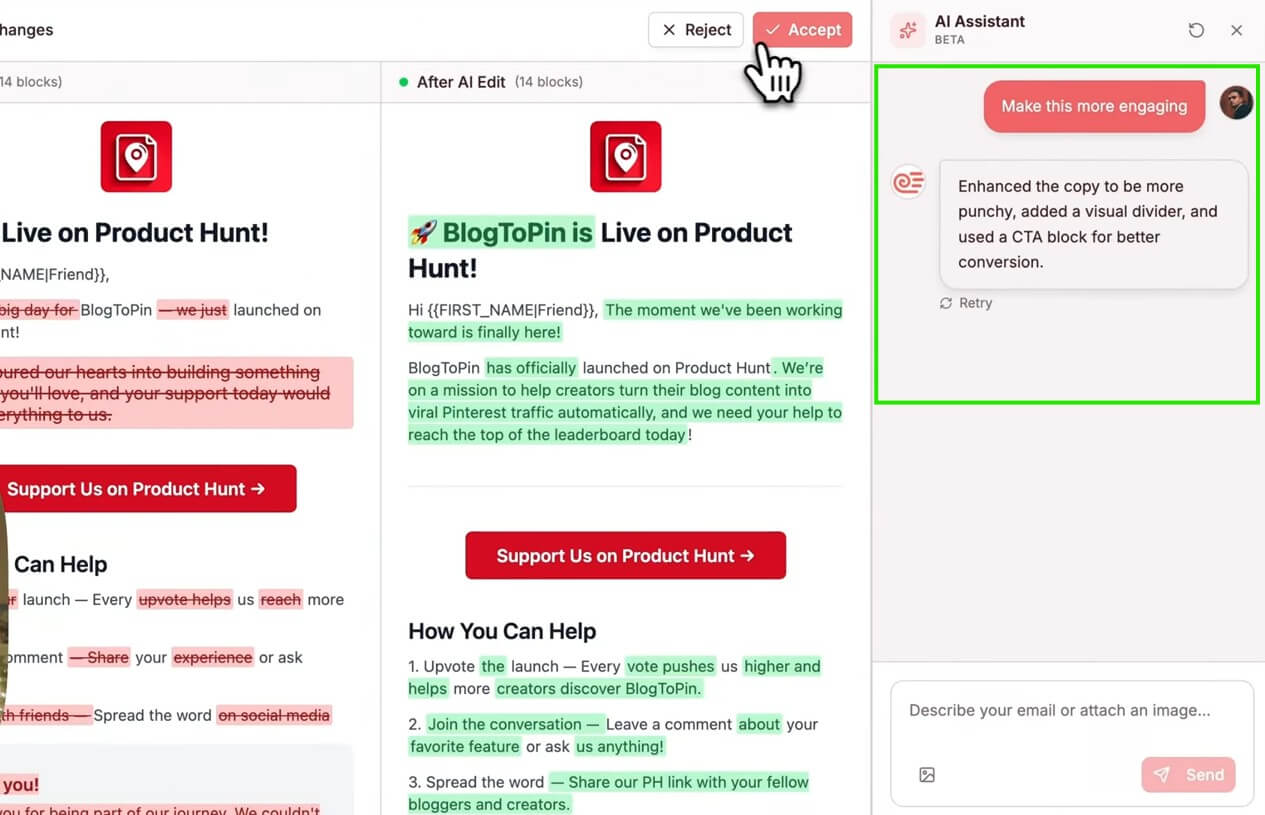
The important caveat: agent-driven marketing still needs human review. Letting an AI draft or configure emails is helpful. Letting it send sensitive revenue, billing, or cancellation messages without checks can create problems. Sequenzy’s value rises when teams treat the agent as an operator that prepares work, not as a manager that should run unchecked.
Sequenzy’s SaaS focus shows most clearly in its billing-trigger support. Its public facts page says it supports billing-event-driven emails for Stripe, Paddle, and Lemon Squeezy, including failed payments, new subscriptions, cancellations, upgrades, downgrades, and trial events.
That matters because billing events are often where generic email tools feel awkward. A failed payment email is not the same as a newsletter. A trial user who has not activated needs a different sequence from a paying user who downgraded. A cancellation flow should not sound like a generic promotion.
Sequenzy is built closer to those lifecycle moments. For SaaS teams, that can reduce the need for multiple tools or custom glue code.
Another practical strength is that Sequenzy combines transactional email with campaigns, automations, segmentation, and lifecycle marketing. Its official facts page states that it handles transactional email APIs and templates alongside marketing workflows.
This is helpful for smaller SaaS teams that do not want their email stack split across too many platforms. Product emails, lifecycle emails, and marketing emails can be managed with shared context. Developers still get API access, while marketers and founders get a more accessible campaign and automation layer.
That mix is not for everyone. Larger teams may prefer separate best-in-class tools for each function. But for lean SaaS teams, fewer moving parts can be a real advantage.
Sequenzy is a strong fit for SaaS founders who need onboarding and trial-to-paid flows without building a full lifecycle system from scratch. It is also useful for product-led growth teams that want to segment users by behavior, billing status, or engagement.
Developer tool companies may like it because it supports API workflows, MCP access, GitHub-related product update use cases, auth integrations, webhooks, and transactional email.
It also fits startups that need dunning emails, cancellation follow-ups, upgrade prompts, reactivation campaigns, and product announcements tied to real user data. This is where Sequenzy feels more focused than a broad small-business email tool.
Sequenzy’s biggest strength is also its main limitation: it is clearly built around SaaS and product-led email. Its own public limitations note that SMS is not a core product area, landing pages are for focused signup and offer capture rather than full website building, and ecommerce merchandising is not its primary focus.
Teams that mainly need ecommerce promotions, visual storefront flows, SMS-heavy campaigns, or creator newsletters may find the SaaS focus too narrow. Sequenzy can still send campaigns, but its sharper value comes from lifecycle automation, billing triggers, and developer-friendly workflows.
There is also setup discipline involved. AI can draft a sequence, but good lifecycle email still depends on clean segments, accurate events, clear goals, and careful review. Poor data will produce poor automation, even in a capable tool.
Sequenzy is best for SaaS teams that want email marketing, transactional messages, lifecycle automation, billing triggers, and AI-assisted campaign operations in one focused platform.
Its strongest edge is the blend of SaaS-specific workflows with MCP-powered AI agent control.
The main caveat is fit: it makes the most sense for product-led and developer-first teams, not businesses that only need basic newsletters or ecommerce promotions.
TAGS: Marketing
Related Tools:
Automates sales and lead generation

Email marketing automation tool

Automates multi-channel sales

Streamlines data analysis and visualization

Generates alt text, titles, captions, and descriptions for images

Enables artists to create intricate 3D models