
Share this tool:
 |
Description:
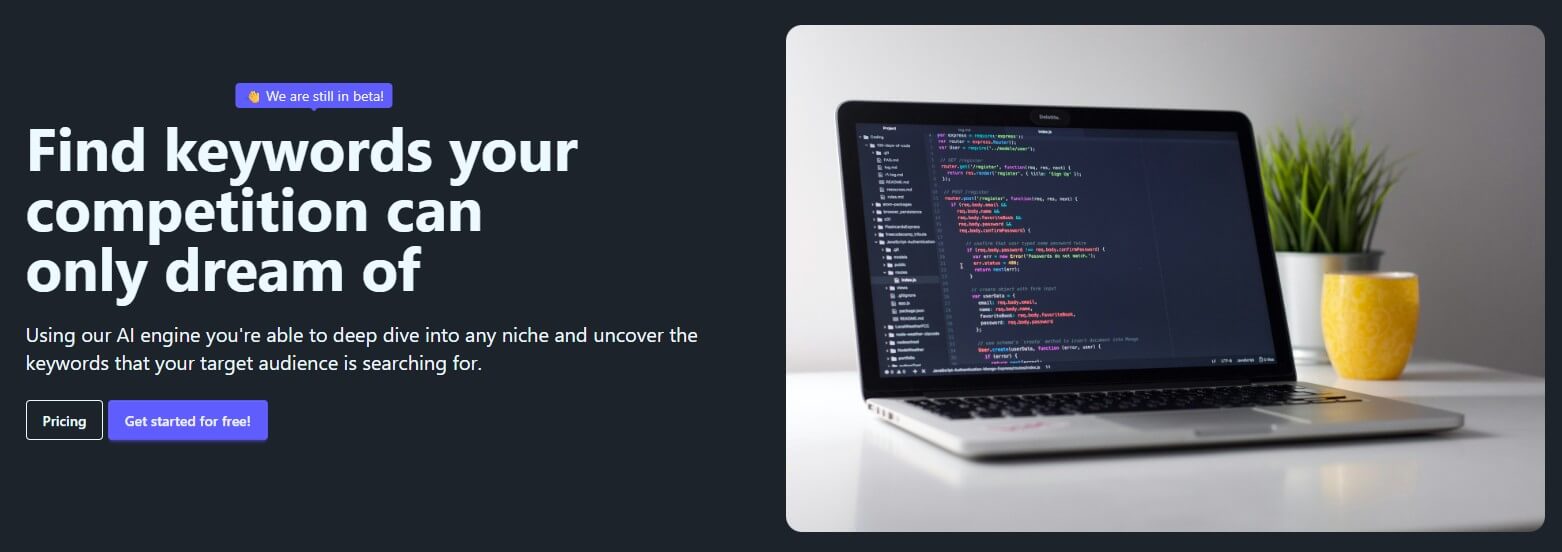
Keywrds.ai is an AI-powered SEO research tool built around one practical problem: finding the questions, keywords, topics, and outlines that can feed a stronger content strategy. It is not trying to be a full writing suite or an enterprise SEO dashboard. Its strongest value is earlier in the workflow, where marketers need to move from a seed idea to usable keyword data, People Also Ask questions, topic clusters, and content angles.
| Feature | What it does | Why it matters |
|---|---|---|
| AI Keyword Generation | Starts from a seed keyword and expands it into related keyword ideas, topics, and questions | Helps users move beyond obvious head terms into richer content opportunities |
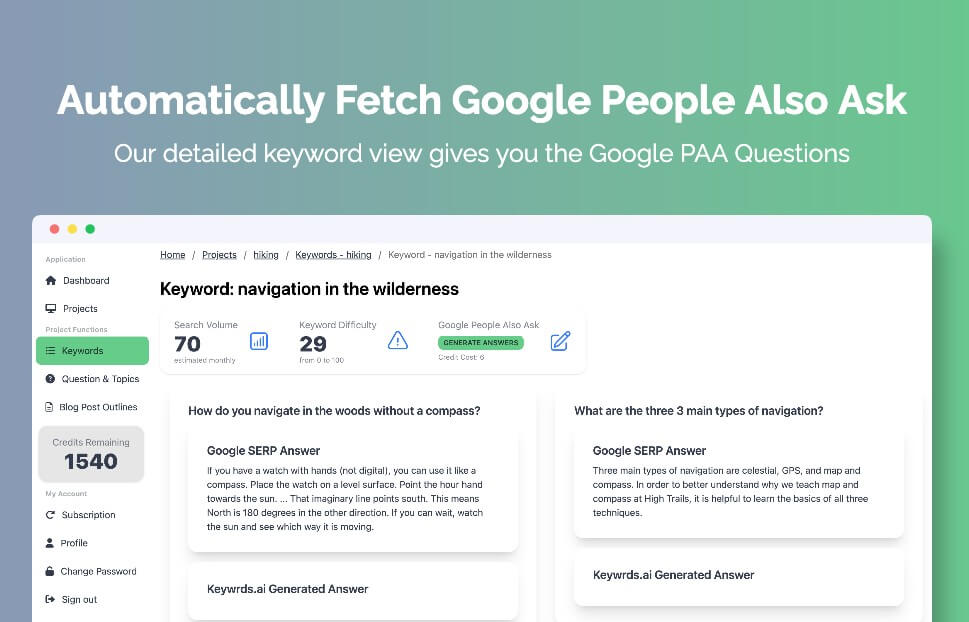
| People Also Ask Research | Scrapes Google People Also Ask questions from keyword detail pages | Useful for FAQ sections, answer blocks, and content expansion |
| AI-Generated Answers | Generates multiple answers for People Also Ask questions | Gives writers a starting point for concise, search-friendly responses |
| Blog Post Outlines | Builds article structures from a main keyword, extra keywords, and an article style such as informational, listicle, how-to, or product review | Turns keyword research into a more usable writing brief |
| Niche Expander | Turns a broad industry into related sub-niches and topic directions | Useful when a site has run out of obvious content ideas |
| Google Search Console Opportunity Analysis | Connects Search Console data to content actions, including page improvement opportunities, new content ideas, and AI-powered recommendations based on real query and page signals | Helps existing sites prioritize content opportunities based on actual search performance |
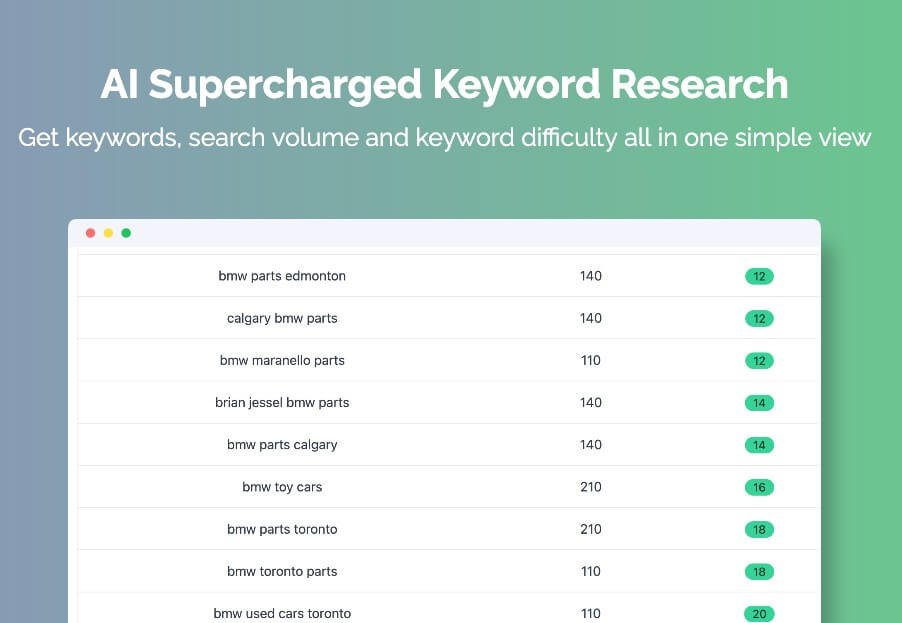
Keywrds.ai starts with a seed keyword and uses its AI engine to generate keyword ideas, questions, topics, and blog post outlines. The current official homepage says generated keywords can include estimated monthly search volume, Google People Also Ask questions, and keyword difficulty, which makes it more useful than a plain brainstorming tool.
The product’s current model positioning also matters. Keywrds.ai now describes its engine as GPT-4o-mini powered, which is a change from some older third-party listings that reference earlier GPT naming. For accuracy, the official site is the safer source here.
The simplest way to understand the platform is this: Keywrds.ai helps you build the research layer before you write. It gives you keyword possibilities, search-intent clues, question-based opportunities, and article outline structure. It can generate answers for Google People Also Ask questions, but its own FAQ says the platform currently focuses on keyword research and topic ideation rather than writing complete articles for you.
Keywrds.ai is strongest when you are stuck between “I know the niche” and “I know what to publish next.”
That is a common SEO problem. A business may know it wants to rank for “email marketing,” “lawn care,” “AI transcription,” or “home gym equipment,” but that broad topic is not enough. The real work is finding subtopics, pain points, questions, comparisons, and angles that match what people search for.
Keywrds.ai leans into that gap. Its homepage says users can generate hundreds of topics around a single keyword, then use those ideas to build topical coverage. It also frames its keywords around how people search in natural language, not just stiff exact-match phrases. That makes it a good fit for blogs, affiliate sites, niche publishers, SEO consultants, SaaS content teams, and small businesses that need more content direction but do not want to start every brief from scratch.
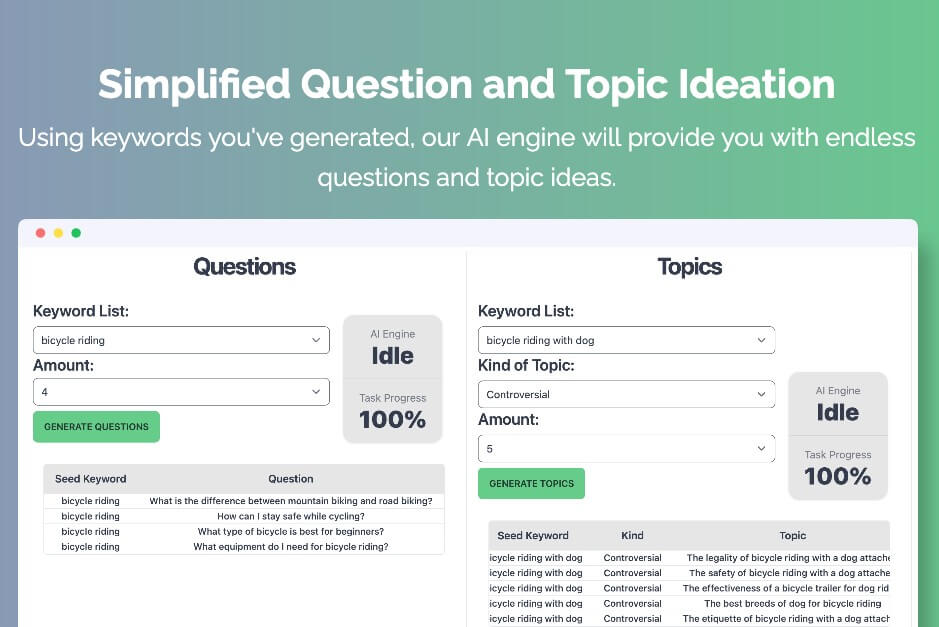
The core workflow is straightforward: create a project, enter a seed keyword, generate keyword ideas, review keyword data, inspect questions, then move the best opportunities into outlines or content planning.
The blog post outline workflow shows the platform’s practical style. After creating a project, users can open the outline generator, choose a main keyword, add extra keyword inputs, and select the type of article they want. That is useful because not every keyword should become the same kind of content. A how-to article, product review, and listicle all need different structure.
The Niche Expander adds a broader discovery layer. Instead of going directly from one keyword to one article, it helps users map adjacent niches and subtopics. That is helpful for building topical authority because strong SEO content plans usually need clusters, not isolated posts.
The newer Search Console feature is the most interesting workflow upgrade. It moves Keywrds.ai closer to ongoing content optimization, not just fresh keyword discovery. The feature is designed to connect a Google Search Console property, sync recent performance data, and surface opportunities based on pages and queries that already show demand.
Keywrds.ai should be treated as a research and planning assistant, not as an autopilot publisher.
Its People Also Ask answers can help writers move faster, especially for short FAQ-style responses. But those answers still need checking. The same is true for outlines. An AI-generated outline can provide structure, but it does not know your customer interviews, product positioning, brand voice, internal expertise, or conversion goal unless you bring that strategy into the final piece.
The best use is to let Keywrds.ai widen the idea pool, then apply human judgment. Pick topics that match business value. Merge overlapping keywords. Remove thin questions. Add original examples. Rewrite AI-generated answers so they sound like your site, not like generic SEO filler.
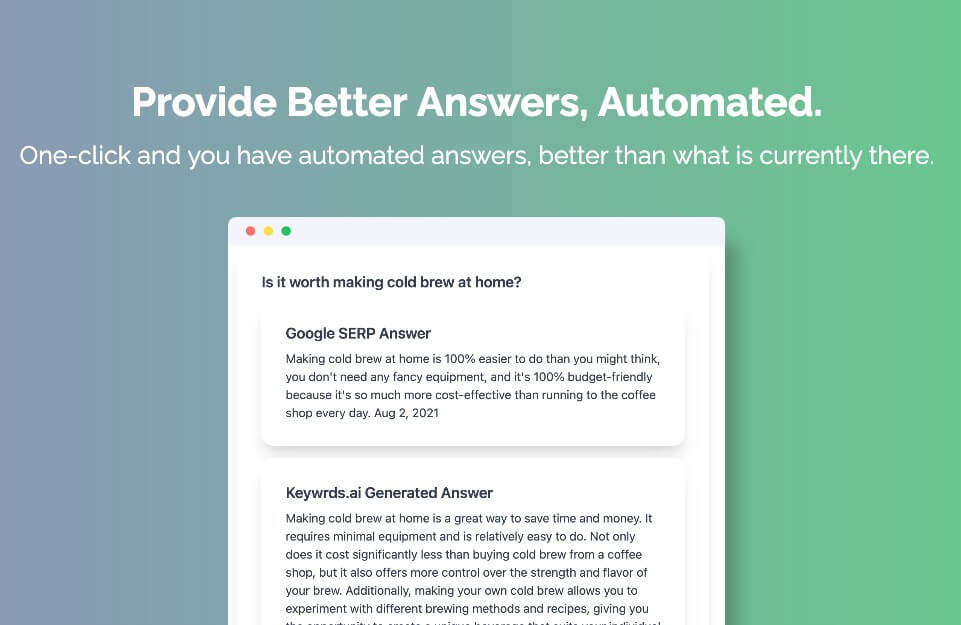
Keywrds.ai works best for content teams that need a steady supply of topic ideas and article directions.
It is especially useful for niche site builders who want long-tail keyword coverage, affiliate marketers looking for question-led content angles, agencies preparing content plans for clients, and SaaS teams building educational topic clusters around product categories.
It also fits small businesses that do not have a large SEO team but still need practical content direction. The Search Console analysis feature makes it more useful for existing sites, because it can work from search demand the site is already earning rather than only guessing from seed keywords.
It is less ideal for teams that mainly need backlink analysis, technical SEO audits, rank tracking, or a polished long-form content editor. Keywrds.ai sits closer to keyword discovery and content planning than full SEO operations.
- Start broad, then narrow quickly. Use a seed keyword to explore the space, but do not publish from the full list. Group ideas by intent, audience stage, and business value.
- Use People Also Ask data for answer sections, but avoid stuffing every question into one article. Some questions deserve short FAQ answers. Others deserve their own page.
- Use the Niche Expander when your site feels tapped out. It is better for discovering adjacent content lanes than for final keyword selection.
- Use Search Console Opportunity Analysis for existing sites before chasing brand-new topics. Queries where you already get impressions can be easier to improve than topics where your site has no traction.
The main limitation is scope. Keywrds.ai is useful for finding and shaping content opportunities, but it is not a complete SEO platform. It does not appear positioned as a full replacement for technical SEO tools, backlink databases, site crawlers, or advanced analytics suites.
The second limitation is that AI-generated ideas can still overlap. Keyword expansion tools often produce many related phrases that look different but serve the same intent. Users still need to consolidate topics to avoid building several pages that compete with each other.
The third trade-off is editorial depth. Keywrds.ai can help you identify what people ask and what topics to cover, but the final content still needs expertise, accuracy, examples, and a clear point of view.
Keywrds.ai is best for SEO users who need better keyword discovery, question research, topic expansion, and content outline planning without turning the process into a heavy enterprise workflow. Its strongest features are AI keyword generation, People Also Ask mining, niche expansion, outline creation, and the newer Google Search Console opportunity layer. The main caveat is that it works best as a content strategy accelerator, not a replacement for human editorial judgment or a full SEO suite.
TAGS: Content Creation
Related Tools:

Analyze information, generate code, and complete complex tasks

Creates marketing copy and content from short prompts
Streamlines content creation and scheduling

Pproduce engaging videos using customizable templates
Simplifies the creation of professional-quality video

Creates SEO-optimized articles