

Share this tool:
 |
Description:
AutoBlogging Pro is an AI content automation tool for people who want to produce blog articles at scale and push them into a publishing workflow with less manual work. Its core promise is straightforward: generate SEO-optimized articles, add structure and featured images, then publish them to a connected blog, especially WordPress. That makes it more of a content operations tool than a pure writing assistant.
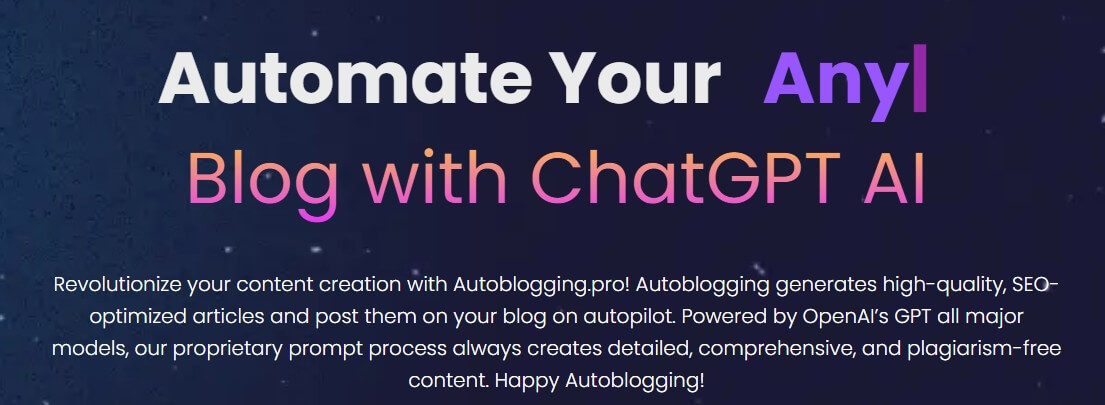
AutoBlogging Pro combines AI article generation with blog setup, keyword management, project limits, and automated publication. The platform says it uses OpenAI’s GPT models to create comprehensive, readable articles and includes a WordPress plugin for publishing generated posts directly to a site.
The basic workflow has three parts:
| Layer | What it does | Why it matters |
|---|---|---|
| Article generation | Creates blog posts from topics, keywords, and project settings | Speeds up first-draft production |
| SEO structure | Adds headings, bullets, paragraphs, targeted keywords, and featured images | Helps posts look closer to publish-ready content |
| Publishing automation | Connects to WordPress through a plugin and can support broader posting workflows | Reduces copy-paste work for site owners |
That structure is the main reason to consider the tool. You are not just asking a chatbot to write an article. You are setting up a system that can create and deliver blog posts into a website workflow.
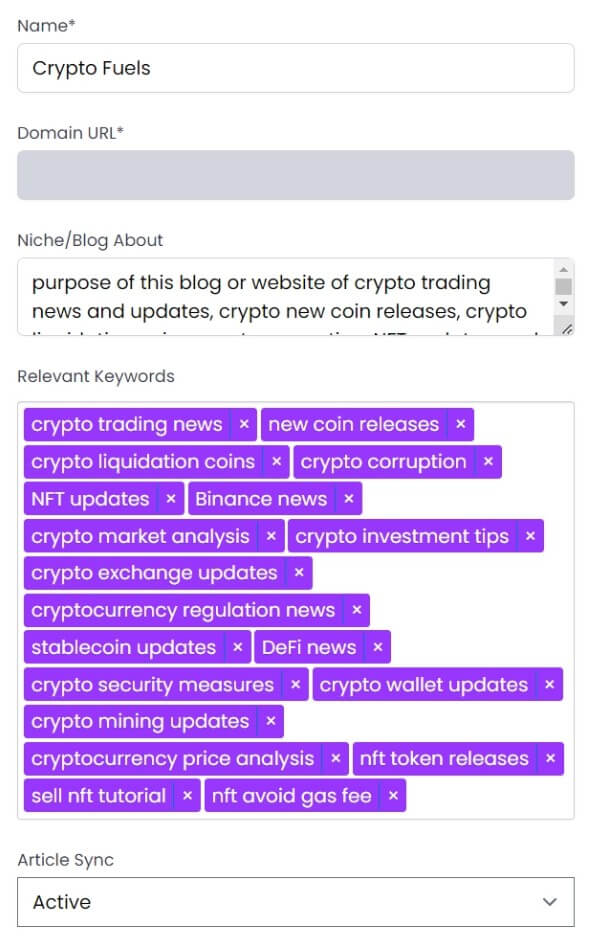
AutoBlogging Pro is strongest for users who already know their niche, keywords, publishing schedule, and site structure. It is not a strategy tool that will magically build a content business from nothing. It works best when the user brings direction: target topics, affiliate categories, product clusters, local service pages, informational blog ideas, or news-style content angles.
The WordPress plugin is the most practical part of the product. AutoBlogging Pro’s site describes a setup process where users create a project, add a domain, describe the blog, manage keywords, install the plugin, connect it to the project, and configure plugin settings. That is useful because many AI writing tools stop at the document. AutoBlogging Pro tries to keep going until the content reaches the site.
The tool also has clear appeal for niche bloggers, affiliate marketers, local businesses, and agencies managing repeatable content campaigns. Its official use cases include news aggregation, niche blogging, product reviews, and content curation. Those are exactly the workflows where automation saves time, as long as the final content still gets reviewed and improved.
| Feature | What it does | Why it matters |
|---|---|---|
| AI Article Generation | Uses GPT-based models to create long-form blog content from user-defined project and keyword inputs | Helps users produce first drafts faster |
| WordPress Plugin | Connects a WordPress site to an AutoBlogging Pro project and publishes generated content directly | Reduces manual transfer from AI draft to website |
| SEO-Oriented Formatting | Adds structured headlines, bullet points, paragraphs, targeted keywords, and featured images | Gives articles a more usable publishing shape |
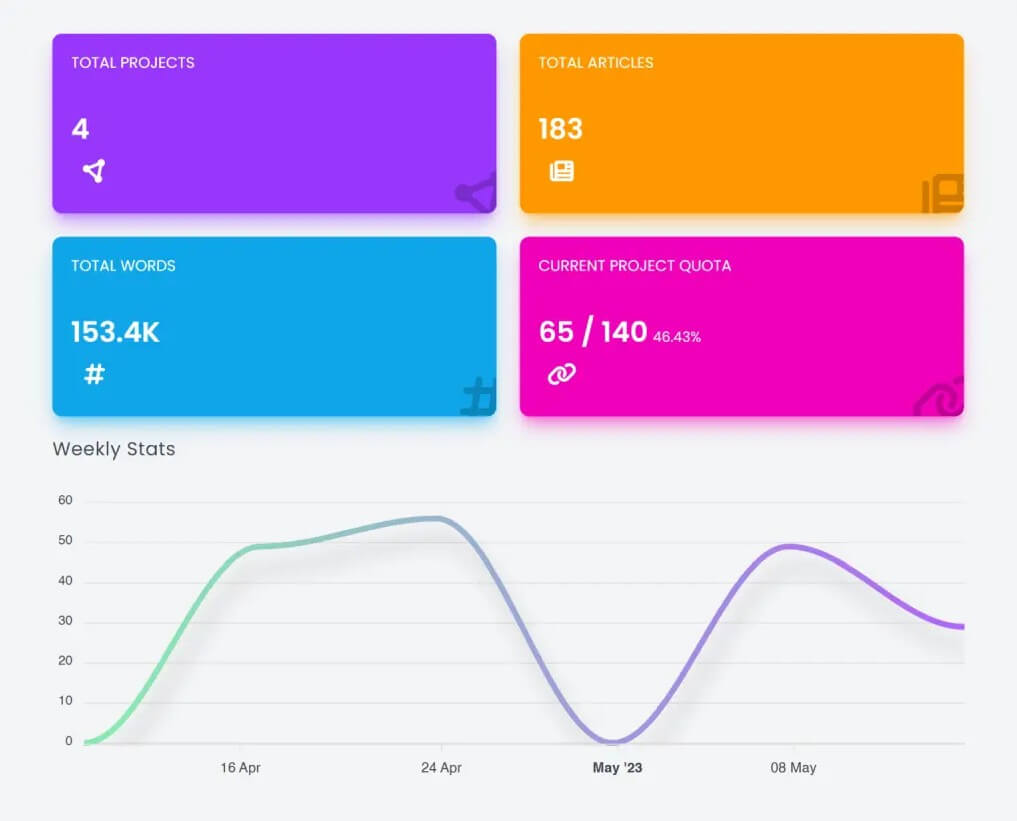
| Keyword and Project Controls | Lets users add a domain, provide a blog description, manage keywords, and set article generation limits | Helps separate different sites, projects, or campaigns |
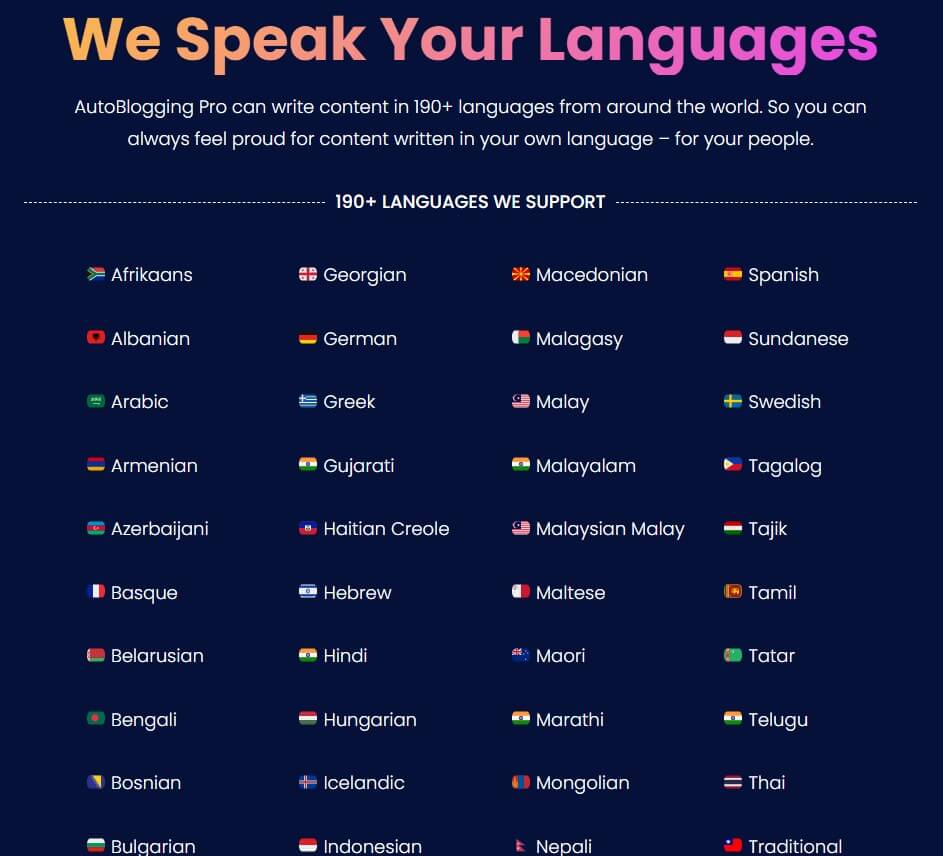
| Multilingual Content | Lists broad language support across public pages | Can support multilingual blog workflows, but users should verify specific language needs inside the product |
| SEO Plugin Support | Can detect major SEO plugins and fill relevant fields for tools such as SEO Press, All in One SEO, Yoast SEO, Rank Math, and SEO Framework | Helps generated posts fit into existing WordPress SEO setups |
The workflow is simple in concept, but it requires setup discipline. You register, verify your email, add an OpenAI API key, create a project, add a domain, describe the blog, manage keywords, and connect WordPress through the plugin.
That setup is not hard, but it is not the same as opening a blank AI chat and typing “write me a blog post.” AutoBlogging Pro is closer to a content machine. The quality of that machine depends on inputs: niche clarity, keyword quality, topic selection, internal linking plan, editorial standards, and publishing rules.
For a single article, a general AI writing tool may be easier. For repeated publishing across one or more websites, AutoBlogging Pro starts to make more sense.
AutoBlogging Pro leans heavily into SEO, but users should be careful with the word “autopilot.” Google’s guidance says generative AI can help with research and structure, but using automation to generate many pages without adding value may violate its spam policy on scaled content abuse. Google also says its systems aim to reward helpful, reliable, people-first content rather than content made mainly to manipulate rankings.
That means AutoBlogging Pro should be treated as a production assistant, not a replacement for editorial judgment. The best use is to generate drafts, then add original examples, product testing, expert insight, screenshots, comparisons, internal links, and fact checks before publishing.
AutoBlogging Pro is a strong fit for niche bloggers who need a steady flow of first drafts around keyword clusters.
Affiliate marketers can use it for product roundups, comparison articles, buying guides, and supporting informational content, but they should add real product judgment before publishing.
Agencies may find it useful for producing drafts across client blogs, especially when paired with human editing and clear brand guidelines.
Local businesses can use it for service-area posts, educational articles, FAQs, and seasonal content, as long as claims and contact details are checked.
It is less ideal for expert-heavy industries where trust, citations, compliance, or firsthand experience matter more than publishing speed.
The biggest limitation is content quality risk. Automated articles can become generic fast, especially in crowded niches. Without human review, posts may sound similar, miss nuance, or repeat common web information without adding anything new.
The second trade-off is dependency on setup and external services. The FAQ says users need an OpenAI API key, so buyers should understand that this is not only a closed all-in-one writer.
The third issue is public documentation clarity. Some feature claims are broad, and the model and language details are not perfectly consistent across public pages. That does not make the tool unusable, but it does mean serious users should test the workflow before building a large content operation around it.
Privacy also deserves review. AutoBlogging Pro’s privacy policy says it collects personal data and usage data, uses cookies, and may share personal data with third-party service providers for services such as payment processing, email delivery, marketing, and data analysis.
AutoBlogging Pro is best for bloggers, affiliate site owners, agencies, and small businesses that want to generate and publish SEO-style blog content more efficiently, especially through WordPress. Its strongest value is the combination of article generation, keyword/project setup, SEO structure, plugin-based publishing, and repeatable content workflow. The main caveat is that automation does not replace quality. Use AutoBlogging Pro to speed up draft and publishing operations, but keep human editing, originality, and SEO judgment in the process.
TAGS: Content Creation
Related Tools:

Finds keywords and create SEO-optimized content

Streamlines content creation and information processing

Automates content creation

AI designed to streamline content creation

Transforms video content into polished, SEO-friendly blog posts

Generates marketing copy from simple prompts