Share this tool:
 |
Description:
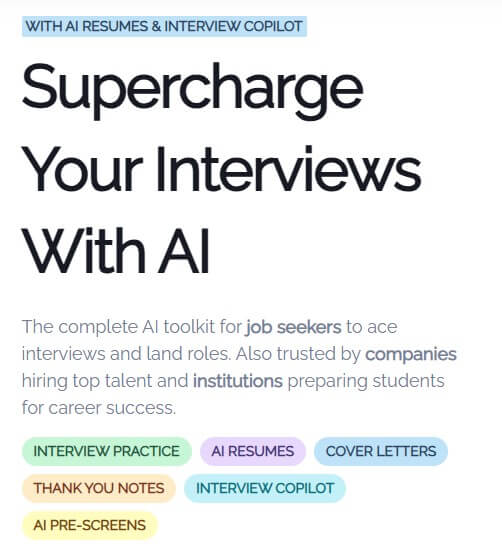
InterviewAI is an AI interview preparation and hiring support platform that serves two related audiences: job seekers who want to practice and improve before interviews, and companies or schools that want a more structured way to screen or prepare candidates. Its public site presents it as a broader toolkit, with interview practice, AI resumes, cover letters, thank-you notes, an interview copilot, and AI pre-screens in one place.
InterviewAI is not just a mock interview generator. That is the first thing to understand.
The product combines candidate-facing preparation tools with interviewer-facing workflow features. For job seekers, the main value is practice: choose a role, answer questions, receive feedback, and use the scoring summary to improve. For organizations, the platform leans toward structured interviewing, question generation, candidate tracking, follow-up questions, and pre-screening support.
That dual focus makes InterviewAI more useful than a basic “give me interview questions” chatbot. It is trying to turn interview preparation into a repeatable system. The role selection page shows a wide list of job categories, including software, finance, healthcare, operations, retail, sales, human resources, hospitality, trades, and more.
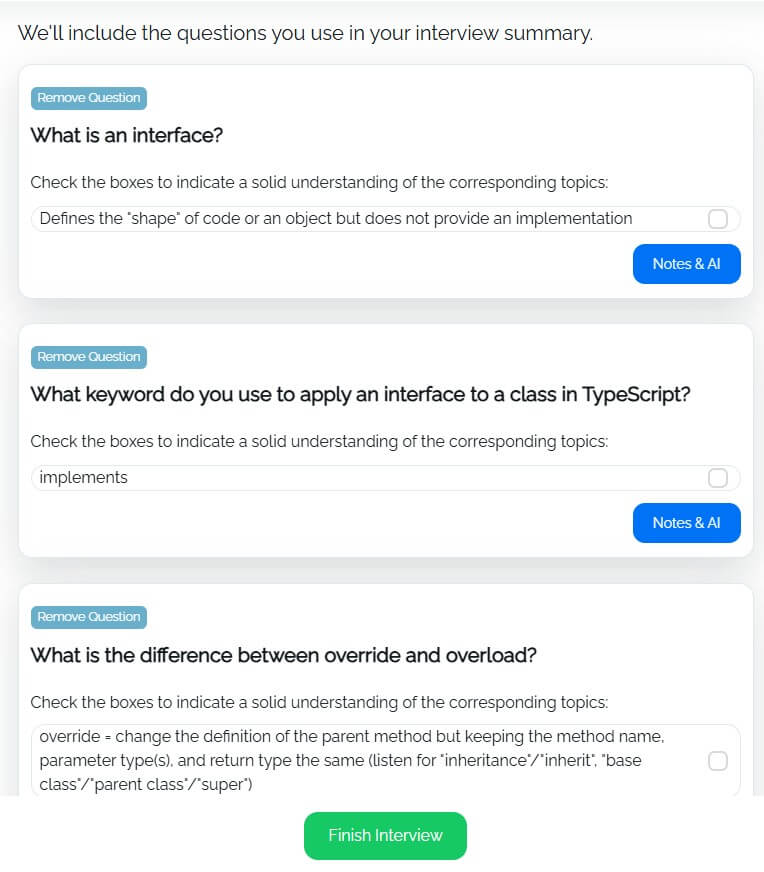
InterviewAI is strongest when the user needs structure. Many candidates do not fail interviews because they know nothing. They fail because their answers are vague, too long, poorly organized, or not tied closely enough to the role. A tool that gives role-specific questions, follow-up prompts, scoring, and feedback can help users practice with more discipline.
It is also useful for students and early-career candidates. InterviewAI’s education page is aimed at career counselors and says the platform offers personalized interview questions and scoring based on job title and student responses. It also frames the tool as a way to give students immediate feedback and guidance before real interviews.
For companies, the stronger use case is early screening. InterviewAI Async supports asynchronous candidate interviews, role-specific AI-generated questions, customizable questions, interview analysis, transcripts, performance insights, and role management.
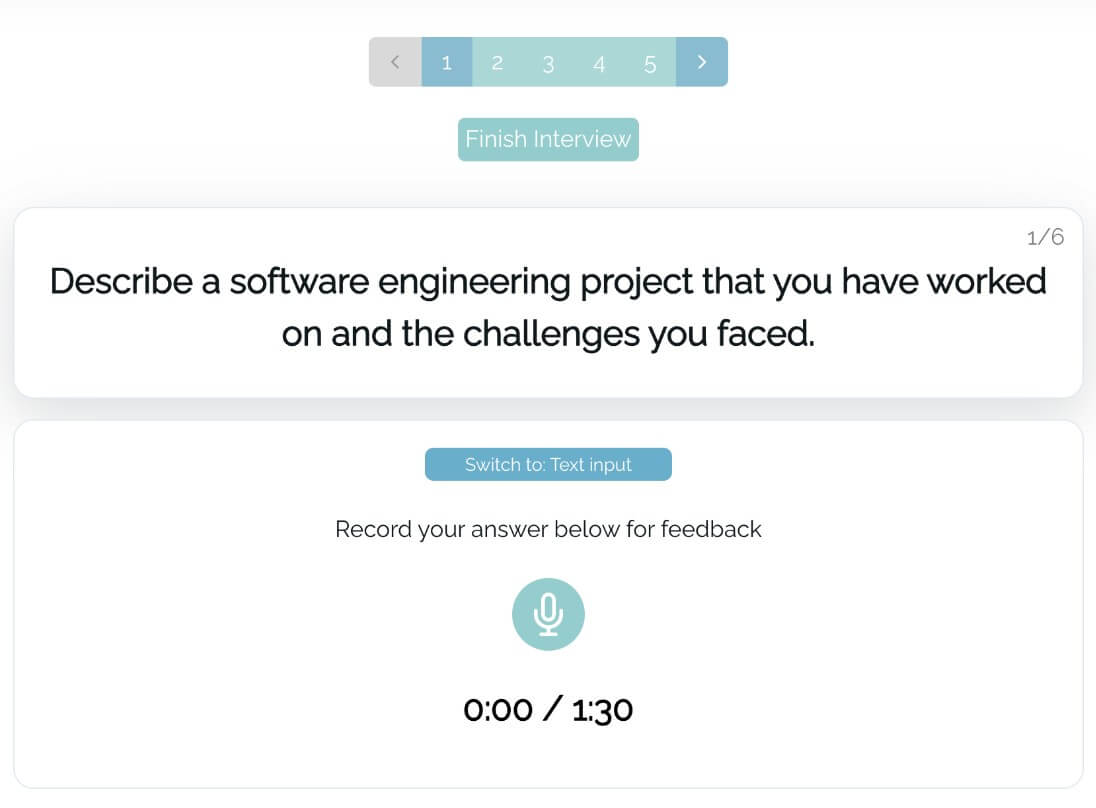
InterviewAI generates questions based on the selected job category or role, which makes practice more relevant than generic question lists.
Candidates can receive performance scoring, question-level feedback, and interview summaries after practice sessions.
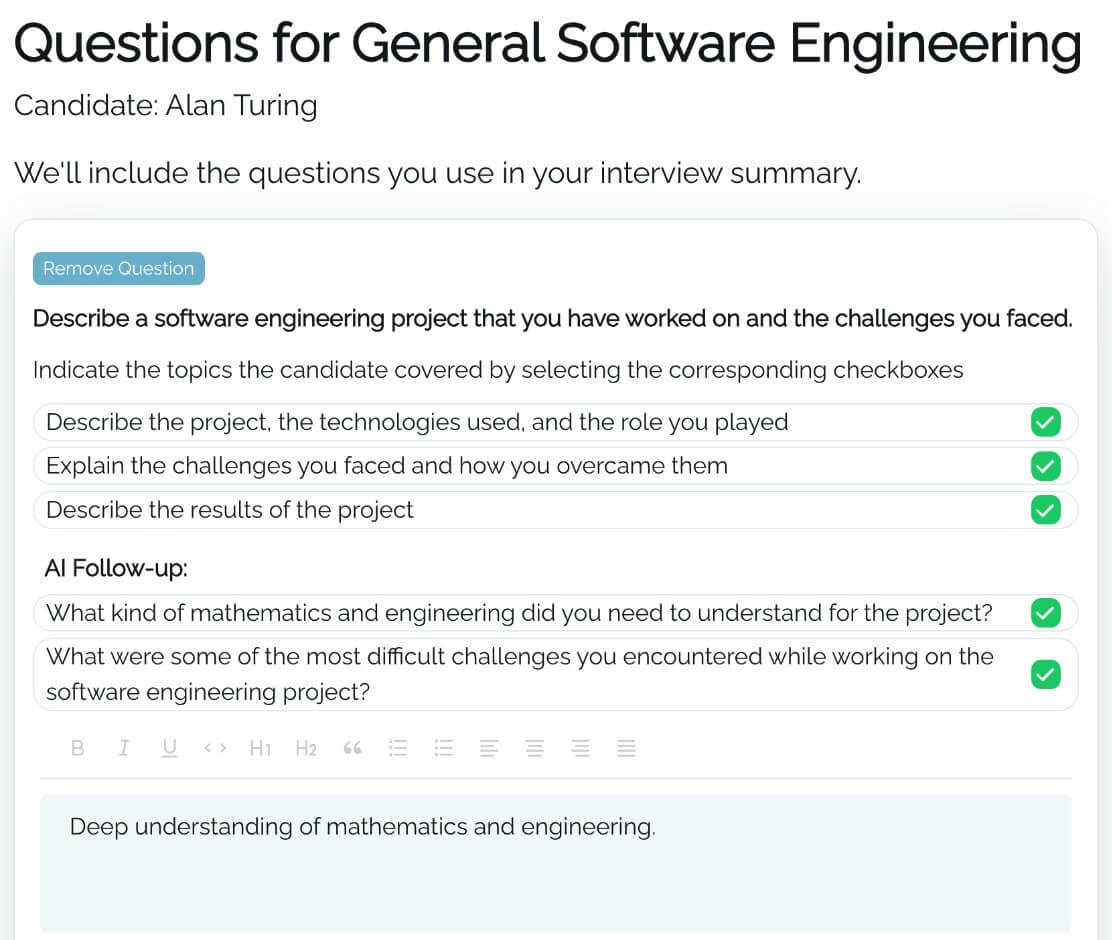
The platform can generate follow-ups based on candidate responses, which helps simulate the pressure of a real interview more closely.
InterviewAI includes a preloaded question library that can serve as a starting point for practice or interviewer customization.
For hiring workflows, the platform supports saving notes and questions for individual candidates.
InterviewAI Async lets candidates complete interviews on their own schedule, while employers review transcripts, analysis, and performance summaries afterward.
The candidate workflow is straightforward: choose a role, start an interview, answer questions, then review the feedback. That simplicity matters. Interview prep tools can get bloated fast, especially when they try to cover resumes, coaching, role research, and live interview help all at once. InterviewAI’s role selection page keeps the entry point practical by asking users to choose the job they are interviewing for before beginning.
The role library is broad, which helps users who are not applying for standard office jobs. It includes roles like electrician, automotive technician, bartender, nurse practitioner, store manager, customer service representative, software developer, and product manager.
For employers, the async workflow is built around reducing scheduling friction. Candidates can complete interviews when available, and teams can review responses later. That is most useful at the top of the funnel, where live interviews can consume too much team time before the strongest applicants are clear.
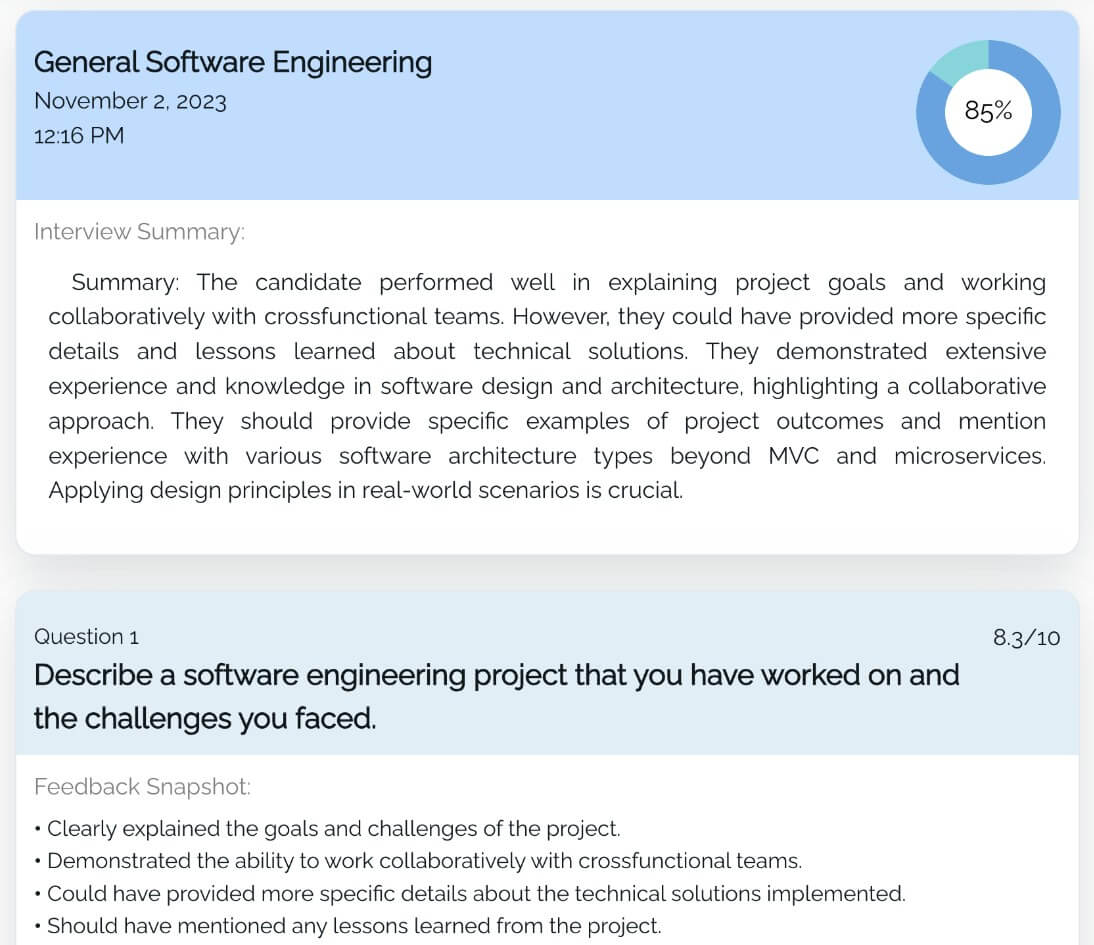
The practical value comes from repeated feedback. A one-off mock interview may help a little. A score, per-question notes, follow-up questions, and a summary create a loop: answer, review, improve, repeat.
That said, users should not treat the score as a perfect measure of interview readiness. AI feedback can help identify weak structure, missing detail, vague answers, or poor relevance. It cannot fully judge charisma, chemistry with a hiring manager, company-specific fit, or the subtle context of a real interview panel.
The best way to use InterviewAI is as a rehearsal tool, not a final authority. It can help candidates prepare stronger stories, practice role-specific answers, and reduce anxiety. The final polish still has to come from human review, company research, and real speaking practice.
- InterviewAI is a good fit for job seekers preparing for common behavioral and role-specific interviews.
- It is especially useful for candidates who need practice answering out loud, people switching careers, students preparing for their first serious interviews, and applicants who struggle to organize responses under pressure.
- It also fits career centers that want to give students scalable practice before graduation. The education page directly targets career counselors and student interview readiness.
- For companies, InterviewAI works best for early-stage screening, pre-interview filtering, and standardized question workflows.
- It is less suited to final-stage hiring decisions, where human judgment, team fit, deeper technical review, and role-specific nuance matter more.
- Start with the closest role match, not the most impressive title: If you are interviewing for a customer support role, practicing as a general manager will not help much.
- Repeat the same role interview more than once: The first run shows your weak spots. The second and third runs help you build cleaner answers.
- Use the follow-up questions seriously: They are useful because real interviewers rarely stop at your first answer.
- Pair AI feedback with human feedback: A friend, mentor, recruiter, or career counselor can catch things AI may miss, such as tone, confidence, pacing, and credibility.
- The biggest limitation is that interview performance is not only about answer content: Body language, timing, warmth, rapport, and company context still matter.
- The second limitation is trust in scoring: Automated scoring is useful for practice, but it should not be treated as an objective hiring truth. Employers should be cautious about over-relying on AI analysis, especially in screening workflows where bias, accessibility, and context matter.
- The third trade-off is scope: InterviewAI offers several job-seeker tools beyond interview practice, including resumes, cover letters, thank-you notes, and copilot-style support, but its clearest value remains interview preparation and structured screening.
InterviewAI is a practical interview preparation and screening platform for users who want more structure than a generic chatbot can provide.
Its strongest features are role-specific practice, AI-generated follow-up questions, automated feedback, scoring, and async screening for organizations.
It is best for job seekers, students, career centers, and hiring teams that need repeatable interview workflows. The main caveat is that AI feedback should guide preparation, not replace human judgment.
TAGS: Self Improvement
Related Tools:
AI-powered language learning tool

Helps entrepreneurs practice and improve their pitches

AI-based language learning application

AI-powered mental health companion
Facilitates English language learning

Records and organizes your ideas, notes, and memories