

Share this tool:
 |
Description:
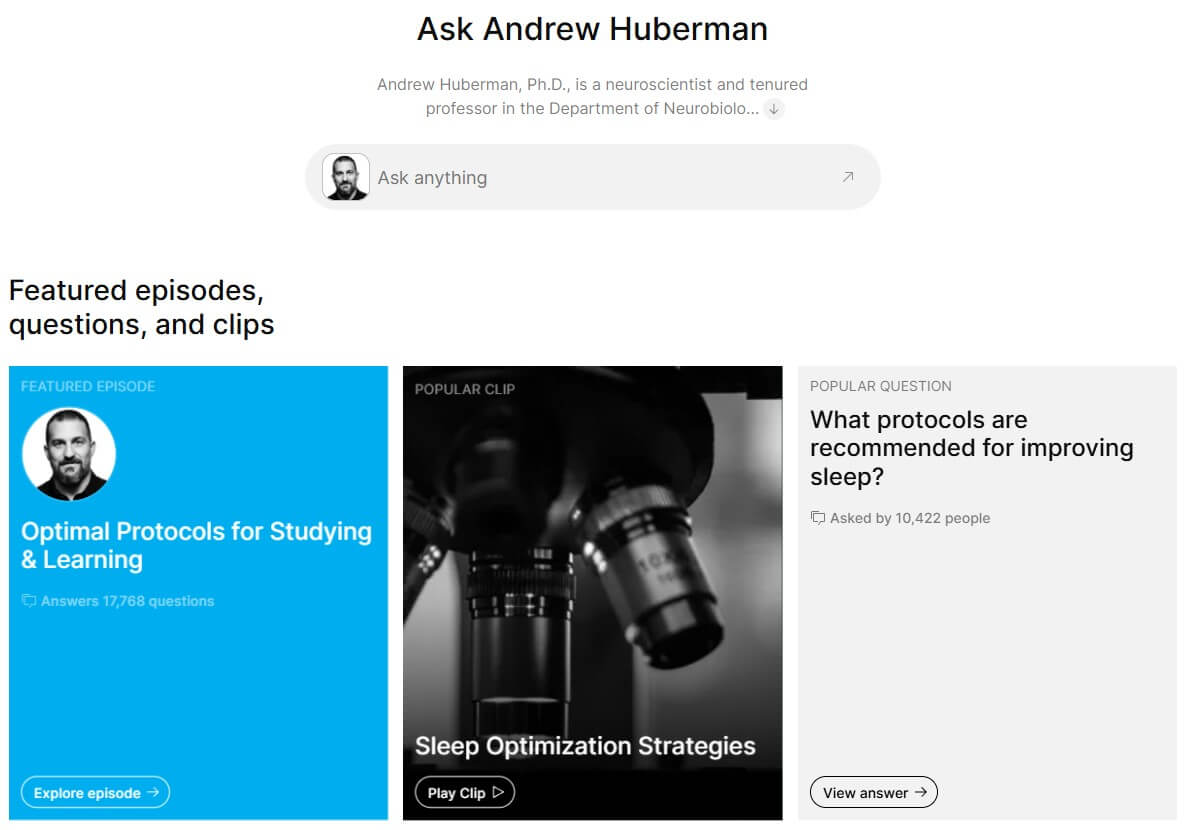
Huberman AI is a focused AI search assistant built around Andrew Huberman’s podcast content. Instead of asking users to scrub through long episodes, search transcripts, or guess which clip contains the answer, it lets them ask natural-language questions and get answers tied back to podcast sources, clips, and episode references. Dexa describes the broader system as an AI search engine for expert podcast and video content, built to identify who said what and where it appeared in an episode.
Prompt:
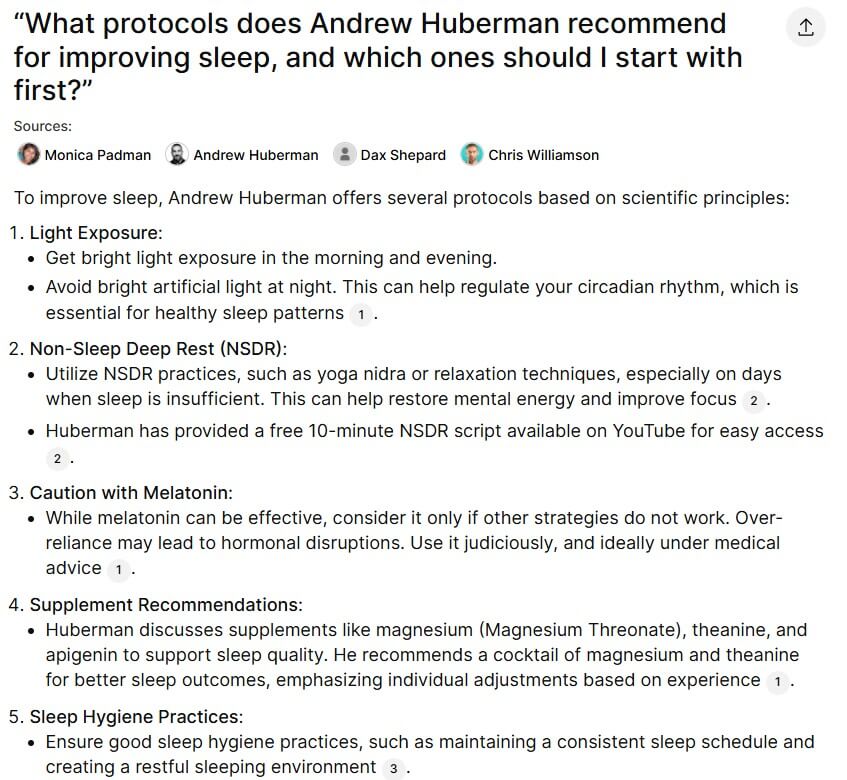
“What protocols does Andrew Huberman recommend for improving sleep, and which ones should I start with first?”
Prompt:
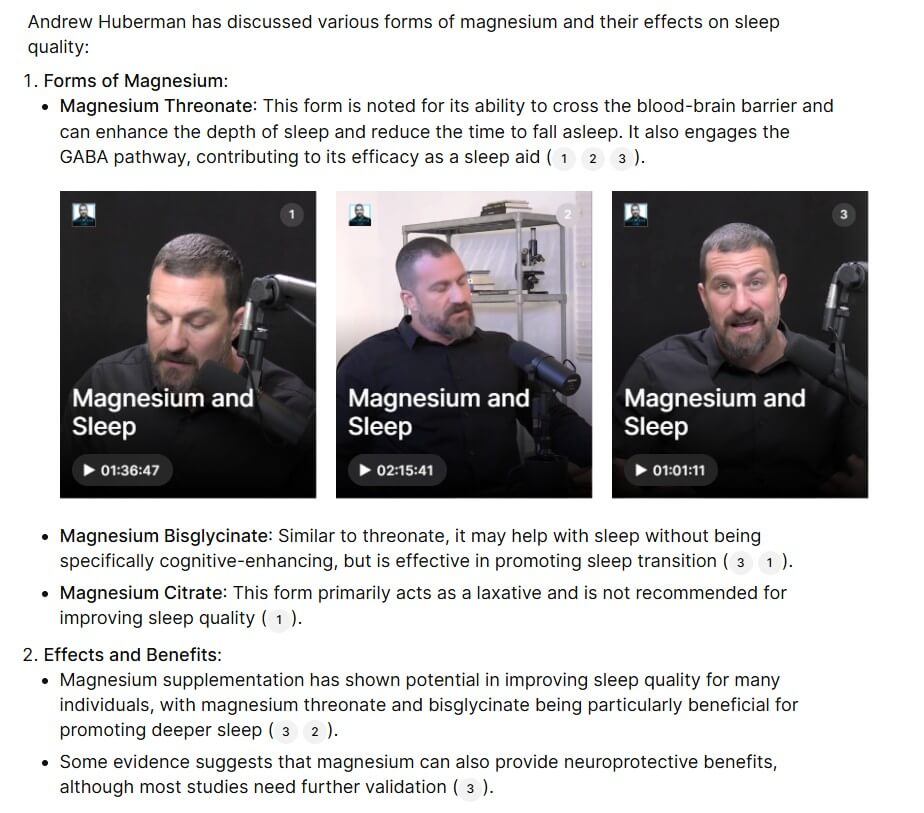
“What has Huberman said about magnesium for sleep, and what cautions or context did he mention?”
Prompt:
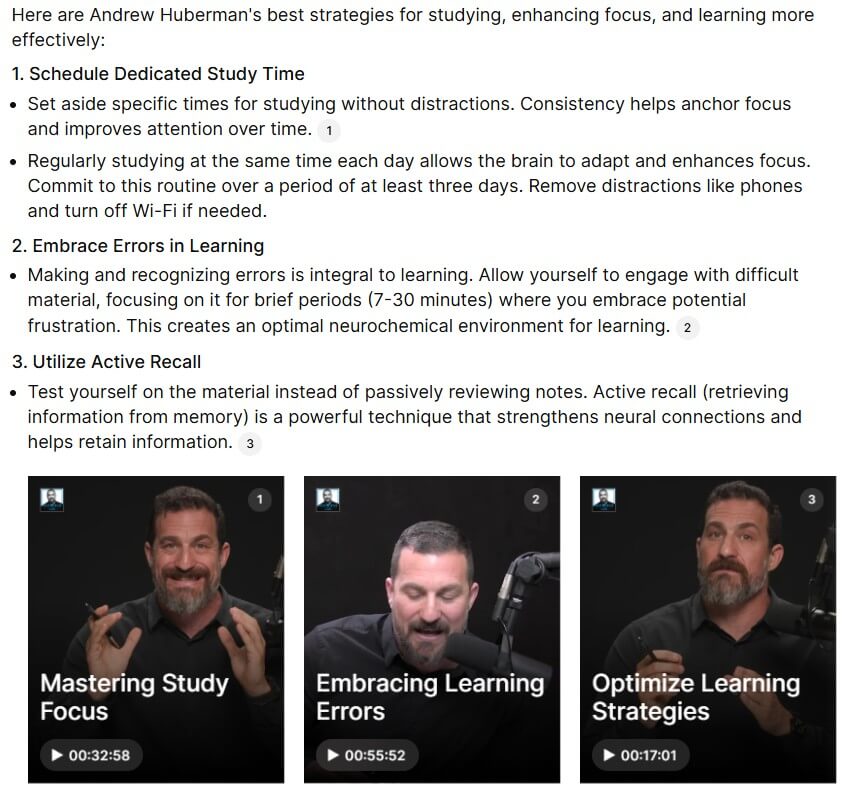
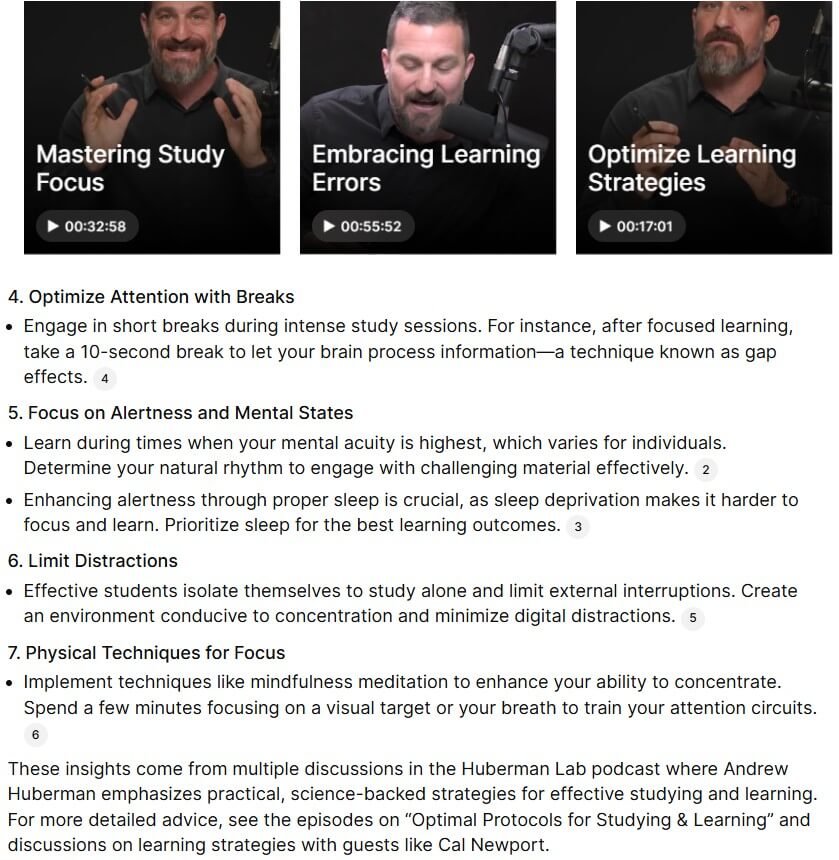
“Summarize Huberman’s best advice for studying, focus, and learning faster.”
Prompt:
“What are the main takeaways from the episode on female hormone health, PCOS, fertility, and breast cancer?”

Prompt:
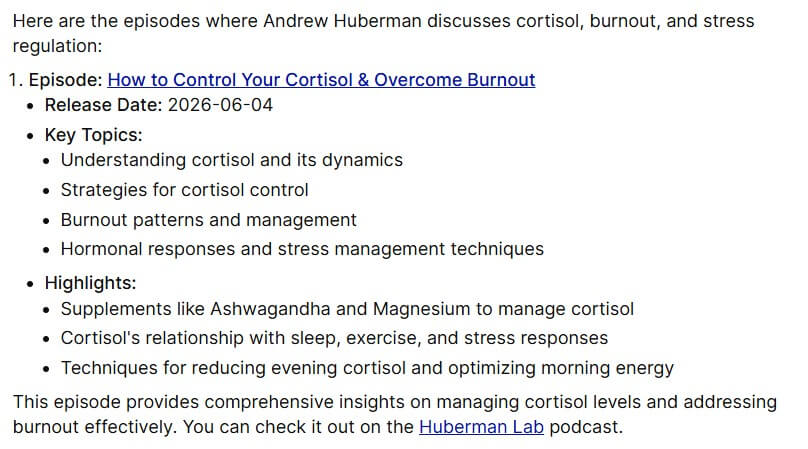
“Find the episodes where Huberman discusses cortisol, burnout, and stress regulation.”
These are better than vague prompts like “tell me about health” because Huberman AI is strongest when the question points to a real problem, protocol, topic, or episode area.
Huberman AI is not a general health chatbot. That distinction matters.
The product is better understood as a podcast knowledge interface. It searches and summarizes information from Huberman-related content, then routes users back to the relevant episode, question, or clip. The Dexa page for Andrew Huberman includes featured episodes, popular questions, recent episodes, guest appearances, and clips, so the experience is part search engine and part guided archive.
The main value is retrieval. Huberman Lab episodes are often long and dense. Dexa’s own launch story mentions the pain of trying to find a specific magnesium recommendation inside a long Huberman episode, which is exactly the kind of problem Huberman AI is meant to solve.
You can ask direct questions instead of searching exact episode titles or keywords.
Dexa says answers are based on what experts have said, with citations and direct source links.
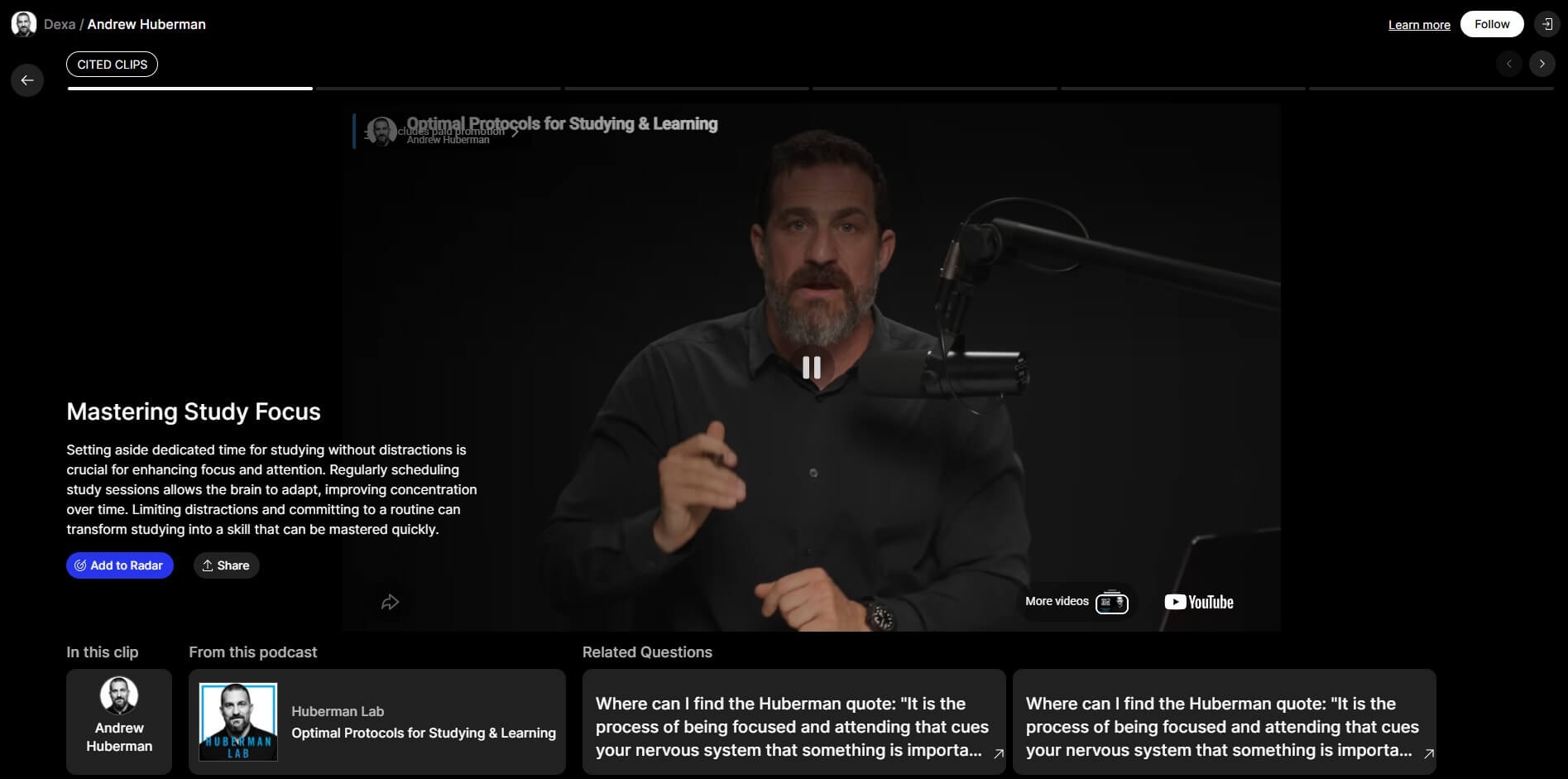
The platform can connect answers to relevant clips, which is useful when you want to hear the original wording.
Dexa’s newer chat interface supports follow-up questions, which makes the tool feel less like a transcript search box and more like a research assistant.
Beyond one answer, the page surfaces popular questions, featured episodes, recent episodes, and guest appearances, which helps users browse related material.
Dexa’s broader pitch is that users can search advice from specific expert voices rather than anonymous web summaries.
Huberman AI is strongest when you already trust Huberman Lab as a source and want to find a specific idea inside the archive. Sleep, learning, exercise, supplementation, stress, hormones, motivation, and performance are good fits because those topics recur across the show.
It is also useful for people who remember hearing something but do not remember the episode. That is a common podcast problem. You may remember “Huberman talked about morning sunlight” or “there was a discussion about cortisol,” but not the title, guest, or timestamp. Huberman AI narrows that gap.
The tool also works well for quick pre-research. A reader can ask a question, scan the summary, open the supporting clip, and decide whether to watch or listen to the full episode. For students, wellness writers, personal trainers, creators, and Huberman Lab listeners, that saves time.
The workflow is simple: ask a question, read the answer, check the sources, then open clips or episodes when needed. The Dexa page already includes popular questions such as intermittent fasting, sleep improvement, and sleep protocols, which gives new users a quick sense of what to ask.
The best part is that the interface does not require users to know podcast metadata. You do not need the exact title. You do not need to remember the guest. You can start with the topic, then refine.
That said, the quality of the experience depends on asking useful questions. “How do I sleep better?” may work, but “What protocols does Huberman recommend for improving sleep, and what is the evidence or caution behind each one?” is more likely to produce a useful answer.
The biggest advantage over a general chatbot is source grounding. A normal chatbot may summarize general wellness advice from a broad training set. Huberman AI is designed to answer from a defined content base and point back to the original material. Dexa says it provides answers based on what human experts have actually said, with citations and direct links to sources.
That does not make every answer automatically complete. Huberman Lab content is educational, and some topics touch health, supplements, hormones, sleep, or mental health. Users should still treat the output as a guide to source material, not as medical advice. The source links matter. If the question affects your health, listen to the original clip and check with a qualified professional.
- Huberman Lab listeners: Huberman AI is best for people who want to revisit specific protocols without replaying long episodes.
- Creators and researchers: It is strong for users who need to find where a topic was discussed, then cite or reference the original episode.
- Students and self-improvement readers: It helps users find fast summaries of topics like focus, learning, sleep, motivation, stress, and exercise.
- Coaches, trainers, and wellness professionals: It can help locate relevant discussions before building notes or client education material.
- Users who need broader medical research: It is less useful if you want balanced medical research across clinical guidelines, systematic reviews, and multiple institutions. For that, a medical database or research tool is the better starting point.
- Ask for sources in your question: Even though the system is built around them, a prompt like “Give me the answer and show the most relevant source clips” keeps the workflow grounded.
- Use follow-up questions to narrow broad answers: Start with “What does Huberman say about caffeine?” then follow with “What timing does he recommend?” or “What cautions does he mention?”
- Separate summaries from decisions: Huberman AI can help you find and understand a protocol, but it should not decide whether a supplement, diet change, or health routine is right for you.
- Use it as an archive, not a doctor: This is the safest and most practical way to get value from the tool.
- The first limitation is scope: Huberman AI is only as useful as the content it can search. It is excellent for Huberman-related material, but it is not a full scientific literature review engine.
- The second trade-off is source dependency: If an answer reflects what was said in a podcast episode, it may not include newer research, opposing views, or formal medical guidance unless that content exists in the indexed material.
- The third limitation is prompt sensitivity: Better questions produce better answers. Vague questions may return broad summaries, while more specific questions tend to surface more practical clips and references.
- Finally, users need to be careful with health interpretation: Huberman AI can make complex material easier to find, but easier access does not remove the need for judgment.
Huberman AI is a strong search and Q&A layer for people who want faster access to Huberman Lab’s dense health, neuroscience, and performance content.
Its best use is finding source-backed podcast answers, clips, and episode references without manually digging through long recordings.
It is best for regular Huberman listeners, researchers, creators, and wellness-minded users who want a guided archive. The main caveat is that it should be treated as a source-finding assistant, not a medical authority or a replacement for broader research.
TAGS: Self Improvement
Related Tools:

AI personalized fitness coaching

Helps families plan meals and organize household needs

AI-powered language learning tool
Assists users in solving mathematical problems
Provides scientific and health-related answers

Captures, organizes, and reviews your reading highlights