
Share this tool:
 |
Description:
- Introduction
- Strong Features and Capabilities
- What MarketFully Actually Is
- Where MarketFully Is Strongest
- Adaptive Translation, Transcreation, and Creation
- InContent AI and the Agent Layer
- Workflow and Ease of Use
- Website, Social, and Multichannel Execution
- Quality, Governance, and Brand Control
- Best Use Cases
- Practical Tips
- Limitations and Trade-Offs
- Final Takeaway
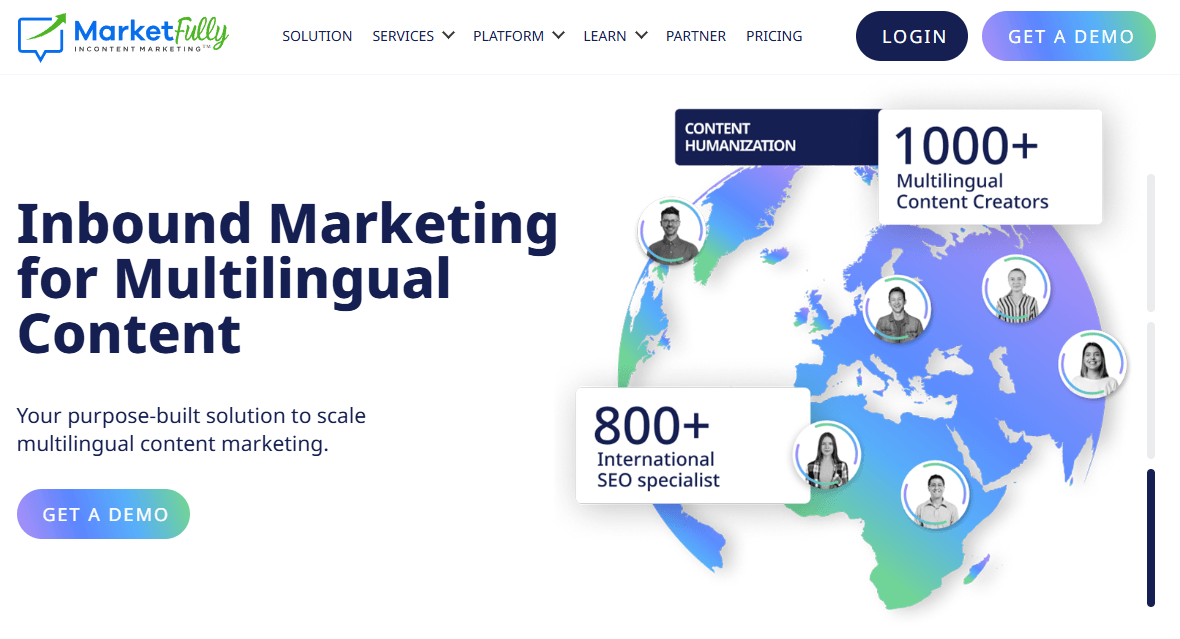
MarketFully is a multilingual content marketing platform and services ecosystem built for global teams that need more than translation. It combines MarketFully.AI, Adaptive Content AI, InContent AI, and human-in-the-loop services from its agency network to help brands create, adapt, distribute, and improve content across languages, cultures, and markets.
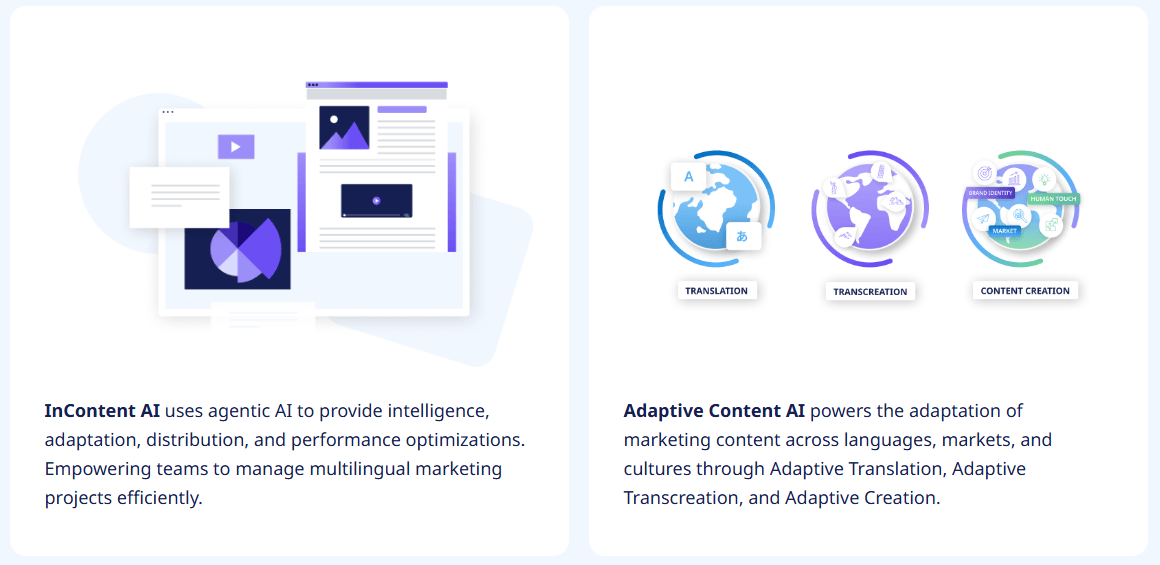
Adapts brand marketing content, including text and images, so it can resonate across markets, cultures, and languages.
Uses glossaries, brand voice guides, file uploads, collaboration, and optional human review to translate marketing assets with more control.
Adjusts tone and style instead of translating word-for-word, making it better for culturally sensitive or campaign-driven content.
Creates new original content directly in the target language, using briefs, keywords, brand voice, glossaries, references, and human review.
Brings together Intelligence, Adaptive, Distribution, and Performance agents to plan, execute, deliver, and improve multilingual content.
MotionPoint, Key Content, and Social Element support translation, transcreation, content creation, post-editing, QA, social media, and cultural validation.
MarketFully is not a simple translation tool. It is a larger multilingual marketing system that brings together technology, strategy, content adaptation, human review, distribution support, and performance measurement. The company describes MarketFully.AI as a platform that helps marketers “create, adapt, and manage multilingual content,” combining Adaptive Content AI for content creation with InContent AI for intelligent management.
The platform sits on top of a broader brand structure. MotionPoint launched MarketFully as a parent brand in 2025, bringing together MotionPoint, Key Content, and GetGloby into one unified platform for multilingual and multicultural growth. MarketFully later expanded its social offering with the acquisition of Social Element, adding multilingual social content and community engagement capabilities to the wider ecosystem.
| Layer | What it does | Why it matters |
|---|---|---|
| Adaptive Content AI | Adapts marketing text and images for different markets, cultures, and languages. | This is the core content adaptation engine. |
| Adaptive Translation | Translates marketing assets with glossaries, brand voice controls, collaboration, and optional human review. | Best for content where consistency and accuracy matter most. |
| Adaptive Transcreation | Reworks copy so tone, style, and cultural fit match each target market. | Best for campaigns, emotional messaging, ads, and brand storytelling. |
| Adaptive Creation | Creates original content directly in the target language. | Best when the local market needs its own content, not a translated version. |
| InContent AI | Uses agents for intelligence, adaptation, distribution, and performance. | Turns multilingual content into an ongoing operating system. |
| Human services | MotionPoint, Key Content, and Social Element add review, strategy, editing, localization, and social expertise. | Reduces the risk of AI-only multilingual publishing. |
That structure is the main reason MarketFully feels different from a standalone AI translator. It is trying to solve the full global content problem: what should be adapted, how deeply it should be adapted, who should review it, where it should be distributed, and how performance should improve the next campaign.
MarketFully is strongest when a brand has moved beyond one-off localization and needs a repeatable multilingual content operation. The platform is designed for companies that manage many languages, many markets, many content types, and many internal stakeholders. It helps decide whether each asset should be translated, transcreated, or created from scratch, which is the right question for global marketing teams.
That distinction matters. Translation is useful when the original message already works and just needs to become accurate, consistent, and discoverable in another language. Transcreation is more useful when the message needs emotional or cultural adjustment. Creation is the right route when the market has different search behavior, customer expectations, cultural references, or product use cases. MarketFully’s InContent Marketing framework explicitly separates these three adaptation levels: translation, transcreation, and creation.
The second major strength is the combination of AI and human expertise. MarketFully’s homepage says the solution includes MarketFully.AI plus human-in-the-loop services, while its services page says MotionPoint, Key Content, and Social Element execute different parts of the multilingual marketing workflow. That gives the platform a stronger quality-control story than AI-only tools, especially for public-facing brand content.
The third strength is performance orientation. MarketFully is not only about making translated content readable. It repeatedly frames multilingual work around discoverability, engagement, conversion, SEO, GEO, and measurable outcomes. InContent AI’s Performance Agents are described as tracking discoverability, engagement, and conversion across markets and feeding insights back into future strategy.
The clearest way to understand MarketFully is through its three adaptation modes.
| Workflow | Best for | What makes it useful |
|---|---|---|
| Adaptive Translation | Product pages, support content, structured website copy, documentation, internal communications, and straightforward marketing assets. | It preserves meaning, terminology, and brand consistency while allowing optional human review. |
| Adaptive Transcreation | Ads, campaign copy, taglines, landing pages, social posts, brand storytelling, and emotionally driven messaging. | It adapts tone and style for the target market instead of translating word-for-word. |
| Adaptive Creation | Native-language articles, local SEO content, regional campaigns, thought leadership, newsletters, and content that needs to originate in-market. | It creates new content directly in the target language using briefs, brand voice, keywords, and local nuance. |
Adaptive Translation is the most direct layer. Teams upload brand voices and glossaries, submit content in formats such as TXT, PPTX, PDF, DOCX, XLSX, and HTML, then use collaboration and optional human review to improve quality before publishing. This is the best fit when the content needs to stay close to the source but still reflect brand terminology and style.
Adaptive Transcreation is the more creative layer. MarketFully describes it as adjusting tone and style to align with the culture and expectations of each market. It also supports multiple brand voices and glossaries, market-specific controls, file uploads, team collaboration, and optional review by writers and editors. That makes it better for messaging that would lose force if translated too literally.
Adaptive Creation goes furthest. It creates new original content directly in the target language, with a workflow built around a Smart Brief, brand voice, keywords, reference documents, AI-generated drafts, co-editing, comments, human review, export, publishing, workspaces, and team management. This is the best fit when a market needs its own content strategy rather than a localized copy of the global master asset.
InContent AI is MarketFully’s intelligence and orchestration layer. It is built around four types of agents: Intelligence, Adaptive, Distribution, and Performance. MarketFully describes these agents as operating together inside one managed platform to plan, execute, distribute, and optimize multilingual marketing content.
The Intelligence layer is where strategy starts. It gathers audience data, performance analytics, and competitor insights, then identifies topics, formats, and the right level of adaptation for each market and language. This matters because global teams often waste effort by treating every asset the same. MarketFully’s stronger workflow is to decide what each market actually needs before production begins.
The Adaptive layer turns strategy into content. It supports translation, transcreation, creation, draft generation, editorial alignment, cultural alignment, and quality assurance through human review. This is where AI can move quickly, while human reviewers preserve tone, nuance, and intent.
The Distribution and Performance layers make the system more operational. Distribution Agents automate delivery across websites, social platforms, and marketing systems through connectors, proxies, and middleware integrations. Performance Agents then track discoverability, engagement, and conversion, feeding insights back into future campaigns. This is the part that makes MarketFully more than a production tool. It is designed as a loop.
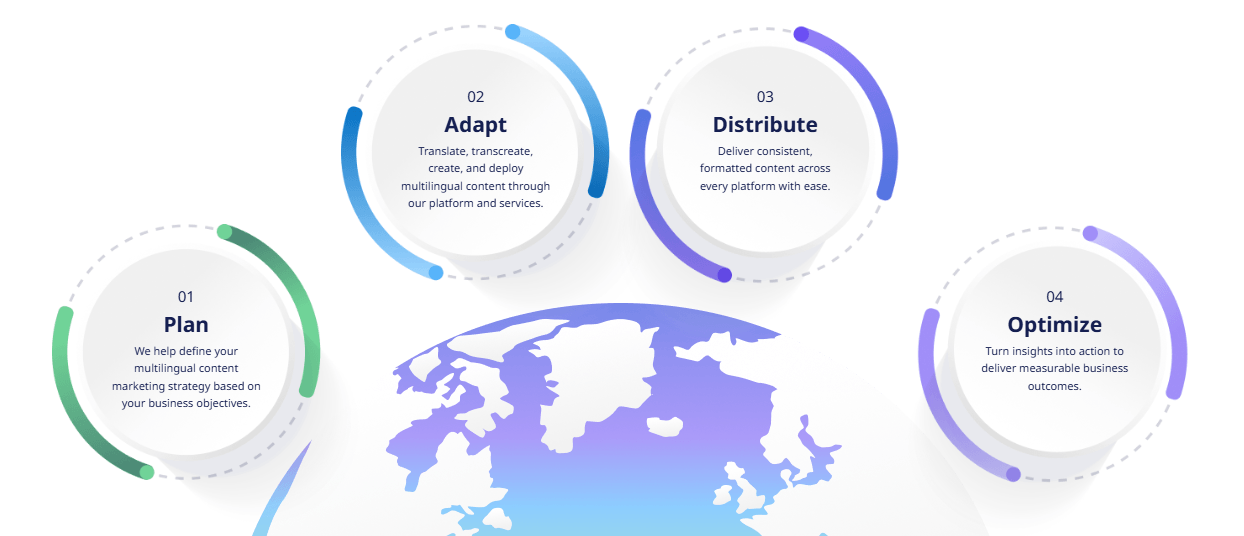
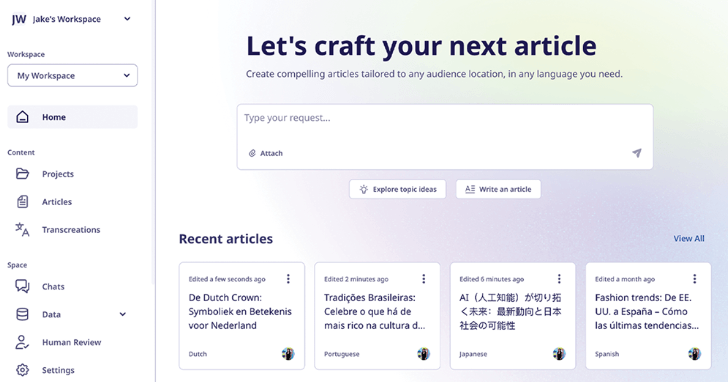
MarketFully is not the kind of tool you judge by opening a blank text box and asking for a translation. The stronger workflow is structured: define the market, upload or set brand voice, add glossaries, choose the right adaptation depth, create or adapt content, collaborate, bring in human review where needed, distribute, then measure performance.
That makes the product more enterprise-oriented than casual. It is built for marketing teams that already have content operations, regional stakeholders, SEO goals, brand standards, compliance needs, and publishing workflows. A small team can still benefit from the platform, but the real value appears when the workflow has enough volume and complexity to justify a structured system.
The platform also includes multiple workspace and collaboration ideas across its pages. Adaptive Translation and Transcreation mention sharing, editing, and reusing content, glossaries, and brand voices across teams. Adaptive Creation includes co-editing, inline comments, approval, publishing/export options, workspaces, and team management.
The human-services layer changes the feel of the workflow. MarketFully is not only selling software; it combines MarketFully.AI with human services from its in-house agencies. MotionPoint focuses on digital content translation and transcreation for websites, apps, and online experiences. Key Content leads strategy, content creation, and SEO optimization for new languages and markets. Social Element supports multilingual social media and community work.
MarketFully’s website localization platform is one of the clearest examples of how the system moves beyond document translation. It supports a managed proxy-based localization model or integration with CMS, DAM, and custom systems using APIs and connectors. It also uses brand voice, glossaries, and translation memory to keep terminology, tone, and style consistent across languages and content types.
The social side is also becoming more important. MarketFully’s social media services page says it uses MarketFully technology alongside Social Element to plan, create, manage, and optimize social content across platforms, languages, and cultures. It specifically describes localized captions, visual adaptations, short-form video, native-language QA, post-editing, and cultural validation.
This matters because global marketing is no longer just website translation. A campaign may need search-friendly landing pages, market-specific blog content, localized social posts, adapted visuals, short-form video, email derivatives, and performance reporting. InContent AI’s Distribution Agents are designed to create derivatives and deliver content across websites, social platforms, and marketing systems.
MarketFully’s best quality argument is not that AI writes perfect content. It is that AI production is paired with controls, review, and market expertise. The homepage highlights AI governance, admin user roles, brand voice standardization, and security alignment. Its services page also mentions brand voice standardization, glossary terms, AI governance, post-editing, quality assurance, fact-checking, terminology consistency, proofreading, cultural tone adaptation, and visual QA.

For multilingual marketing, this is critical. A generic AI workflow can create fluent content quickly, but fluent content is not always locally credible or on-brand. MarketFully’s model is stronger because it makes room for multiple layers of control: glossary terms, brand voice, market selection, human review, subject-matter expertise, and performance feedback.
The platform is especially useful for brands that care about consistency across markets without making every market sound identical. That balance is hard. Over-centralized localization can sound stiff. Fully local execution can drift away from the brand. MarketFully’s best fit is the middle ground: central governance with local adaptation.
- Enterprise multilingual marketing teams: MarketFully is strongest for teams that manage campaigns, websites, content hubs, landing pages, and social content across many countries and languages.
- Global SEO and GEO programs: Adaptive Creation and InContent AI are useful when content needs to perform in local search, AI overviews, and discovery environments rather than merely exist in another language.
- Website localization at scale: The website localization platform is built for teams that need managed or connected localization workflows, continuous updates, brand controls, translation memory, and human review.
- Campaign transcreation: Adaptive Transcreation is a strong fit for headlines, landing pages, paid media, brand storytelling, product launches, and social copy where cultural tone matters.
- Market-native content creation: Adaptive Creation is useful when a region needs new content written directly in the target language instead of adapted from headquarters copy.
- Global social media teams: Social Element’s integration into the MarketFully ecosystem makes the platform more relevant for brands that need multilingual social content, community engagement, cultural validation, and platform-specific execution.
- Start by deciding the adaptation level before production begins. MarketFully’s own framework separates translation, transcreation, and creation, and the best workflow is choosing the right lane for each asset rather than treating all content the same.
- Build glossaries and brand voice guides early. Adaptive Translation and Adaptive Transcreation both rely on glossaries and brand voice controls to preserve terminology, tone, and market-specific language.
- Use Adaptive Translation for factual or structured assets. Product copy, support content, basic pages, policies, and internal material often need consistency more than creative rewriting.
- Use Adaptive Transcreation for messaging that has to persuade. Campaigns, taglines, ads, landing pages, social posts, and storytelling need cultural fit, not only accuracy.
- Use Adaptive Creation when the local market needs different content. If the search intent, cultural context, customer concern, or buying trigger changes by region, creating original target-language content is safer than forcing the global message into every market.
- Keep human review in the workflow for high-stakes work. MarketFully’s own model repeatedly pairs AI with native-speaking reviewers, writers, editors, and specialists because AI-only output is not enough for every asset.
- The first trade-off is complexity. MarketFully is not a quick translation utility. It is a multilingual marketing platform plus services ecosystem. That makes it powerful for global teams, but it can feel too heavy for users who only need occasional translation or simple document conversion.
- The second limitation is that the best results depend on strong setup. Glossaries, brand voice guides, market priorities, briefs, keywords, reference content, and review workflows all matter. Without those inputs, the platform cannot fully deliver on the promise of market-specific, brand-consistent content.
- The third trade-off is that it is more suitable for marketing organizations than general business users. A support team that just needs fast translation may prefer a simpler translation tool. A small brand managing one or two languages may not need InContent AI, human review, distribution agents, or performance orchestration.
- The fourth limitation is that public product naming can feel dense. MarketFully uses several branded concepts: MarketFully.AI, Adaptive Content AI, Adaptive Translation, Adaptive Transcreation, Adaptive Creation, InContent AI, InContent Marketing, and agency services. Each piece makes sense once mapped, but new buyers may need time to understand where the platform ends and the service layer begins.
- The fifth trade-off is that human review adds workflow discipline. That is a strength for quality, but it also means MarketFully is not always the fastest path for low-risk content. For serious multilingual campaigns, the review layer is valuable. For throwaway drafts, it may be more process than necessary.
MarketFully is best for global marketing teams that need multilingual content to perform, not just translate.
Its strongest advantages are Adaptive Translation, Adaptive Transcreation, Adaptive Creation, InContent AI agents, brand voice and glossary controls, human review, website localization, social media support, and performance-driven multilingual operations.
The main caveat is that it is a serious platform-and-services ecosystem, so it makes the most sense for teams with real multilingual scale, market complexity, and a need for governance across languages, cultures, and channels.
TAGS: Marketing Translation
Related Tools:

Enhances communication by providing multilingual support

Marketing automation tool that enhances customer engagement

Email marketing automation tool

Turns product photos into high-converting image and video ads
Enables multilingual support for ChatGPT
Shopping assistant for Shopify stores