

Share this tool:
 |
Description:
BizPlanner.ai is an AI business plan generator built for people who need a structured plan but do not want to start from a blank document. It guides users through business inputs, then turns those details into sections such as business model, target market, competitor analysis, SWOT, financial projections, industry trends, relevant regulations, and suggested next steps.
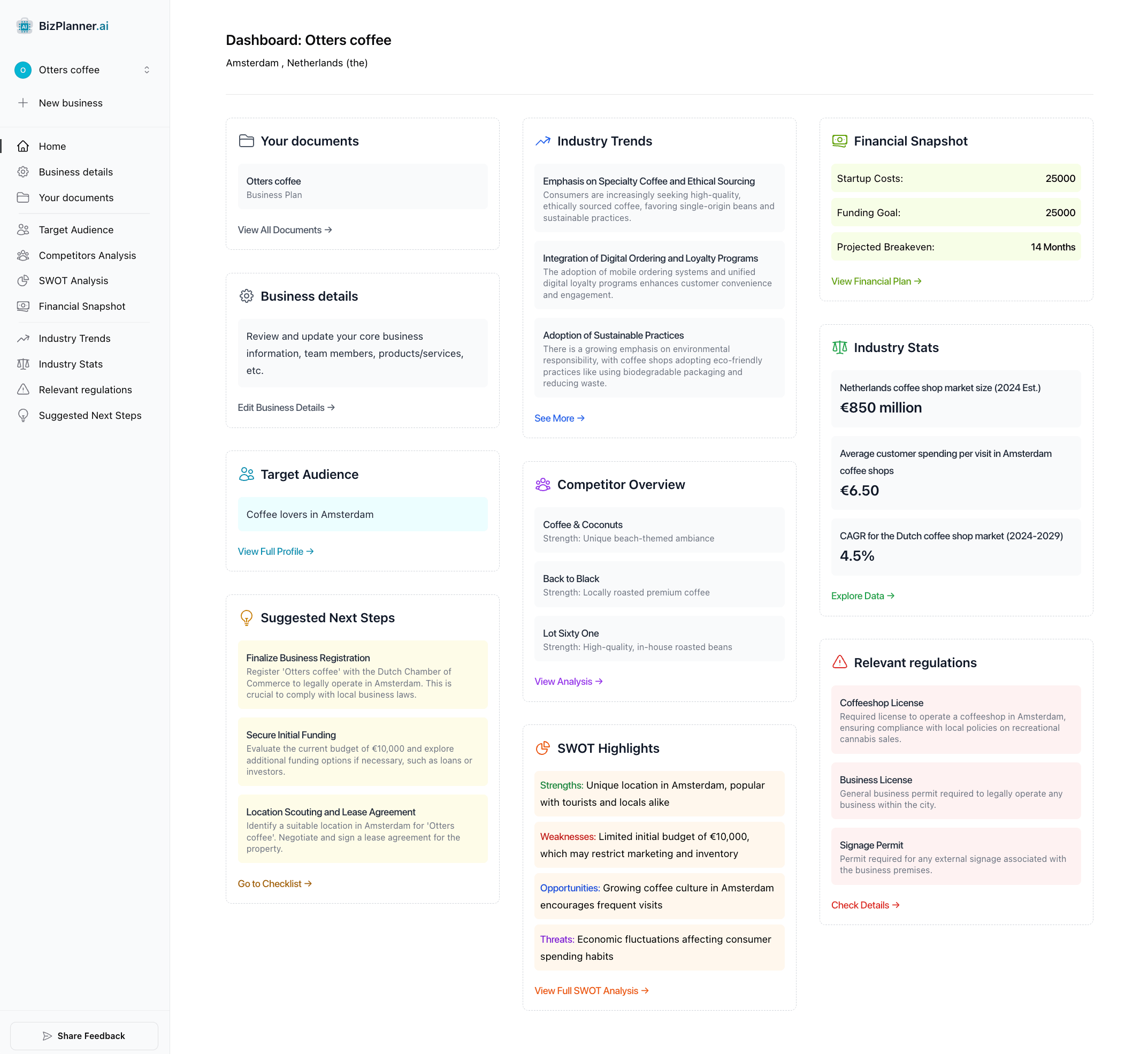
BizPlanner.ai is not a general writing assistant. It is a focused planning tool. The workflow is closer to a guided business-plan builder than a chatbot: answer a few questions about the business idea, industry, and goals; let the AI draft the plan; then review and edit the sections before exporting. The official business plan generator page describes this flow as “Answer a Few Questions,” “AI Generates Your Plan,” and “Review & Customize.”
That structure is important. A blank ChatGPT prompt can produce a business plan, but the user has to know what to ask for, which sections to request, and how to revise the output. BizPlanner.ai narrows the task. It gives the user a planning path and a more predictable document shape.
The strongest value is speed plus structure. It helps early-stage founders, small business owners, students, consultants, and operators get from a rough idea to a usable first draft without building every section manually.
BizPlanner.ai works best when the user already has a business idea but needs help shaping it into business language. This is especially useful for people who know the product, service, location, or customer problem but struggle with the formal plan.
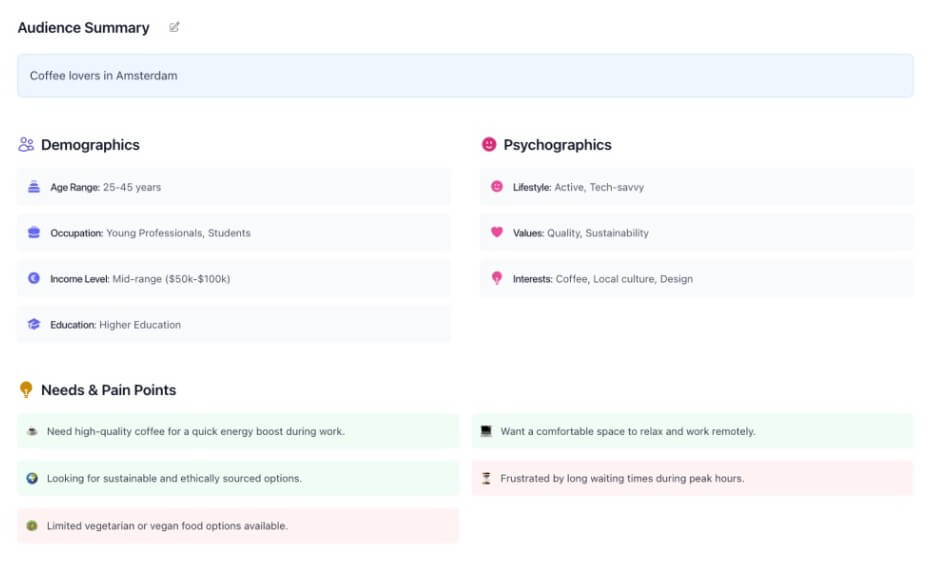
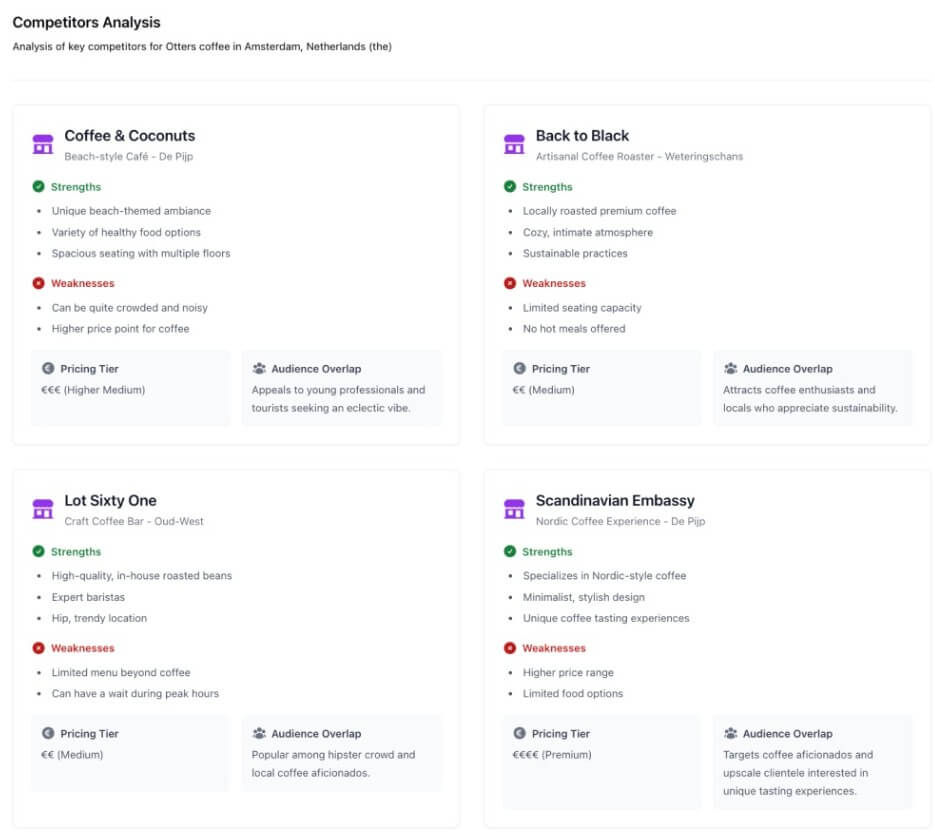
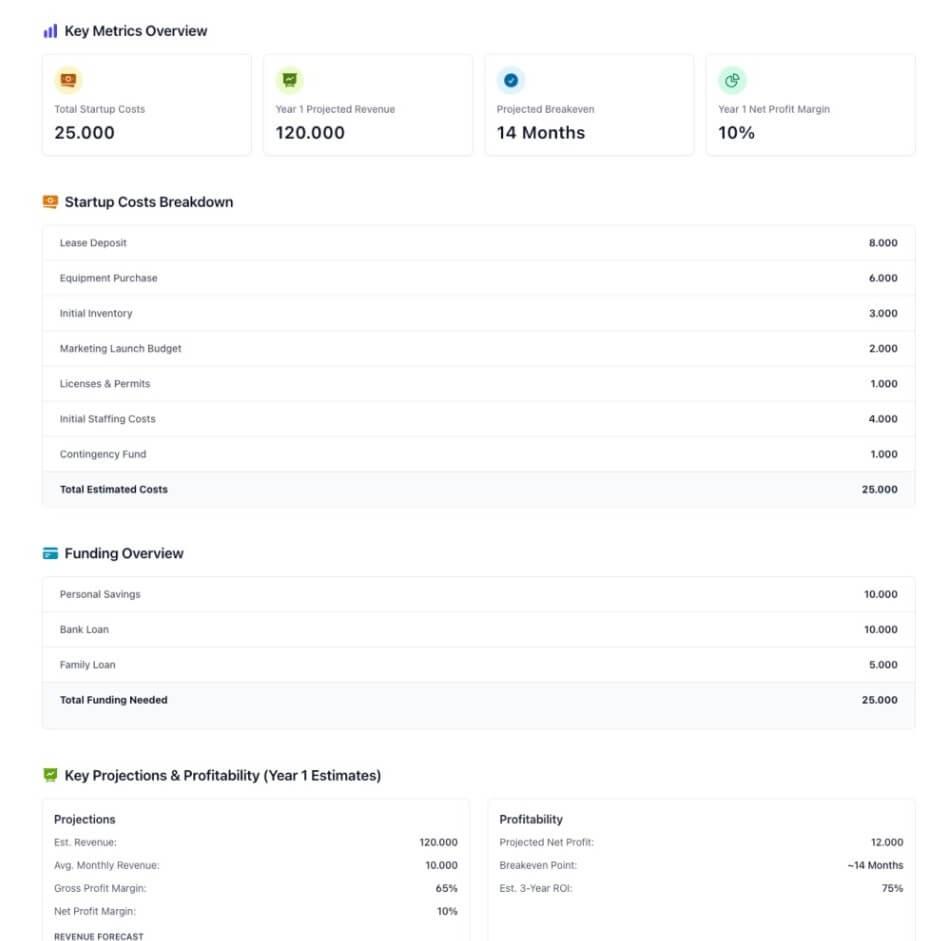
The tool covers practical planning categories, including marketing plan, target audience, competitor analysis, SWOT analysis, financial projections, industry trends, industry stats, regulations, and next steps. That mix makes it more useful than a plain document generator. It is not only writing an executive summary. It is trying to create a broader planning package.
The market and regulation sections are especially helpful as starting points. They give users a checklist of things to verify, refine, and discuss. For a coffee shop, consulting agency, ecommerce store, local service business, or startup idea, that can save hours of early planning.
Users answer business questions first, which helps the AI generate a more relevant plan than a generic prompt would.
The platform can produce core planning sections such as target audience, competitor analysis, SWOT, marketing plan, financial projections, and next steps.
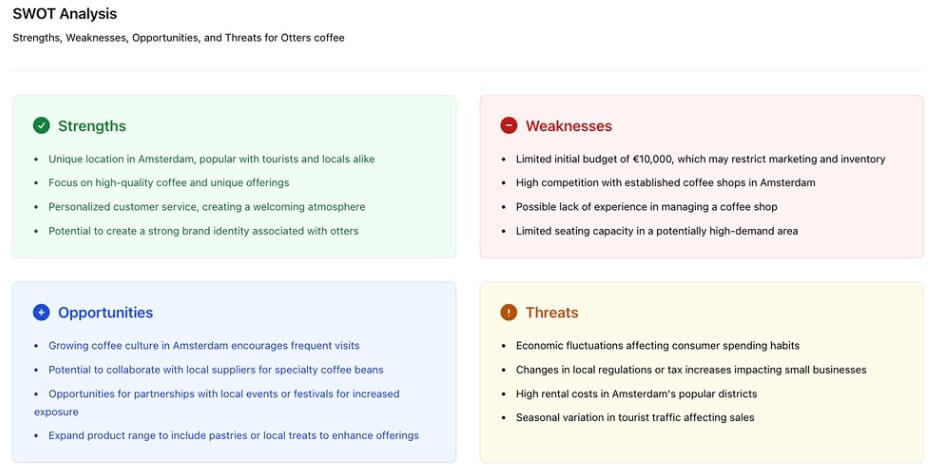
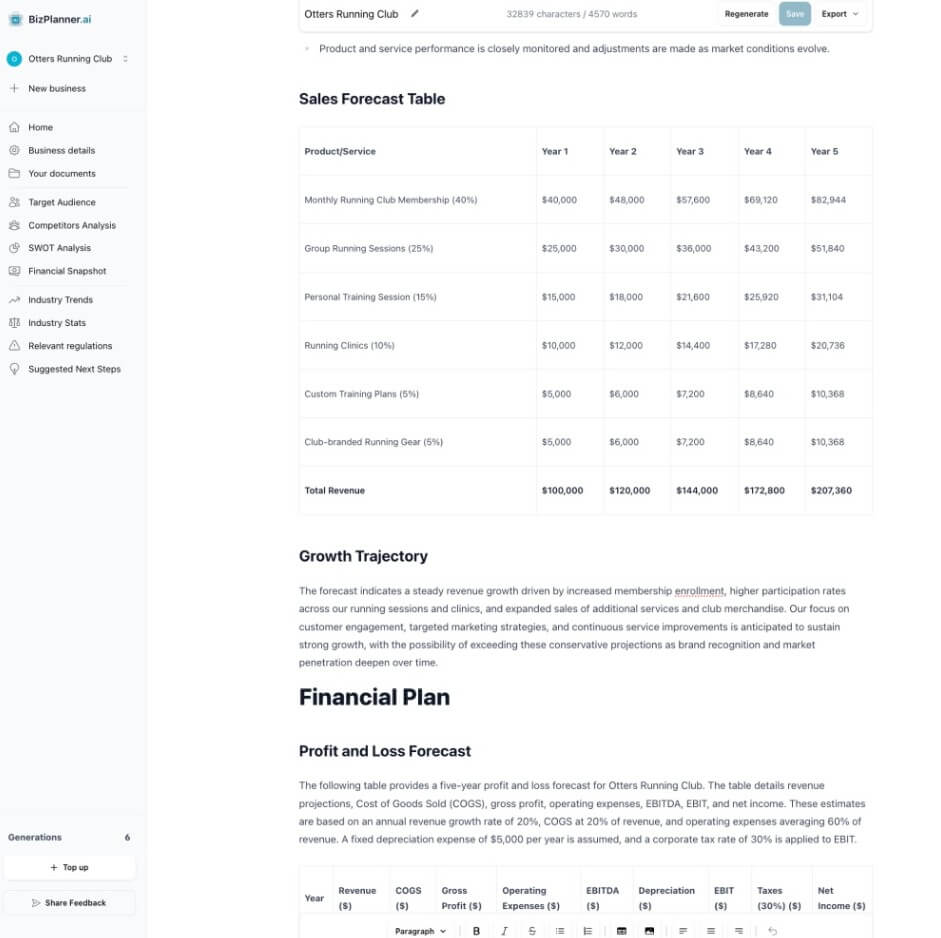
The business plan generator page says users can review and customize sections in a built-in editor before exporting.
BizPlanner.ai says users can export finished plans to PDF or Word.
The platform’s Industry Pulse feature researches emerging trends, recent laws or regulatory changes, competitors, market opportunities, and risks based on the business idea and location.
BizPlanner.ai announced support for seven languages: English, Spanish, French, German, Portuguese, Korean, and Japanese.
The main workflow is simple enough for non-specialists. You provide details about the business, the AI creates a draft, and then you edit. That makes BizPlanner.ai useful for people who find business planning intimidating.
The user still needs to bring judgment. A business plan is not just a writing exercise. It includes assumptions about customers, revenue, costs, competition, hiring, supply, regulations, and growth. BizPlanner.ai can draft those sections, but the owner has to check whether the assumptions fit the real market.
That is where the tool’s best workflow becomes clear: use it to create the first serious draft, not the final truth. It can help users organize thinking, spot missing sections, and create a document to revise with partners, accountants, mentors, or lenders.
The addition of Industry Pulse is one of the more interesting parts of BizPlanner.ai because it moves the product beyond static AI writing. BizPlanner.ai says Industry Pulse starts researching as soon as a business is created and looks at trends, laws, competitors, risks, and opportunities tied to the industry and location.
That is useful because business plans age quickly. A plan written around outdated regulations or old market assumptions can look polished while still being weak. A dynamic research layer gives the user better starting material.
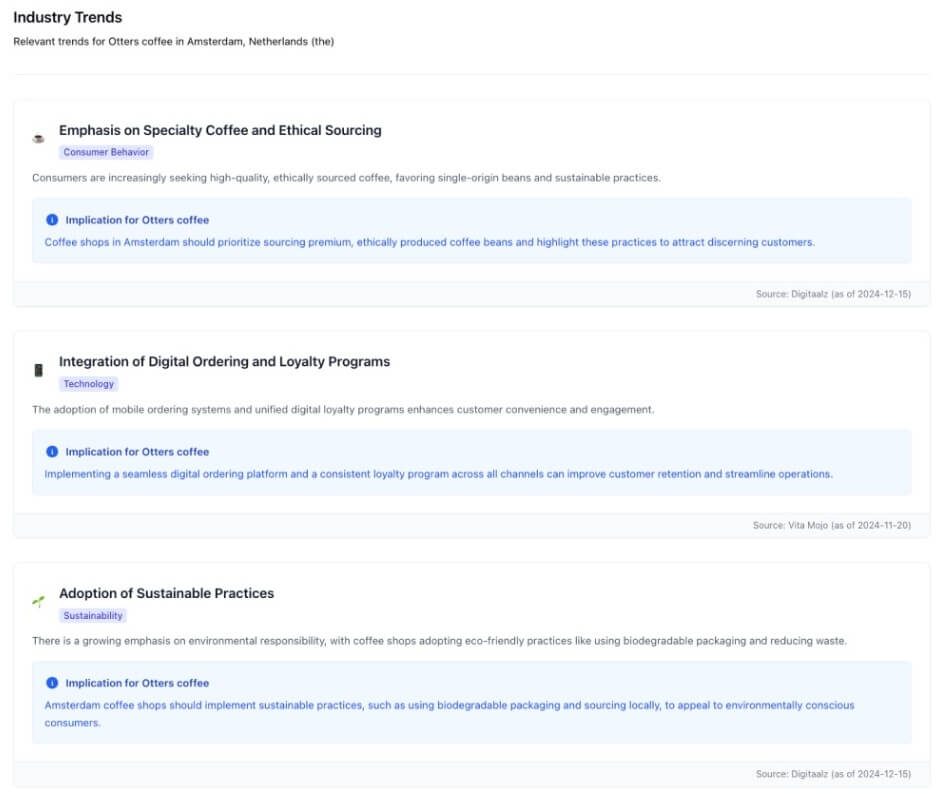
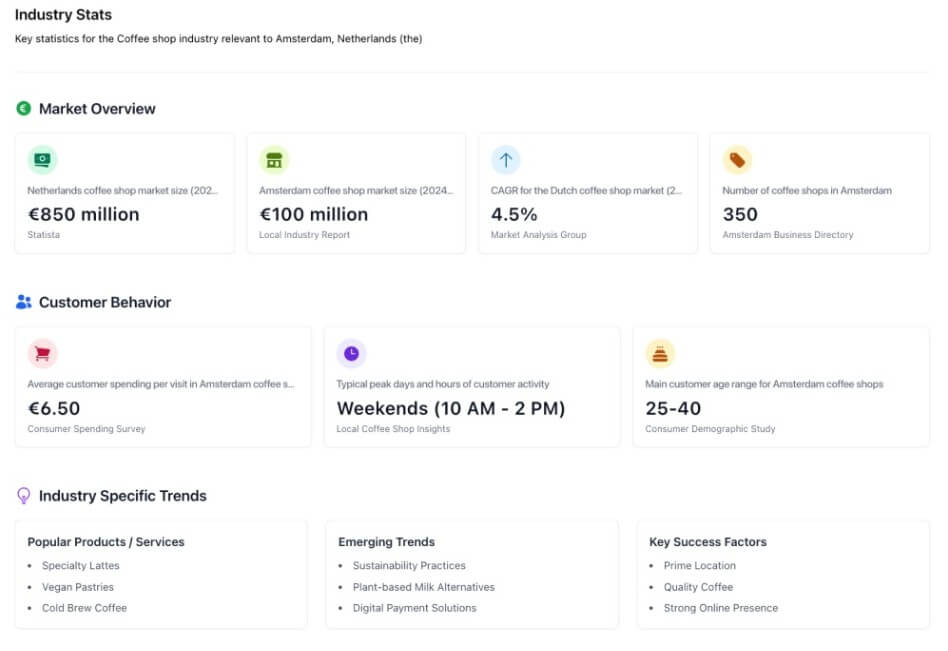
Still, users should verify any market claim before relying on it. AI-compiled research can miss local context, niche competitors, licensing rules, seasonal patterns, or current cost changes. The value is direction and structure, not a replacement for real validation.
BizPlanner.ai’s output should be judged by how useful it is as a planning draft. The best results will likely come when users provide specific inputs: location, business model, target customers, expected services, revenue streams, staffing needs, startup assumptions, and known competitors.
Generic inputs will produce generic plans. A user who writes “online clothing store” will get a broader output than someone who describes a sustainable women’s workwear brand targeting remote professionals in Manila with direct-to-consumer sales and limited seasonal drops.
The built-in editor matters because business plans need revision. AI can help with structure, but the final plan should sound like the actual business. Investors, lenders, and partners can usually tell when a plan is padded or vague.
BizPlanner.ai is a strong fit for first-time entrepreneurs who need a formal plan but are unsure how to organize it. It also works well for small business owners launching local services, restaurants, ecommerce stores, agencies, clinics, workshops, and franchise-style ideas.
Students can use it for business planning assignments, as long as they revise the work and understand the assumptions. Consultants may find it helpful for creating first drafts across multiple client ideas, though they should add their own analysis before presenting anything.
It is also useful for founders testing several ideas. Creating a rough plan for each concept can expose weak assumptions early: unclear audience, thin margins, poor differentiation, or too many operational risks.
The main limitation is that BizPlanner.ai can make a business idea look more complete than it is. A formatted plan with financial projections and market language can feel convincing, even when the underlying assumptions are still untested.
Financial projections need special care. AI-generated numbers should be treated as placeholders unless they are tied to real costs, quotes, sales data, margins, and market evidence. The same applies to competitor analysis and regulations. These sections are useful, but they still need human review.
The tool is also less suited for complex venture-backed startups, regulated industries, deep technical products, or companies that need detailed operational modeling. In those cases, BizPlanner.ai may still help with structure, but expert review becomes more important.
BizPlanner.ai is best for turning an early business idea into a structured, editable business plan without starting from scratch. Its strongest value is the guided workflow, broad section coverage, export-ready format, and market-context features like Industry Pulse.
It is a good fit for entrepreneurs, small business owners, students, and consultants who need a serious first draft. The main caveat is that a polished AI-generated plan is not the same as a validated business. Use it to organize and accelerate planning, then verify the numbers, market claims, and assumptions before making decisions.
TAGS: Productivity
Related Tools:

Enables teams to capture, access, and verify information

Automates task prioritization and management

AI meeting assistant that tracks participation

Provides real-time understanding and smart assistance for meetings

Transforms lecture notes into interactive flashcards

Provides real-time transcription for meetings and conversations