

Share this tool:
 |
Description:
Yahini is an AI content strategy platform for teams that need more than another blank-box writing assistant. Its main value is not “write me a blog post.” It is the way it connects brand understanding, keyword research, content briefs, first drafts, and production tracking inside one workspace. Yahini’s own positioning is clear: manage content operations from research to execution with AI content agents that understand the business behind the content.
Yahini is a strategy-first content operations tool. It sits somewhere between an SEO research platform, a content brief generator, and a workflow management system. The difference is that Yahini tries to connect those pieces instead of leaving them scattered across spreadsheets, documents, project boards, and generic AI chats.
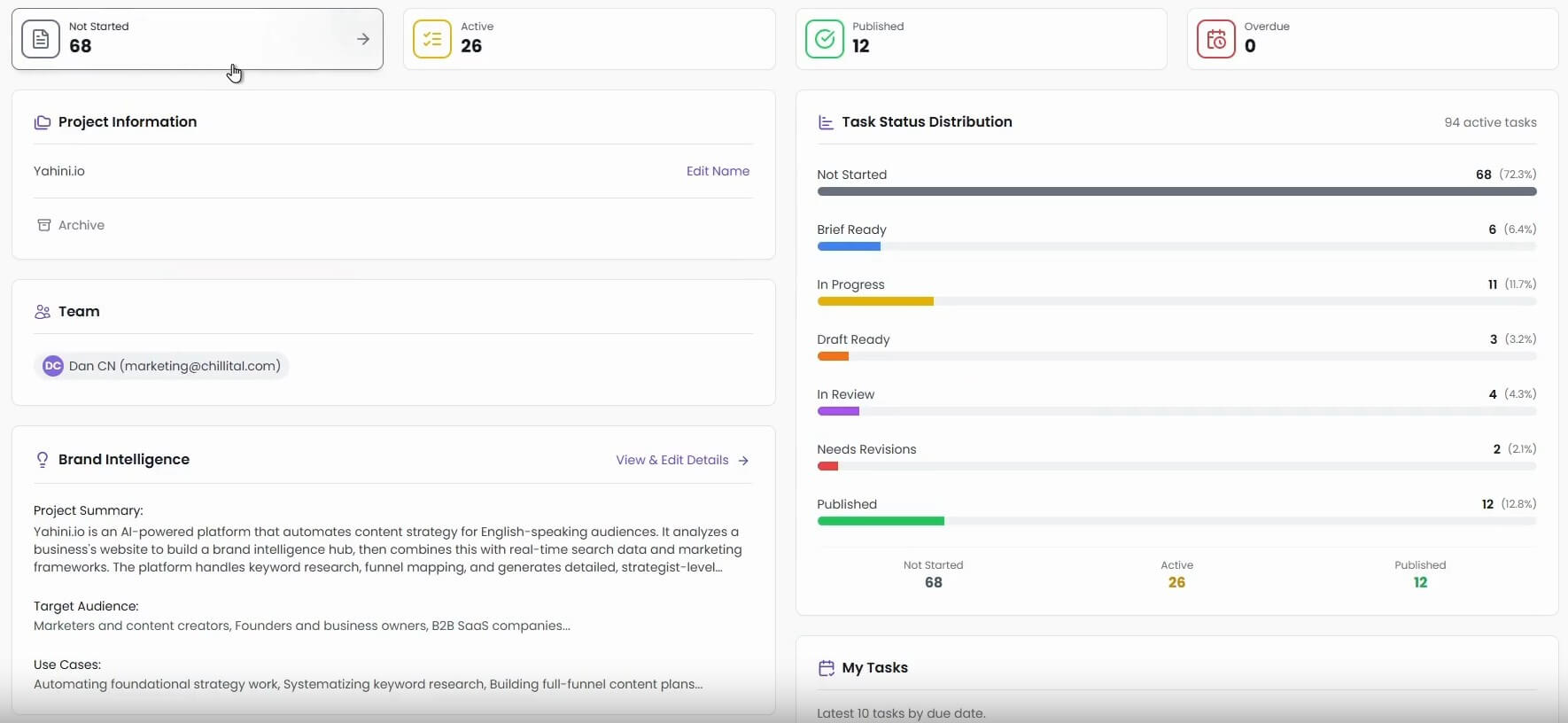
The product has four major layers. First, it builds Brand Intelligence from your website, using that information to understand products, features, positioning, audiences, use cases, and pain points. Second, it uses that business context to support keyword research and prioritization. Third, it turns selected opportunities into strategic content briefs and drafts. Fourth, it tracks content execution through boards, calendars, lists, assignments, comments, and status views.
That makes Yahini a better fit for content teams than for casual AI writing. It is designed for people who need repeatable strategy and execution, not one-off copy blocks.
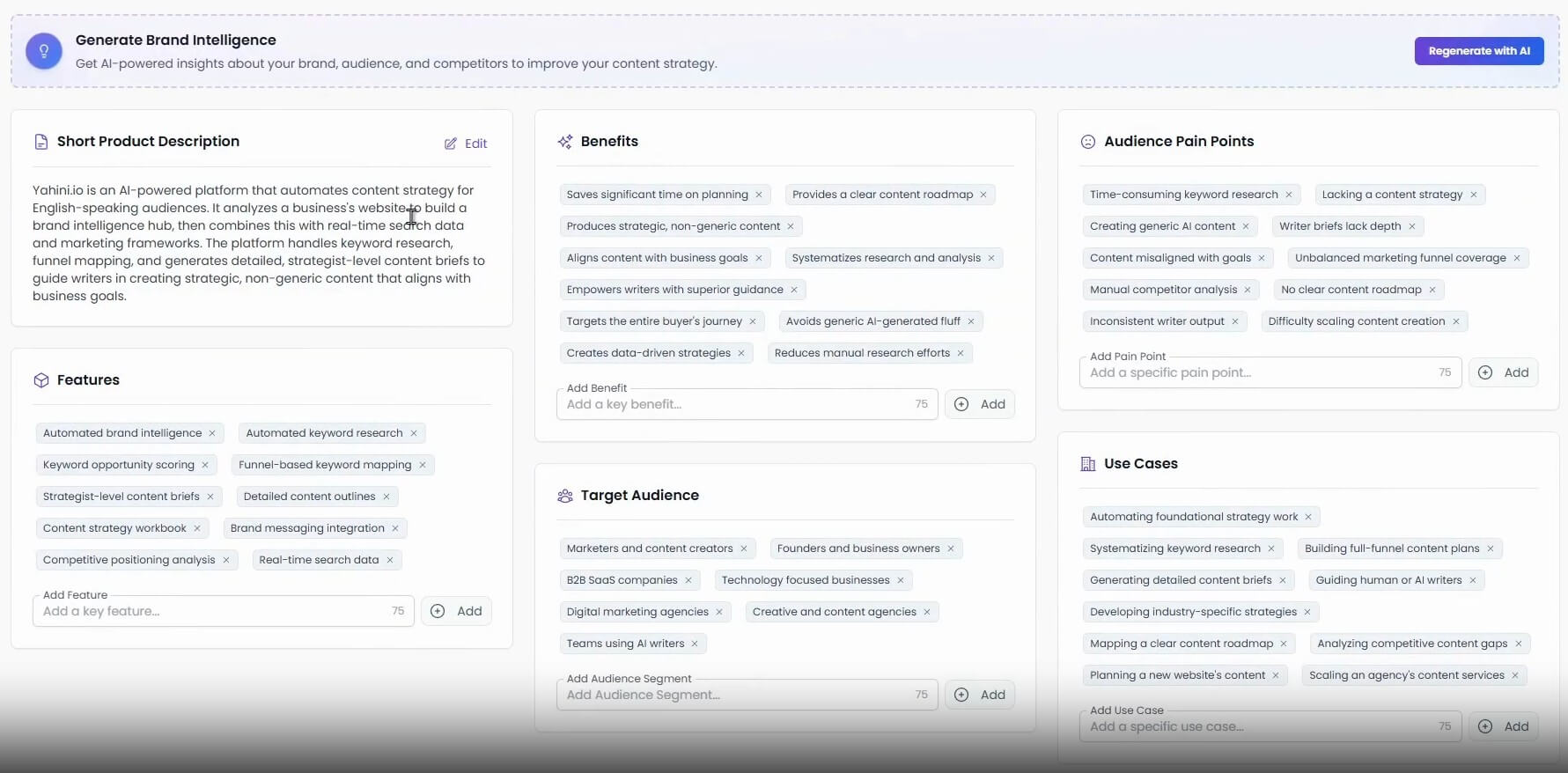
Yahini is strongest when the content problem is strategic, not just editorial.
A generic AI tool can generate a passable article outline. Yahini is trying to answer a harder question: which topics should you write about, why should they matter to your business, how should they map to the funnel, and what should writers include so the content is useful instead of generic?
That is the core difference. Yahini’s Keyword Research Agent cross-references Brand Intelligence with live SERP and competitor data, then scores opportunities by business impact and maps keywords to funnel stages such as TOFU, MOFU, and BOFU. This is much more practical than a long keyword list with no judgment attached. Content teams do not just need options. They need prioritization.
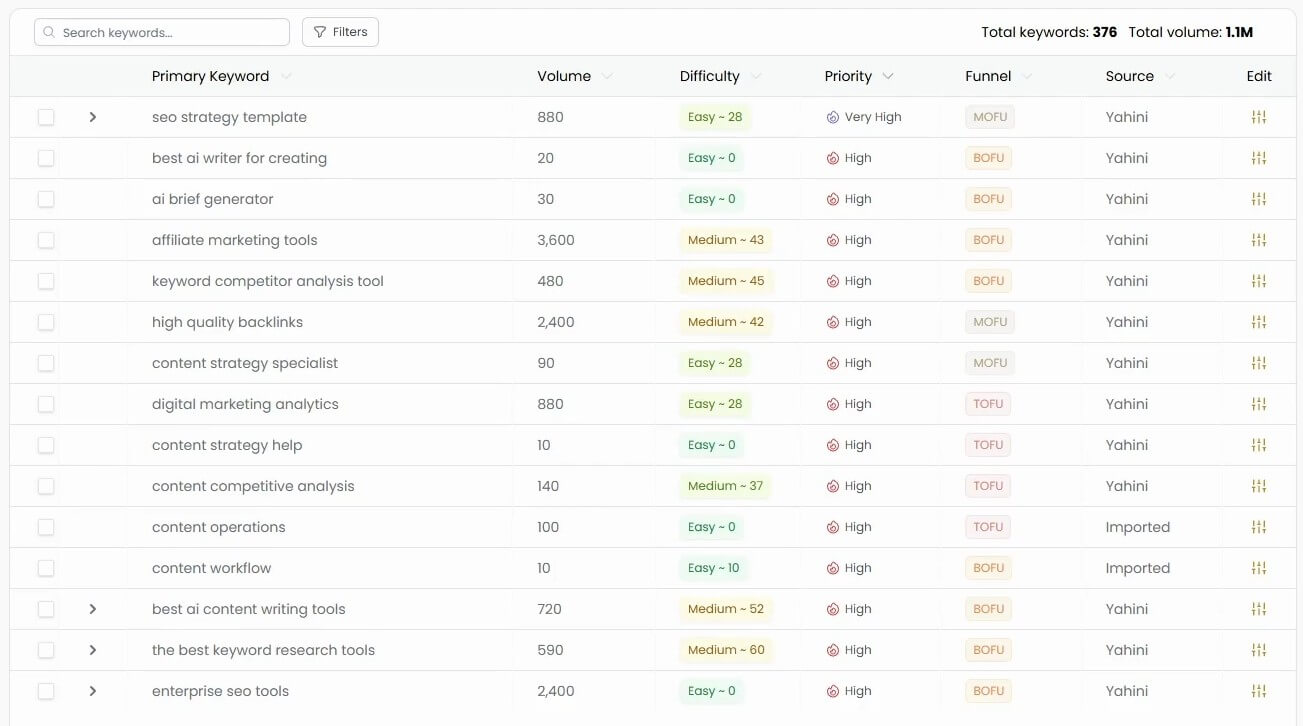
Yahini analyzes a website to build a structured profile of products, features, value propositions, audiences, pain points, and positioning. That profile stays editable, which matters because automatic extraction should be treated as a strong starting point, not a final brand strategy.
Yahini finds and prioritizes keyword opportunities using business context, SERP data, relevance, difficulty, and volume signals. It also groups related keywords into clusters, which helps teams think in topics rather than isolated search terms.
The platform maps keywords to funnel stages, which helps separate awareness content from comparison content and decision-stage content. This is useful because a bottom-funnel article and a top-funnel explainer need different structure, proof, and calls to action.
Yahini generates briefs using Brand Intelligence, SERP analysis, funnel stage, search intent, and content frameworks such as problem-solution, how-to, and comparison formats. The briefs are editable and can include SEO stats, related keywords, meta recommendations, and suggested structure.
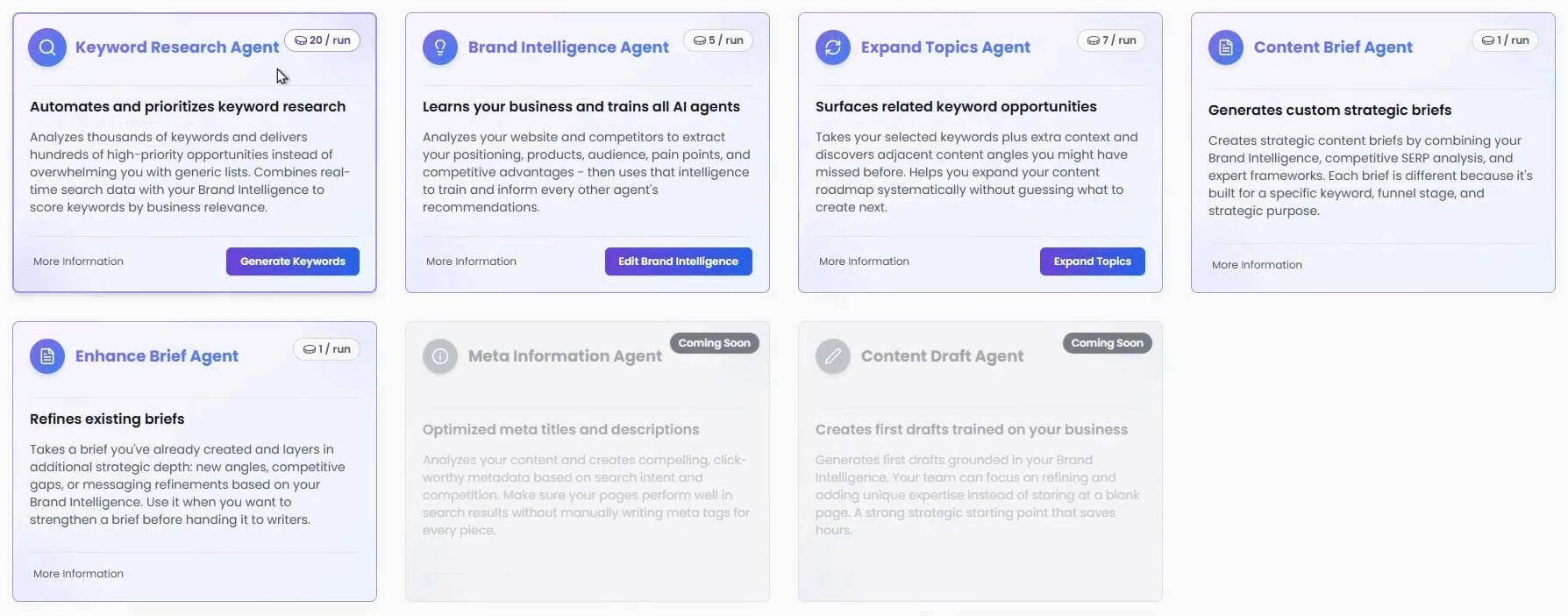
Yahini’s agents are built to work together. Brand Intelligence creates the foundation, keyword research finds opportunities, the brief agent creates strategic plans, and draft support helps move the work forward.
Yahini includes a workflow layer for moving content from keyword research to brief, draft, review, and publishing. Teams can use kanban boards, calendar views, list views, assignments, deadlines, comments, and workspaces for different brands or clients.
The basic workflow is simple: add your business context, generate or import keyword opportunities, review priority suggestions, choose the topics that matter, create briefs, then manage production from the same workspace.
This is a good structure because it mirrors how serious content teams already work. The difference is that Yahini tries to reduce the manual work between stages. You are not exporting from an SEO tool, pasting into a spreadsheet, writing a brief in Docs, assigning it in a project board, and then explaining the brand context again in Slack. Yahini’s content operations page is built around this exact problem: bringing briefs, drafts, assignments, statuses, comments, and publishing progress into one system.
The workflow should feel approachable for marketers, founders, and agencies, but the quality still depends on setup. If your website is thin, unclear, or outdated, the Brand Intelligence layer will need editing. If you accept every keyword suggestion without judgment, the strategy can still become noisy. Yahini reduces the grunt work, but it does not remove the need for content leadership.
The content brief layer is probably Yahini’s most important feature for daily use. Good briefs are where strategy becomes usable. Yahini’s brief system is designed to pull in business positioning, customer pain points, search intent, SERP patterns, topic structure, and funnel-stage logic.
That is the right direction. Many AI brief tools summarize what already ranks and call it strategy. Yahini’s stronger idea is to use ranking pages as input, then add brand-specific angles and a framework that fits the reader’s stage. This should help writers produce content that has a reason to exist, rather than a slightly rewritten version of the current search results.
The main editorial caveat is that briefs still need review. A content lead should check the angle, add internal examples, sharpen the offer, and remove anything that sounds too generic. Yahini can prepare the map, but a human still decides whether the route makes sense.
- Yahini is a strong fit for B2B SaaS teams that need SEO content tied to product positioning. It can help connect features, customer pain points, and funnel stages in a way that a generic writing tool often misses.
- It also works well for agencies managing multiple clients. Separate workspaces for different brands or campaigns make sense when each client needs its own brand context, content calendar, and execution flow.
- Founder-led teams can use Yahini to get structure before they have a full content team. The tool is useful when the founder understands the market but needs help turning that knowledge into a keyword roadmap, briefs, and a manageable content queue.
- It is also useful for content managers who are tired of operating across too many tools. Yahini’s biggest appeal is not one feature. It is the reduction of handoffs.
- Yahini is not ideal for users who want a one-click article generator: The company itself frames it as a better fit for teams that want reliable strategy and editable business context, and not the best fit for people who want fully automated content with no guidance.
- It is also not a replacement for deep SEO judgment: Keyword scoring, funnel mapping, and SERP analysis are useful, but they should not become automatic decisions. Competitive markets still require expert review, internal data, product knowledge, and editorial taste.
- The other trade-off is setup quality: Yahini depends on business context. If the brand profile is weak, the output will be weaker. Teams should expect to review the Brand Intelligence layer, add missing positioning, and refine customer pain points before trusting the briefs.
Yahini is best for marketers, agencies, founders, and content teams that want a strategy-first system for SEO content planning and execution.
Its strongest value is the connection between brand intelligence, keyword prioritization, funnel mapping, content briefs, and workflow management.
The main caveat is that Yahini is not a substitute for human strategy. It is a strong operating layer for teams that already care about better content, but it still needs sharp judgment at the start and final edit.
TAGS: Marketing Content Creation
Related Tools:

Comprehensive 3D modeling and animation software

Optimizes A/B tests on Webflow websites

Marketing automation tool that enhances customer engagement

Supports 3D modeling, sculpting and animation

Automatically edits videos by detecting highlights

Creates personalized popups to enhance user engagement