
Share this tool:
 |
Description:
Winpag is an AI-powered conversion rate optimization tool built specifically for Webflow teams. It learns your business, suggests focused A/B tests, runs experiments on your live site, and helps you approve the winning version. The main idea is simple: instead of redesigning your site once and hoping it works, Winpag helps your site keep improving week by week.
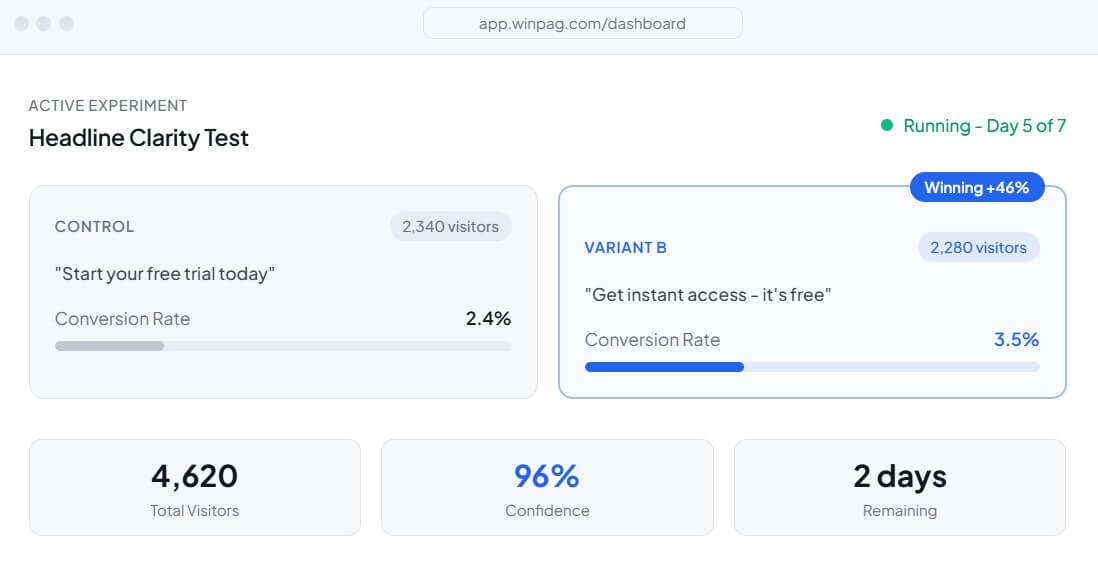
Winpag is not a general analytics platform, and it is not trying to replace Webflow. It sits on top of a Webflow site as an optimization layer.
That focus is useful. Many CRO tools feel built for larger technical teams, with setup work, tagging, experiment planning, and analysis spread across several tools. Winpag is narrower. It is made for Webflow teams that want to test headlines, calls to action, trust signals, positioning, and page messaging without creating a heavy testing process.
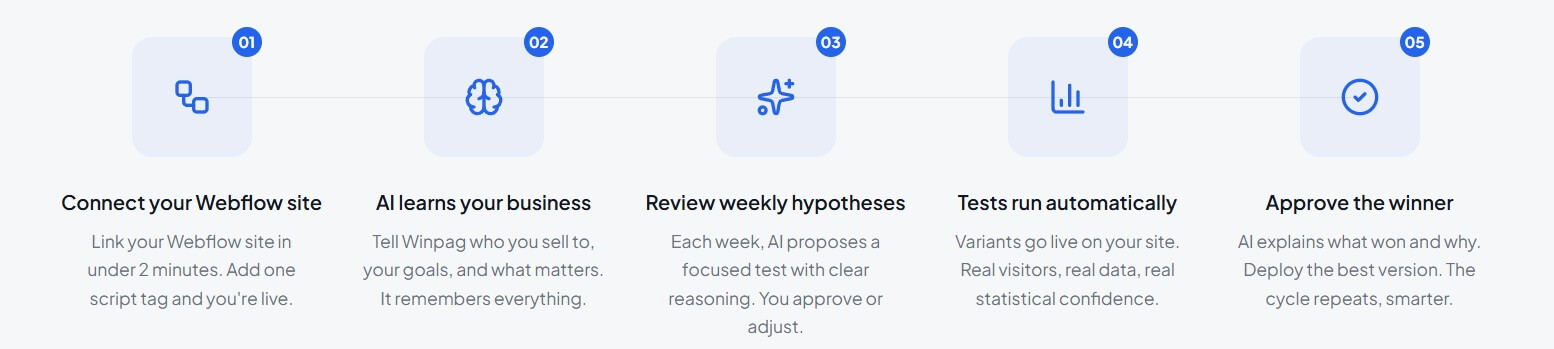
The homepage describes a workflow where users connect a Webflow site, add one script tag, give Winpag business context, review weekly test ideas, let variants run, and approve the winner. That gives the platform a clear rhythm: learn, propose, test, explain, repeat.
The setup is meant to be lightweight. Winpag says users can link a Webflow site and add one script tag, then the system can run tests directly on live Webflow pages without exporting or migrating the site.
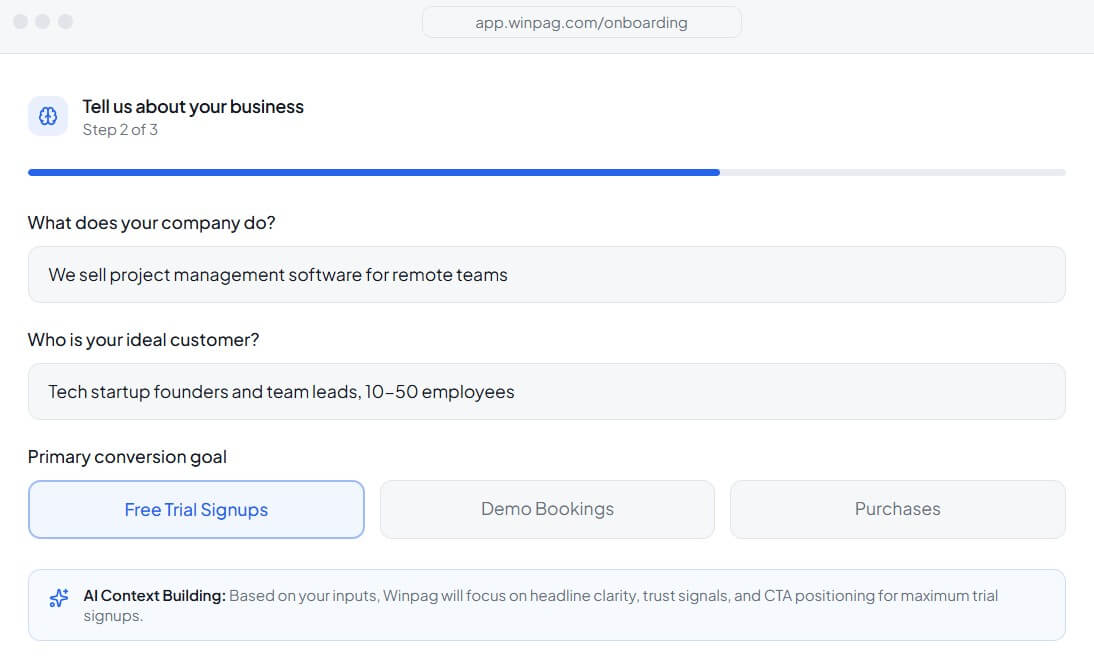
After setup, the business context becomes important. Winpag asks what the company does, who the ideal customer is, and what the primary conversion goal should be. The examples on its homepage include goals such as trial signups, demo bookings, and purchases. That context helps the AI focus on the right kinds of tests instead of making random page changes.
Each week, Winpag proposes a focused hypothesis. A good hypothesis should explain what will change, why it matters, and what impact is expected. The user can approve or adjust the test before it runs. This approval step is one of the most important parts of the product because it keeps the AI from making surprise changes on a live marketing site.
| Feature | What It Does | Why It Matters |
|---|---|---|
| Webflow-native setup | Runs through a script tag on Webflow pages. | Avoids migrations and keeps the site workflow simple. |
| Persistent business memory | Remembers ICP, goals, brand tone, and constraints. | Helps future tests build on earlier context. |
| Weekly test hypotheses | Suggests focused experiments with reasoning. | Reduces the blank-page problem in CRO. |
| Human approval | Requires review before tests run. | Keeps brand and conversion control with the user. |
| Statistical confidence | Runs tests until there is a clear winner or no-winner state. | Reduces premature decisions. |
| Winner explanations | Explains what won and why. | Helps teams learn from each experiment. |
Winpag’s feature section emphasizes persistent business memory, hypothesis-led testing, compounding learnings, human approval, Webflow-native deployment, and statistical rigor.
Winpag’s strongest fit is messaging optimization. Webflow sites are often used for SaaS landing pages, agency sites, startup homepages, lead generation pages, and product marketing pages. On those pages, small wording and layout changes can matter.
A headline that makes the value proposition clearer, a CTA that feels lower-friction, a trust signal moved higher on the page, or a benefit section rewritten around the right buyer can affect conversions. Winpag is built around that kind of practical testing.
It is also useful for teams that know they should run experiments but never get around to it. CRO often fails because nobody owns the process. Winpag gives the process a schedule. Each week, it proposes a test, runs it after approval, explains the result, and carries learnings forward.
Webflow SaaS sites can use Winpag to test homepage headlines, trial signup messaging, demo CTAs, product benefit sections, and trust elements.
Agencies using Webflow can use it for client landing pages where ongoing optimization is part of the service.
Startup teams can use it when they have traffic but not a dedicated CRO specialist.
Lead generation sites can test form messaging, button copy, hero sections, and page hierarchy.
Product marketing teams can use it to refine positioning based on real visitor behavior instead of internal opinion.
- Start with one high-value page. A homepage or conversion-focused landing page is usually better than testing a low-intent blog post.
- Give Winpag clear business context. The better it understands your audience, goal, brand tone, and constraints, the more useful the test ideas should be.
- Review hypotheses carefully. A test may be technically valid but still wrong for your positioning, compliance needs, or brand voice.
- Let tests run long enough. The platform emphasizes statistical confidence, and that matters. A fast early lift can disappear when more visitors are included.
- Keep a separate note of learnings. Winner explanations are useful, but teams should also track what they are learning about buyer motivation over time.
Winpag is focused on Webflow. That is a strength if your site runs on Webflow, but it also means teams using other website platforms should not treat it as a general CRO tool.
It also depends on traffic. A/B testing needs enough visitors to produce useful results. Smaller sites may still benefit from better hypotheses and structured thinking, but test conclusions may take longer or remain less certain.
Another limitation is scope. Winpag can help optimize page content and conversion paths, but it cannot fix weak product-market fit, poor offer quality, bad traffic, or a broken sales process. It improves the page experience; it does not replace broader marketing strategy.
Finally, human review still matters. The product is designed with approval in the loop, and users should use that control. AI can propose sensible tests, but teams should check the wording, promise, tone, and possible business impact before running experiments.
Winpag is best for Webflow teams that want a lighter, more consistent way to run conversion experiments.
Its strongest value is the combination of Webflow-native setup, weekly AI-generated hypotheses, persistent business memory, statistical testing, winner explanations, and human approval.
The main caveat is fit: it makes the most sense for Webflow sites with enough traffic to learn from experiments and a team willing to review each test before it goes live.
TAGS: Marketing
Related Tools:

Create 3D models using advanced NURBS-based techniques

Automates content creation

Simplifies the creation of high-converting pages
Transforms product images into animated marketing videos

Enables artists to create intricate 3D models

Automates the creation of ad campaigns for effective marketing