
Share this tool:
 |
Description:
Robot of Business is not a typical self-service AI app where you log in, type prompts, and generate outputs on your own. Its current site positions the company more like a growth and automation partner for businesses that want paid acquisition, landing pages, conversion tracking, lifecycle marketing, and selected AI-powered business systems built for them.
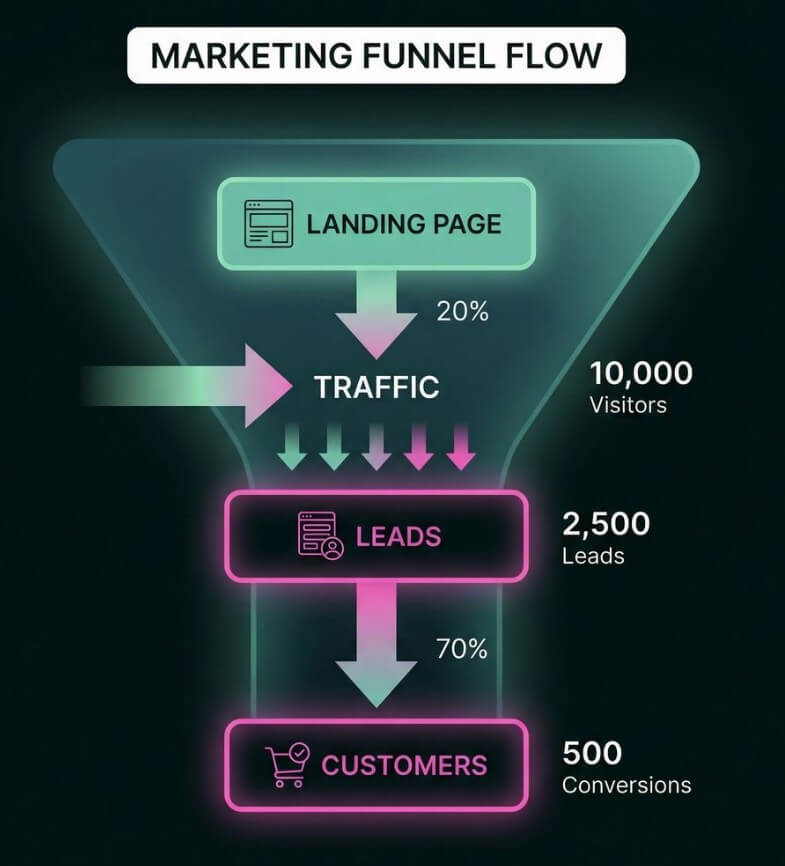
The clearest way to understand Robot of Business is as a managed growth systems service with an AI automation background. The homepage focuses heavily on turning paid ads into predictable growth, combining paid acquisition, landing pages, and conversion tracking so businesses can see what drives revenue.
The company’s About page adds the broader automation layer. It describes Robot of Business as a team of marketers, operators, and engineers that helps small and medium-sized businesses simplify tedious work with AI and automation. The examples include automating website landing pages, social media feeds, blog posts, employee onboarding, email content, PR outreach, employee scheduling, Google review responses, presentations, and other recurring business tasks.
That mix matters. Robot of Business is not only “AI automation” and not only “marketing agency.” It sits between the two. The current public site now emphasizes growth marketing, while older or deeper solution pages still show AI website generation and AI review response workflows. For a buyer, that means the best way to evaluate it is by the business problem you want solved, not by expecting one fixed software dashboard.
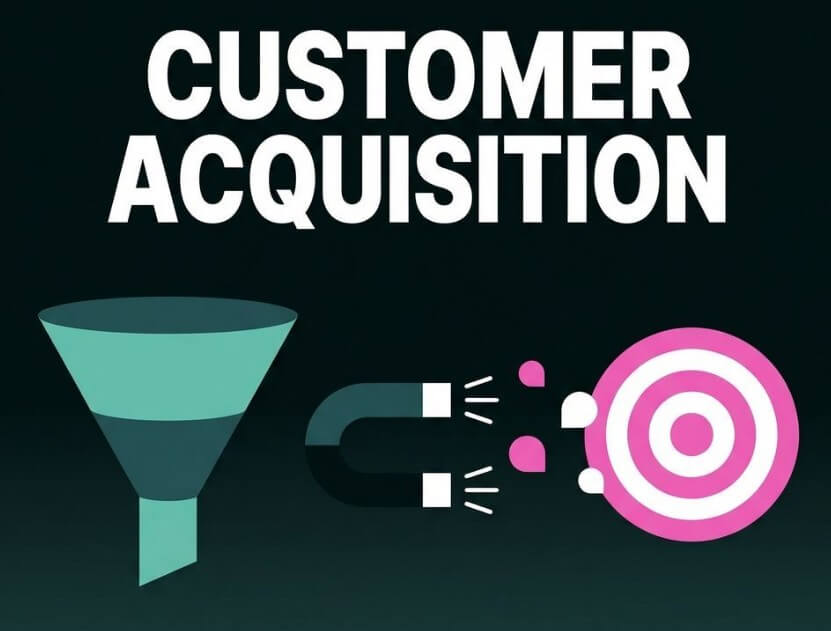
Robot of Business is strongest for companies that already have market demand but need a better system for acquiring, converting, and retaining customers. The site repeatedly points to paid acquisition, funnel alignment, attribution, and lifecycle marketing rather than broad AI experimentation.
That is a practical angle. Many businesses do not need another AI tool sitting unused in a browser tab. They need campaign structure, landing pages that match the offer, better tracking, and follow-up systems that keep leads and customers moving. Robot of Business is built around that operating layer.
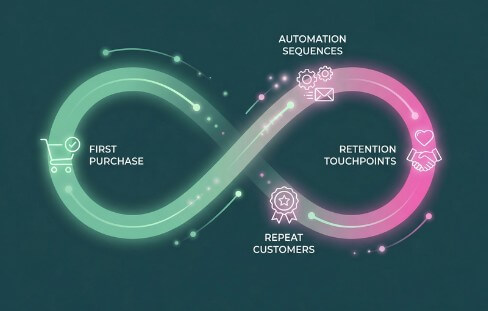
The Growth Marketing page is especially clear about this. It says the system connects acquisition, conversion, and retention into one measurable growth engine, with specific use cases for e-commerce, restaurants, and SaaS companies.
| Feature | What it does | Why it matters |
|---|---|---|
| Paid Acquisition Strategy | Designs and manages campaigns intended to generate qualified leads and customers across platforms such as Meta and Google | Helps businesses turn ad spend into a more structured growth channel |
| Landing Page and Funnel Support | Builds high-converting funnels, landing pages, and lead funnels that turn traffic into measurable revenue | Improves the conversion layer after someone clicks an ad |
| Marketing Attribution | Highlights conversion tracking and attribution so businesses can understand which campaigns drive revenue | Helps owners see what is actually working instead of guessing from surface metrics |
| Lifecycle Marketing | Builds email automations, nurture sequences, retention campaigns, post-purchase flows, and win-back campaigns | Turns first-time customers into repeat buyers and improves customer lifetime value |
| AI Website Builder | Uses a questionnaire-based process to create a live landing page hosted on Robot of Business, with an option to claim and transfer the site into Webflow | Helps businesses create a faster starting point for landing pages and offer tests |
| AI Google Review Responses | Provides AI review management with brand voice matching, integration support, and professional implementation | Helps businesses respond consistently to reviews without writing every reply manually |
Robot of Business appears to work more like a consultation and implementation service than a pure SaaS product. The site’s main calls to action are strategy calls or consultations, and the homepage is written around diagnosing growth problems and building systems rather than inviting users into a standalone app.
That will be a strength for business owners who want outcomes, not setup work. If you do not want to build tracking, write landing page copy, configure lifecycle emails, or connect campaign reporting yourself, a managed service can be more useful than a DIY tool.
The trade-off is that self-serve buyers may find the public experience less transparent. There is not a detailed product interface walkthrough on the main site. You get service categories, use cases, testimonials, and consultation forms, but not the same kind of public product documentation you would expect from a mature SaaS platform.
The strongest AI-specific use case on the site is review response automation. Robot of Business says its Google review response service can provide timely, personalized responses, match brand tone, and handle review management with less manual work.
Its own blog takes a sensible view of the risks. One article notes that outsourced review responses can create concerns around authenticity, direct engagement, and responses that do not reflect the owner’s real voice. Another article says AI review automation should be trained with preferred examples, brand tone, business policies, and sensitive-response rules.
That is the right framing. Review automation is useful, but it should not be treated as “set it and forget it.” It works best when the business has clear tone guidelines, escalation rules, and human review for angry, sensitive, legal, health-related, or safety-related complaints.
Robot of Business is a strong fit for founder-led businesses that want paid acquisition and retention systems built around measurable revenue. It makes sense for e-commerce brands that need paid campaigns plus lifecycle emails, restaurants that need local acquisition and loyalty systems, and SaaS teams that need landing pages, nurture sequences, and trial-to-paid improvement.
It is also useful for local service businesses that struggle to respond to Google reviews consistently. The review response product is especially relevant for owners who care about reputation but do not have time to write every response manually.
The AI website builder is best for early landing pages, offer tests, startup ideas, and quick concept validation. It is less likely to replace a full custom brand site, but it can help businesses get a presentable starting point faster.
- Start with one measurable bottleneck. Do not approach Robot of Business with a vague goal like “automate everything.” Better starting points are “increase qualified demo bookings,” “improve paid ad tracking,” “recover more abandoned carts,” or “respond to all Google reviews in our brand voice.”
- For review automation, prepare sample responses before setup. The quality will depend on tone guidance, policy rules, and examples of how your business handles praise, complaints, refunds, delays, and sensitive issues.
- For paid growth work, ask how campaigns, landing pages, CRM data, and attribution will connect. Robot of Business markets itself around systems, so the real test is whether the pieces work together.
The biggest limitation is clarity. The current homepage emphasizes growth marketing, while other pages still show broader AI automation tools such as website building and Google review response management. That is not a dealbreaker, but it can make the product feel like a service company that has evolved over time rather than a single neatly packaged app.
The second limitation is limited public product depth. Buyers looking for screenshots, dashboards, integration specs, case studies with hard metrics, or a self-service trial may want more detail than the site currently provides.
There is also a data consideration. The privacy policy says Robot of Business may collect information such as name, email, phone number, company name, industry, revenue, business size information, marketing challenges, website behavior, referral source, and advertising or analytics data through cookies and pixels. That is normal for a marketing service, but businesses should still review the privacy policy before submitting sensitive details.
Robot of Business is best for companies that want growth systems built and managed, not just another AI tool to operate themselves. Its strongest areas are paid acquisition, funnels, attribution, lifecycle marketing, AI-assisted landing pages, and Google review response automation. The main caveat is positioning: it feels more like a hands-on growth and automation partner than a conventional software product, so buyers should evaluate the implementation process, reporting, and control level before committing.
TAGS: Marketing
Related Tools:

Automates the creation of ad campaigns for effective marketing
Optimize websites and offers funnel analysis
Improves website rankings and increase conversions
Create highly detailed 3D models and textures
Automates digital marketing tasks

Creates and optimizes Google Ads campaigns