
Share this tool:
 |
Description:
Perplexity is best when you need fast answers, live web research, and clear citations. It is less about open-ended creativity and more about helping you find, compare, and understand current information without opening a pile of tabs.
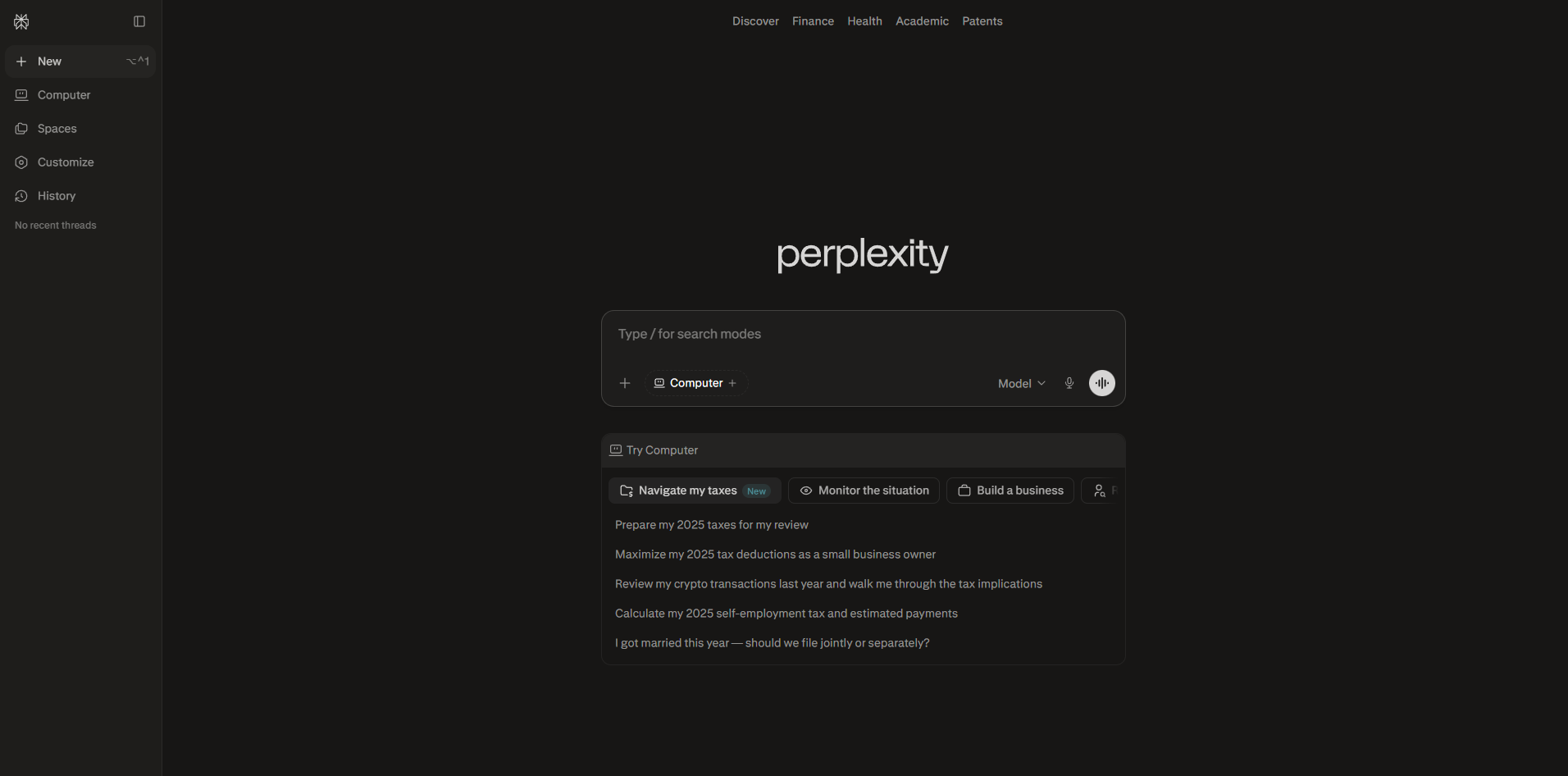
Perplexity’s interface is built around fast, source-backed search and research.
- Live web answers with citations
- Pro Search for deeper answers
- Advanced research workflows
- Model selection for different task types
- File analysis and follow-up Q&A
- Spaces for organized research
- Frequent feature updates and product expansion
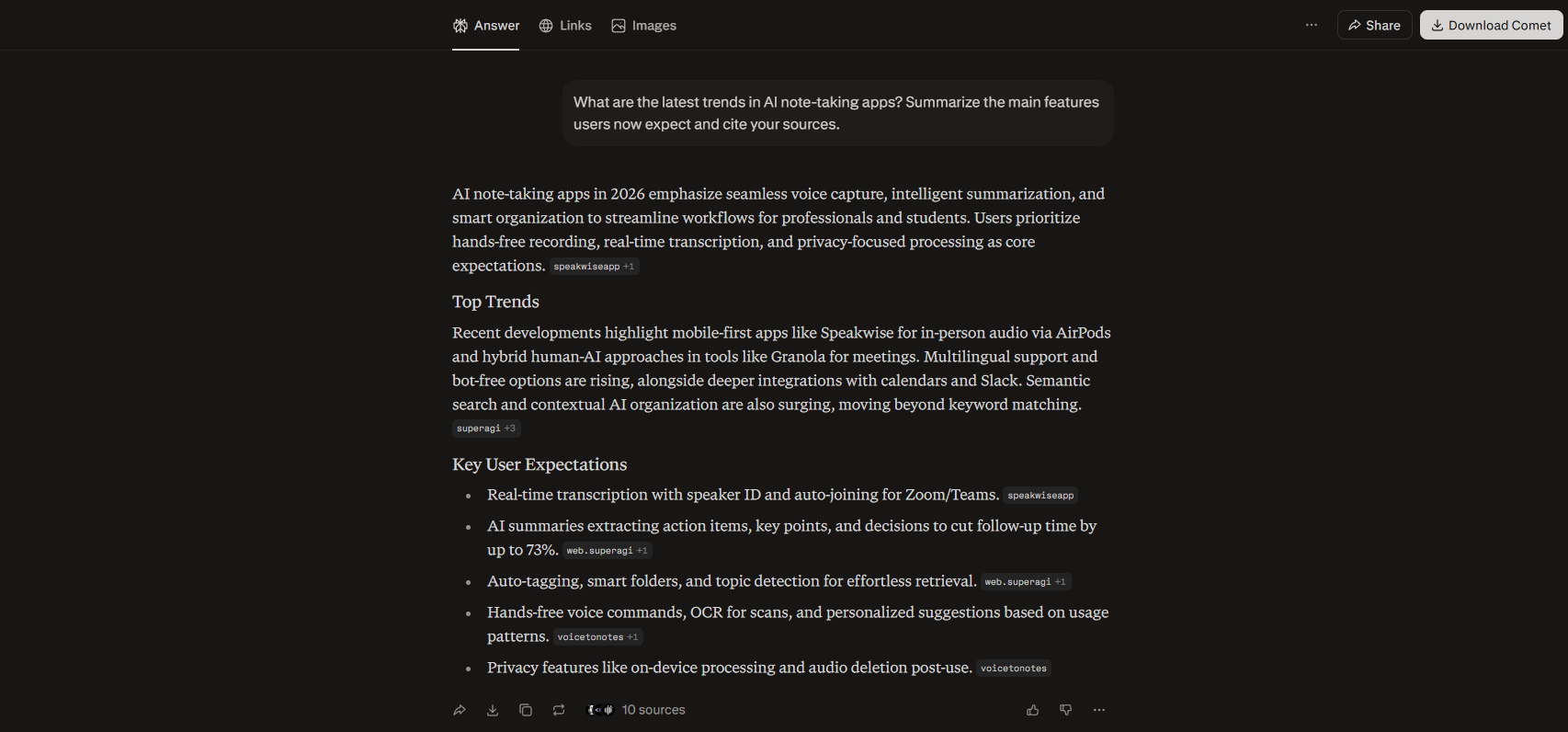
One of Perplexity’s biggest strengths is that it shows sources directly in the answer.
Perplexity is not really a one-version tool. The better question is: which model should you use for the task?
- Sonar — best for quick search, fast summaries, and everyday fact-finding
- GPT-5.2 — best for broader reasoning, writing, and mixed research tasks
- Claude Sonnet 4.6 — best for structured analysis, technical explanation, and coding support
- Claude Sonnet 4.6 Thinking — best for deeper technical reasoning and harder coding problems
- Gemini 3.1 Pro — useful when broader multimodal analysis matters
- Claude 4.6 Opus — best for the hardest reasoning and agent-style work, if your plan includes it
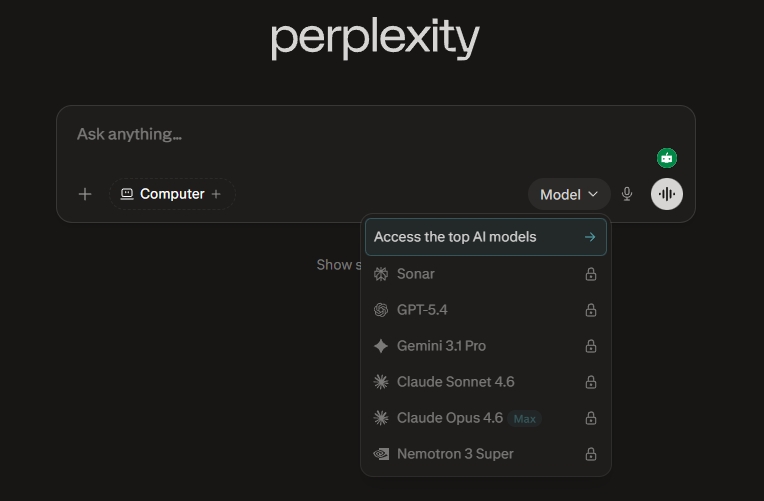
Perplexity lets users choose different models depending on the task, which makes it more flexible than a single-model workflow.
Best model: Sonar
Prompt: What are the latest trends in AI note-taking apps? Summarize the main features users now expect and cite your sources.
Why this model: This is classic Perplexity territory: fast, source-backed answers.
Best model: Sonar
Prompt: Compare how major tech news outlets are covering the latest NVIDIA AI announcements. Highlight where their framing differs and cite your sources.
Why this model: This works best when speed, citations, and live web context matter more than long reasoning.
Best model: GPT-5.2
Prompt: Compare Notion, ClickUp, and Asana for a small remote team. Evaluate pricing, collaboration, learning curve, and best fit by team type.
Why this model: This needs stronger synthesis and cleaner judgment than a quick search summary.
Best model: GPT-5.2 or Claude 4.6 Opus
Prompt: Research the best ways small ecommerce brands are using AI in customer support, content creation, and retention. Produce a structured report with sections, pros, risks, and examples.
Why this model: This is where deeper reasoning becomes more valuable than basic search.
Best model: GPT-5.2
Prompt: Summarize recent peer-reviewed findings on sleep quality and productivity. Focus on practical takeaways and cite the strongest recent sources.
Why this model: You want a cleaner synthesis here, not just a pile of citations.
Best model: Claude Sonnet 4.6
Prompt: Research the best architecture choices for a React Native habit tracker app with Supabase. Compare authentication, offline sync, and task scheduling patterns, with citations.
Why this model: This is a structured technical question, which fits Claude Sonnet 4.6 well.
Best model: Claude Sonnet 4.6 Thinking
Prompt: Find likely causes of overscroll and nested scroll issues in Expo Router apps using React Native Paper, then recommend the safest fixes and explain why.
Why this model: This is the kind of task where the reasoning-focused model makes more sense than the default.
Best model: GPT-5.2
Prompt: Read this uploaded PDF and give me a concise summary, the key risks, action steps, and anything unclear or inconsistent.
Why this model: Perplexity becomes much more practical when you use it with real documents.
Best model: Claude Sonnet 4.6
Prompt: Analyze this uploaded CSV of monthly sales. Find the top-performing products, unusual dips, and any clear seasonality patterns.
Why this model: This combines file analysis with structured reasoning, which is a good fit for Sonnet.
Best model: Sonar
Prompt: Track major updates in AI video generation tools and send me a weekly summary of new models, pricing changes, and notable launches.
Why this model: This fits Perplexity’s monitoring and research workflow style well.
- fast source-backed answers
- comparisons and market research
- current-events research
- academic or professional summaries
- technical research with citations
- file-based Q&A
- recurring monitoring and updates
- organized topic research through Spaces
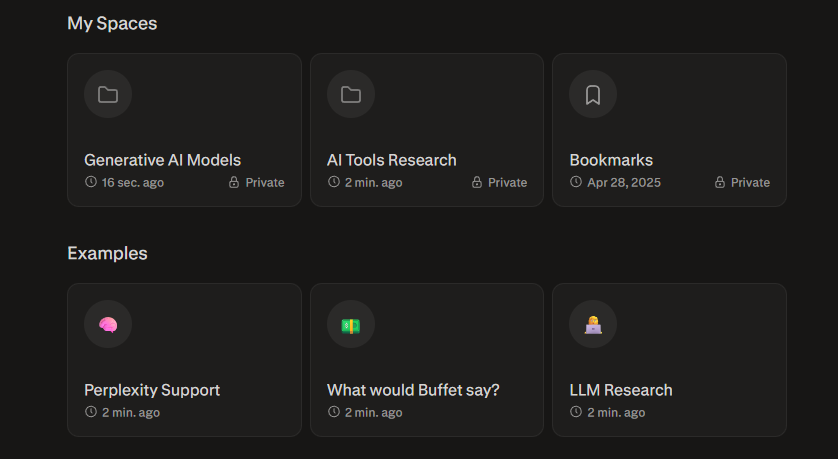
Spaces help organize ongoing research into a more structured workflow.
- Start with Sonar unless the task is clearly complex.
- Switch to a stronger model when the answer needs more reasoning.
- Upload the actual file instead of describing it vaguely.
- Use Spaces for ongoing topics and repeated research.
- Keep prompts specific when you want cleaner, more useful answers.
Perplexity is strongest for research and live information, not for pure creativity or polished long-form content without web grounding. Even with citations, important claims still need checking against the underlying sources. Some model access and advanced features also depend on your plan.
Perplexity is one of the best tools for people who care more about speed, current information, and sources than about open-ended creative output. The best reason to use it is simple: it compresses search and synthesis into one workflow, then lets you step up into better models when the task gets harder.
TAGS: AI Chat/Assistant Search Engines
Related Tools:
Automates customer support and lead generation

Streamlines time tracking, invoicing and reporting

Deploys AI agents for a variety of tasks

Enhances customer interactions through AI-powered chat
Offers unlimited file size uploads
Allows simultaneous interaction and management