

Share this tool:
 |
Description:
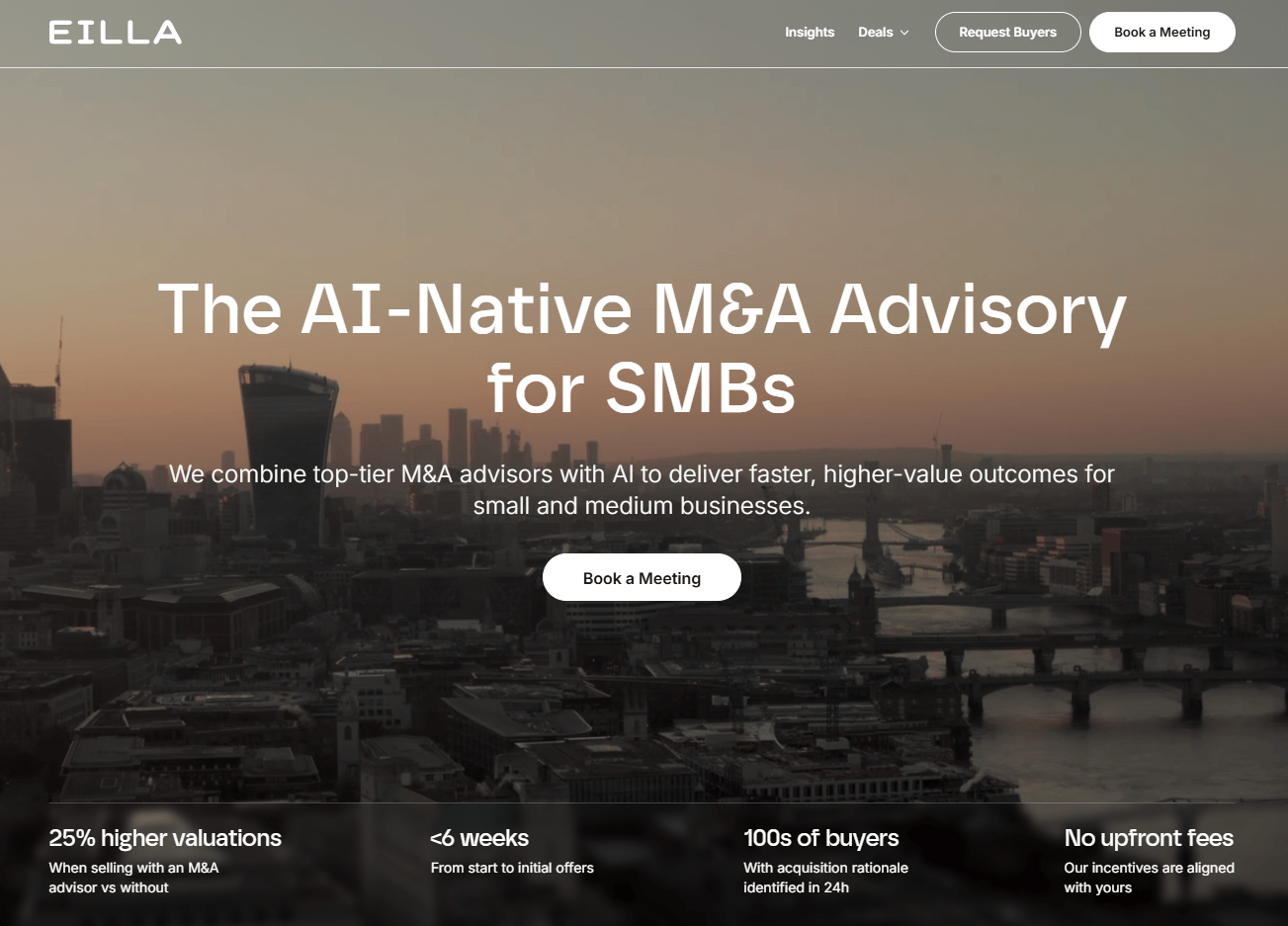
Eilla AI is a private-market AI platform and AI-native M&A advisory firm built around one core idea: much of the manual research, buyer mapping, comps work, and preparation behind dealmaking can be compressed with AI, while human advisors and investment professionals still make the important calls. The current public product has two sides: an AI-native sell-side M&A advisory for SMB owners, and an AI Analyst platform for VC, PE, and M&A teams. That split is important because Eilla is not just a chatbot for finance. It is trying to sit inside the deal process.
Eilla is strongest where deal work is repetitive but still judgment-heavy. A normal M&A, VC, or PE workflow involves lots of manual searching, list building, comparable-company work, market mapping, competitor checks, buyer identification, and preparation of summaries. Those tasks matter, but they can consume analyst time before the team even gets to the sharper questions: Why this company? Why now? Who would care? What could it be worth? What risks need deeper diligence?
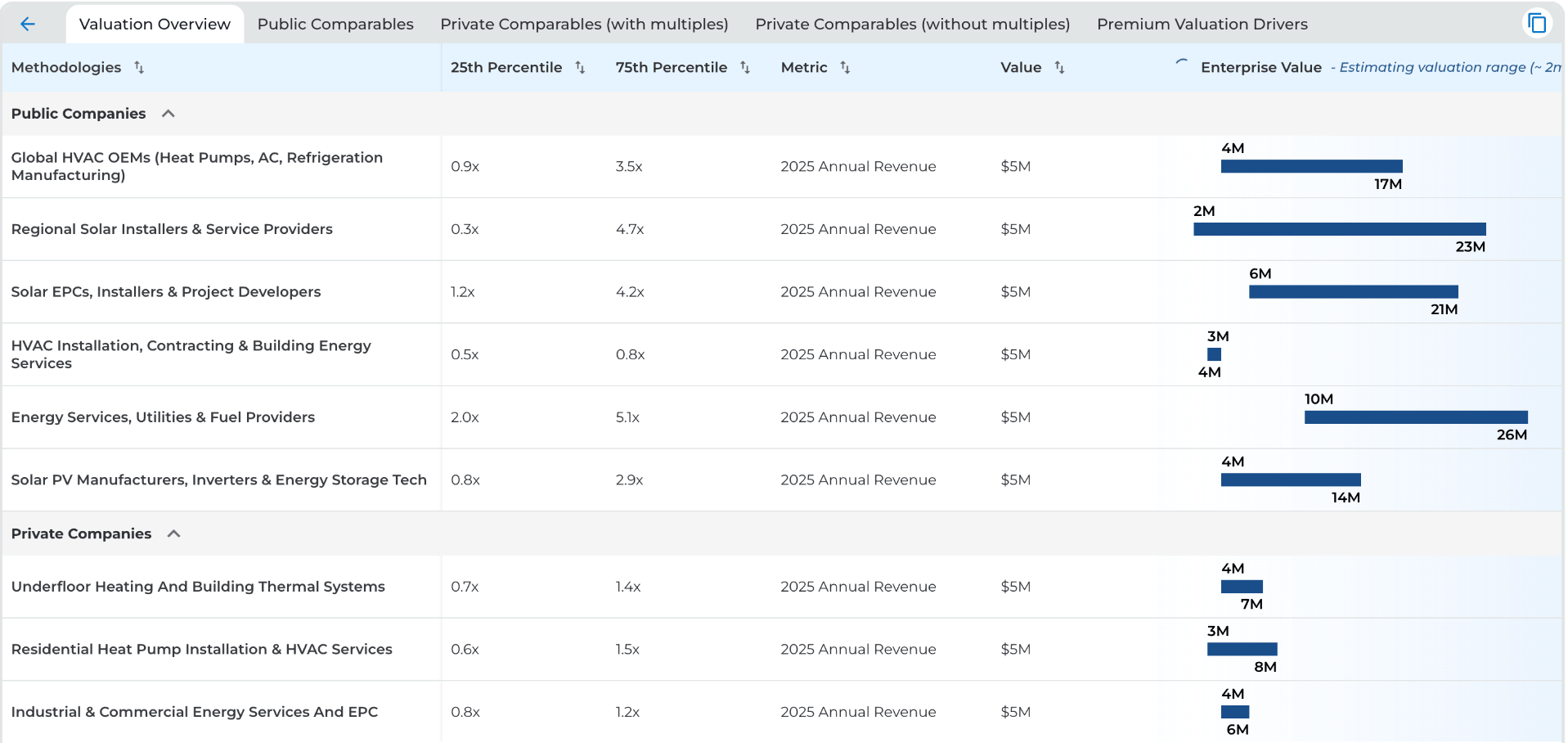
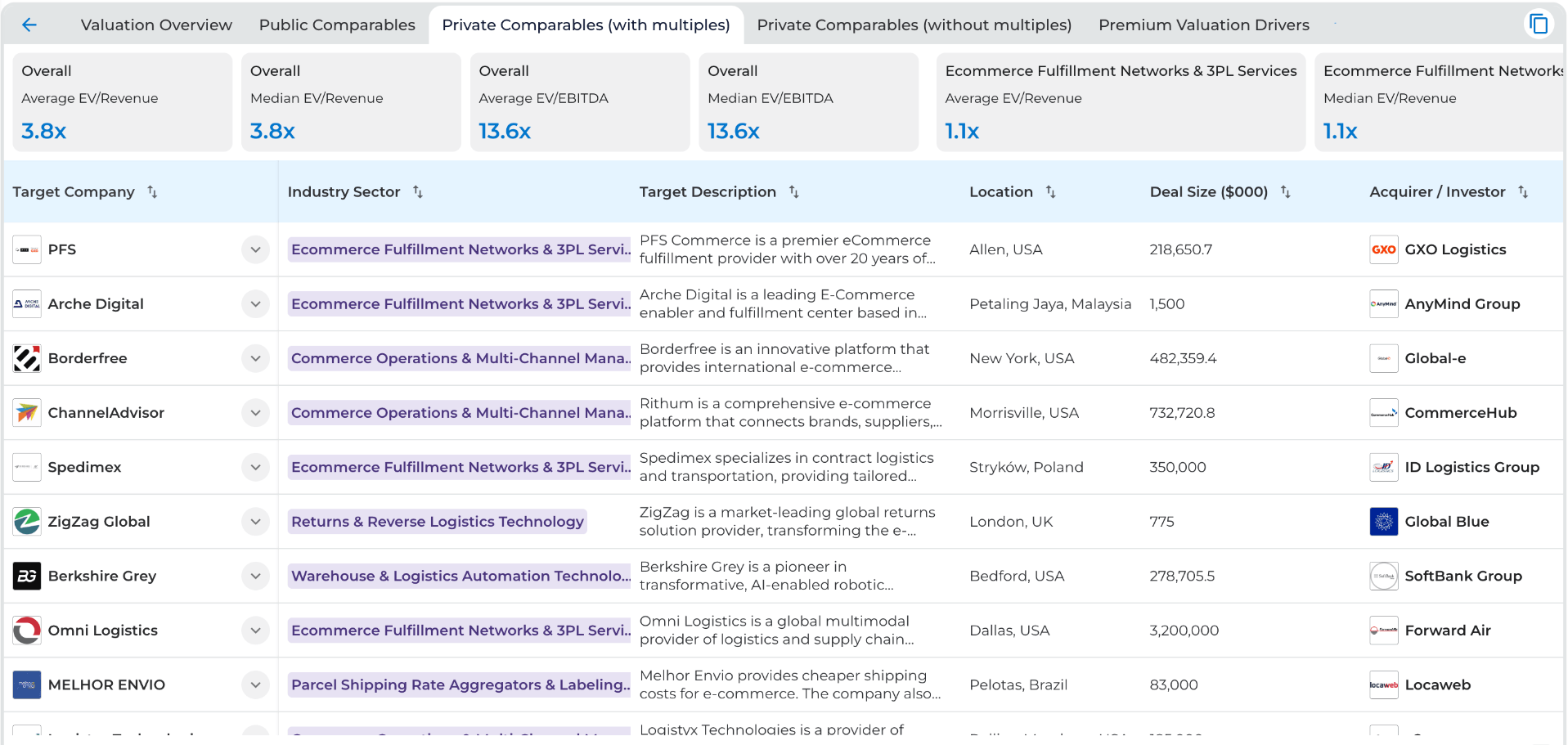
The AI Analyst platform is built for that middle layer. Eilla says its analysts can generate company insights, find real competitors, create SWOT-style comparison reports, identify public and private comps, uncover valuation drivers, and surface strategic or financial buyers based on similar acquisitions.
The advisory side applies a similar logic to sell-side M&A. Eilla says its AI can surface hidden buyers, help identify acquisition rationale, use market intelligence from similar deals, and prepare a company for outreach after the seller uploads data once.
That is the right positioning. Eilla is not trying to make an AI model “decide” a deal. It is trying to make the slow parts of the deal process faster and more structured.
Eilla separates work into named analyst roles for company research, valuation and comps, market research, and buyer or company scouting.
The advisory product says Eilla uses a proprietary database of 9M+ companies to identify relevant acquirers based on acquisition behavior, sector fit, strategic synergies, company size, market cap, and related signals.
Lucas, Eilla’s valuation and comps analyst, is positioned around public and private comps, valuation drivers, and football fields.
Eilla’s platform supports company insights, market size, growth drivers, challenges, competitor discovery, SWOT analysis, and comparison reports.
Eilla says the platform can use industry-trusted sources such as Capital IQ, Crunchbase, LinkedIn, and internal files for diligence tasks.
The advisory product is still advisor-led. Eilla says deals are run by M&A advisors while AI handles manual work such as buyer discovery and preparation.
Eilla is easier to understand when you separate the platform from the advisory service.
| Layer | Who it is for | What it does |
|---|---|---|
| AI M&A Advisory | SMB founders and owners considering a sale | Combines M&A advisors with AI for buyer discovery, market intelligence, prep, outreach, and deal process support |
| AI Analyst Platform | VC, PE, M&A, investment banking, and deal teams | Automates research, comps, market work, competitor discovery, buyer scouting, and diligence-style analysis |
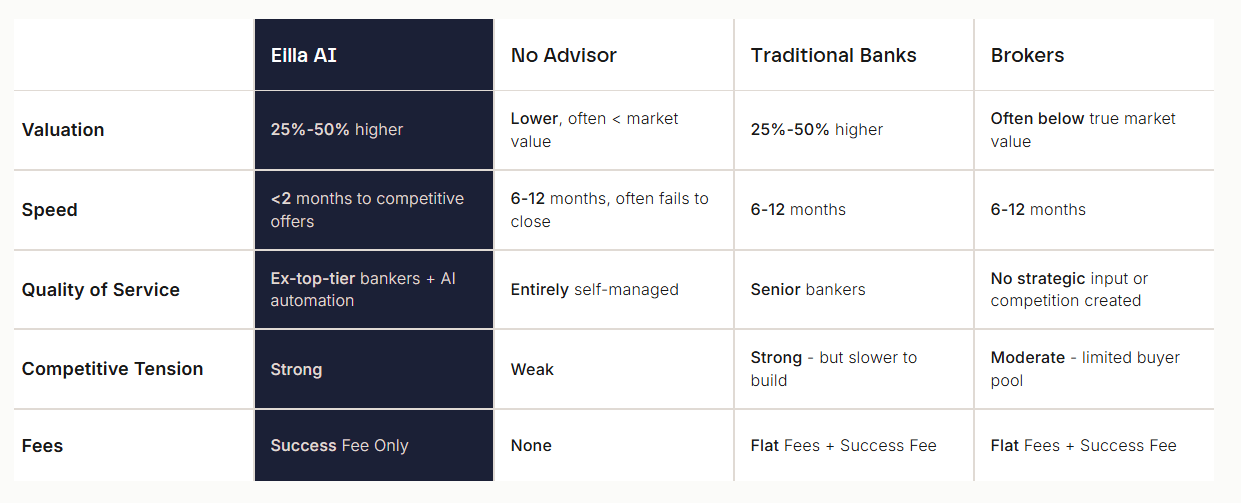
The advisory layer is outcome-oriented. A business owner wants to prepare for a sale, identify buyers, create competition, and get through a process without running it alone. Eilla positions its advisory around SMBs globally, usually businesses with roughly $1M to $50M in revenue.
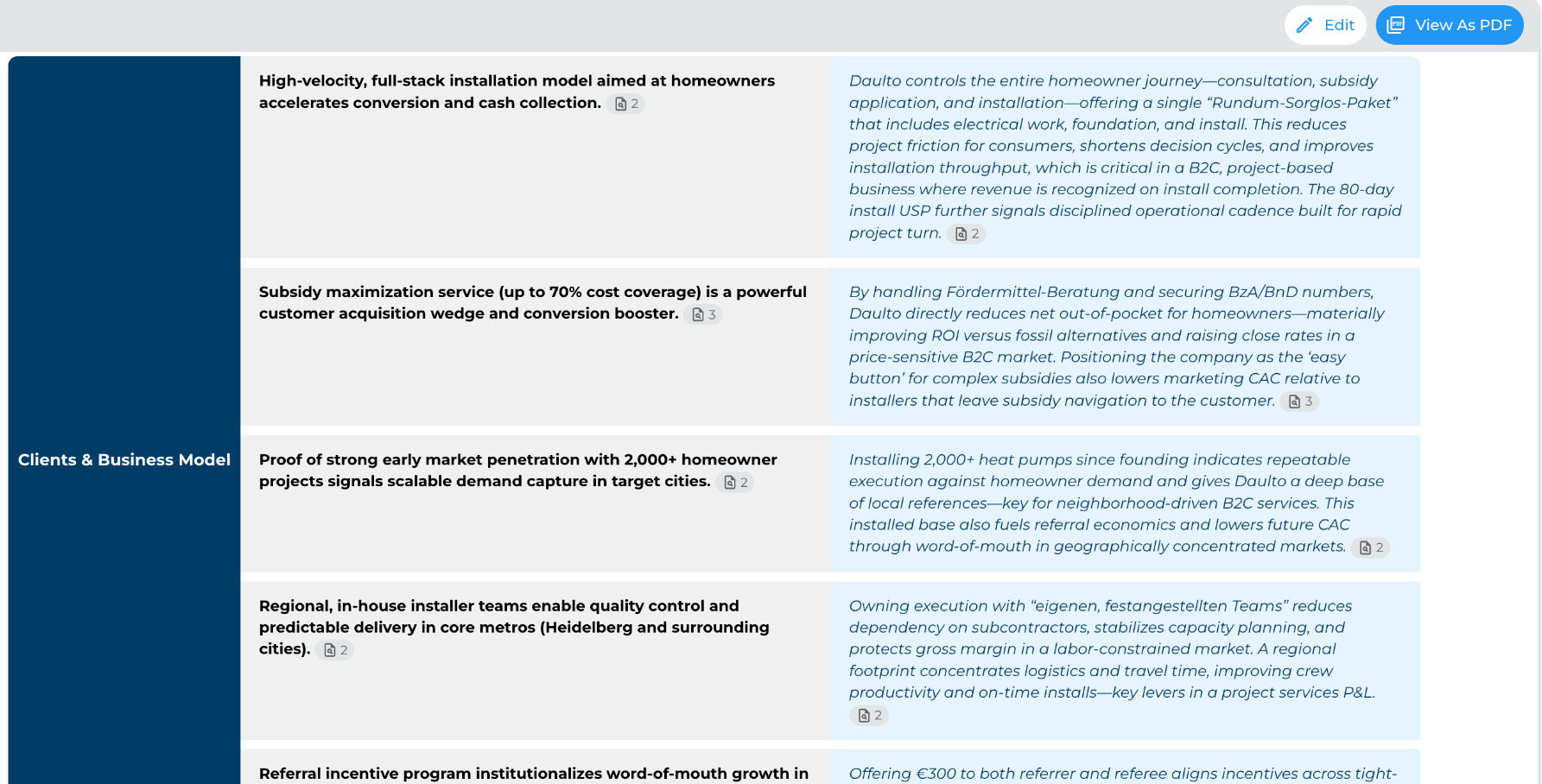
The platform layer is workflow-oriented. A deal professional wants to move faster on tasks that normally take hours: company analysis, comps, buyer lists, market sizing, market maps, and sourcing. Eilla’s own benchmark-style section compares manual processes with AI-assisted timelines for tasks such as company analysis, public and private comps, competitor analysis, buyer lists, sourcing, bottom-up market sizing, and market maps.
The research layer is one of Eilla’s strongest pieces. Company research, market research, competitor discovery, and buyer mapping are the exact areas where AI can reduce manual work without pretending to replace human judgment. A good analyst still needs to check source quality, logic, and deal relevance, but AI can help produce the first pass much faster.
Eilla’s company research analyst, Sophia, is presented as delivering company insights and finding real competitors. Lucas handles public and private comps, valuation drivers, and football fields. Mark extracts market size, growth, key drivers, and challenges from industry sources. Hunter sources strategic and financial buyers based on previous deals.
The buyer discovery piece is especially relevant for M&A. Many small and mid-market companies do not suffer from a total lack of buyers. They suffer from a narrow buyer process. If the outreach list is too obvious, too local, or too relationship-dependent, the seller may not create enough competitive pressure. Eilla’s homepage says its AI scans a large company database to identify acquirers based on past acquisition behavior, strategic fit, sector relevance, size, market cap, and synergies.
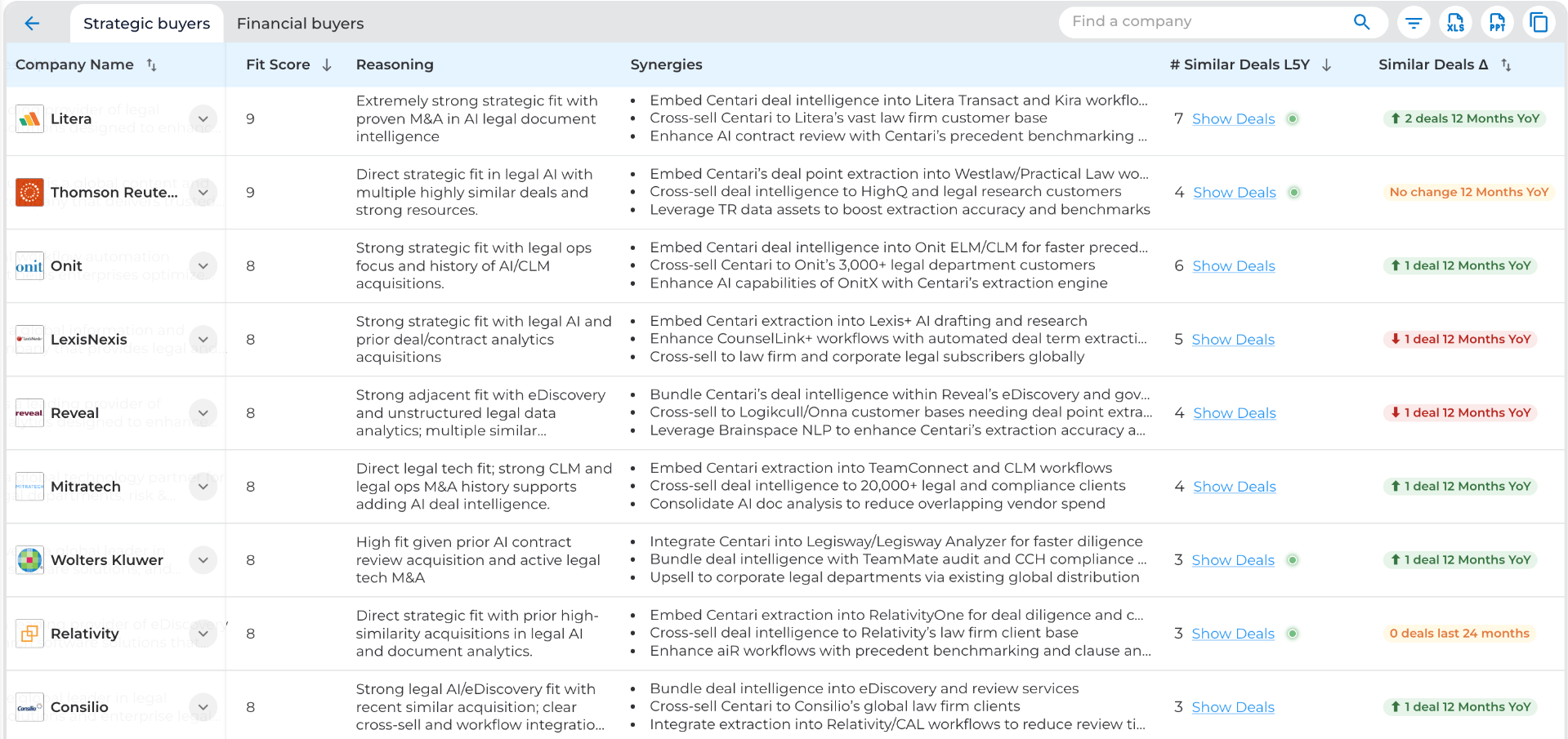
That is not a guarantee of better offers, but it is a useful structural advantage if the buyer list is genuinely broader and more relevant than a traditional manual list.
| Compared with | Where Eilla is stronger | Where the other option may be better |
|---|---|---|
| General AI chatbots | More focused on deal tasks, comps, buyers, market research, and private-market workflows | Better for broad writing, brainstorming, and general research |
| Traditional M&A advisors | Adds AI scale for buyer discovery, market mapping, and preparation | Traditional advisors may be better for complex regulated transactions or highly bespoke strategic situations |
| Data providers | Uses data sources inside workflow outputs rather than leaving users to assemble everything manually | Dedicated data platforms may have deeper raw data access and more transparent search controls |
| CRM or deal pipeline tools | Stronger for research, comps, buyer mapping, and diligence prep | CRMs may be better for long-running relationship tracking and pipeline administration |
| Manual analyst workflows | Faster first-pass output and broader search coverage | Manual work remains stronger for nuanced judgment, negotiation strategy, and final quality control |
The useful comparison is not “Eilla versus an investment banker.” Eilla’s own positioning is a combination of AI and experienced advisors. The better question is whether Eilla can compress the parts of deal work that are repetitive, data-heavy, and time-consuming while keeping human judgment in the areas where it matters most.
Eilla’s advisory side is built for owners who want to sell a business but need help preparing the story, finding buyers, and running a more competitive process. Its public site names sectors such as tech and software, agencies, consumer and hardware, financial services, business services, and home services.
The buyer discovery workflow is useful when a team wants to move beyond obvious acquirers and build a more evidence-backed outreach universe.
Eilla can help with company research, competitor discovery, market mapping, comps, sourcing, and early diligence, which are common time sinks in private-market workflows.
The comps, valuation drivers, football-field, and market research angles make sense for bankers preparing early analysis and pitch support.
Eilla’s blog is built around industry deep dives and valuation guides, which suggests the firm is leaning into sector-specific exit education and M&A preparation.
The first limitation is product clarity. Eilla now presents both an AI-native M&A advisory and an AI Analyst platform. That is compelling, but it also means visitors need to understand which product path they are entering: sell-side advisory for SMBs, or software-style workflow support for finance professionals.
The second limitation is review burden. Eilla’s outputs can speed up research, buyer discovery, market mapping, and comps work, but the end user still needs to validate the logic. Eilla’s own terms warn that the AI system may make mistakes and that users should use their own judgment.
The third limitation is regulated-advice scope. Eilla’s homepage states that Eilla AI Ltd operates outside FCA regulation because its services are limited to advising on sell-side control sale transactions, and that it does not provide regulated investment advice. That is a key boundary for users who may assume “M&A advisory” covers every finance-advice scenario.
The fourth limitation is dependency on source quality. Data providers, internal files, public sources, and proprietary company data can all contain gaps or outdated details. Cross-referencing helps, but it does not remove the need for analyst review.
The fifth limitation is that AI can over-smooth uncertainty. A market map, buyer list, or valuation view can look polished even when the underlying reasoning deserves more debate. In deal work, a clean memo is not the same as a strong conclusion.
Finally, Eilla may be too specialized for casual users. It is not a general finance assistant. It is for people involved in M&A, private-market investing, business exits, buyer discovery, valuation support, and diligence workflows.
Eilla AI is best for two groups: SMB owners who want an AI-supported M&A advisory process, and VC, PE, M&A, or investment banking teams that want AI Analysts for research, comps, market mapping, buyer discovery, and diligence support. Its strongest advantage is the way it combines structured AI workflows with deal-specific use cases rather than offering a generic chatbot.
The main caveat is that Eilla should compress the manual work, not replace judgment. Buyer lists, comps, valuations, and diligence summaries still need human review. Used properly, Eilla looks like a serious productivity layer for private-market deal work. Used carelessly, it could make weak analysis look finished before it has been challenged.
TAGS: Finance
Related Tools:
Helps teams visualize, manage, and optimize workflows

Project management and time tracking tool

Generates real-time market insights for trading

Collaborative document editing and project management tool
Comprehensive digital note-taking tool

Visualizes workflows, automates tasks, and provides real-time analytics