Share this tool:
 |
Description:
- Introduction: What Is B2B Rocket?
- Core Workflow
- What B2B Rocket Does Best
- AI Agents and Sales Automation
- Prospect Data and List Building
- Outreach, Deliverability, and Inbox Control
- CRM and Pipeline Management
- Calendar and Meeting Scheduling
- Best Use Cases
- Practical Tips
- Limitations and Trade-Offs
- Final Takeaway
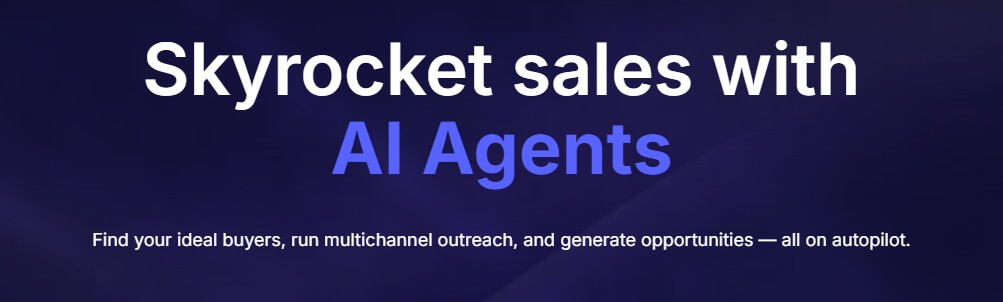
B2B Rocket is an AI sales automation platform built to help teams find prospects, run outbound campaigns, qualify leads, manage conversations, and book meetings with less manual sales development work. Its main idea is straightforward: instead of having sales reps handle every prospecting task by hand, users can deploy AI agents that identify target leads, personalize outreach, follow up, manage responses, and move interested prospects toward meetings.
| Workflow Area | What B2B Rocket Helps With |
|---|---|
| Prospect discovery | Build lead lists from B2B contact data and filter by company or buyer criteria. |
| AI sales agents | Create agents that match the product, audience, and sales pitch. |
| Outreach | Run personalized cold email and multichannel campaigns. |
| Inbox management | Bring lead replies into a unified workflow for response handling. |
| Lead qualification | Prioritize promising prospects based on behavior, responses, and fit. |
| Meeting booking | Use AI agents and calendar tools to move interested leads into scheduled calls. |
| CRM management | Track conversations, tasks, calls, SMS, pipeline stages, and follow-up actions. |
The workflow works best when the user already knows their ideal customer profile. B2B Rocket can automate a lot, but it cannot fix a weak target market. The stronger the audience definition, the more useful the platform becomes.
B2B Rocket is strongest in outbound sales workflows where the bottleneck is volume plus follow-up. A typical sales team can spend hours building lists, cleaning data, writing cold emails, managing inboxes, updating CRM records, and scheduling meetings. B2B Rocket tries to compress that process into one system.
The platform combines AI agents, a B2B prospect database, email sending, multichannel outreach, CRM tools, lead prioritization, and a unified calendar. That makes it more than a cold email tool. It is closer to a sales development operating system for teams that want to automate the top and middle of the pipeline.
Its best fit is not a company that only needs a few manual introductions each month. It is better suited to startups, agencies, sales development teams, and growth teams that need repeatable outbound motion.
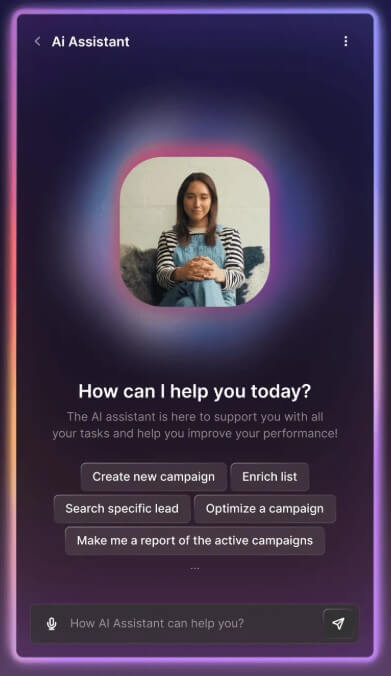
The AI agent layer is the centerpiece of B2B Rocket. Users can customize an AI agent by defining the audience, shaping the pitch, and matching the agent to the product and buyer. The agent can then identify prospects, start conversations, assess interest, qualify responses, and set up meetings.
This is useful because sales development often breaks down in the dull middle: not the first message, but the follow-up, reply sorting, qualification, and scheduling. B2B Rocket’s value comes from automating that sequence rather than only generating cold email copy.
The practical caveat is that AI agents need guardrails. Teams should define what counts as a qualified lead, what claims the agent can make, when a human should step in, and how follow-up should sound. Automation can save time, but careless automation can damage trust.
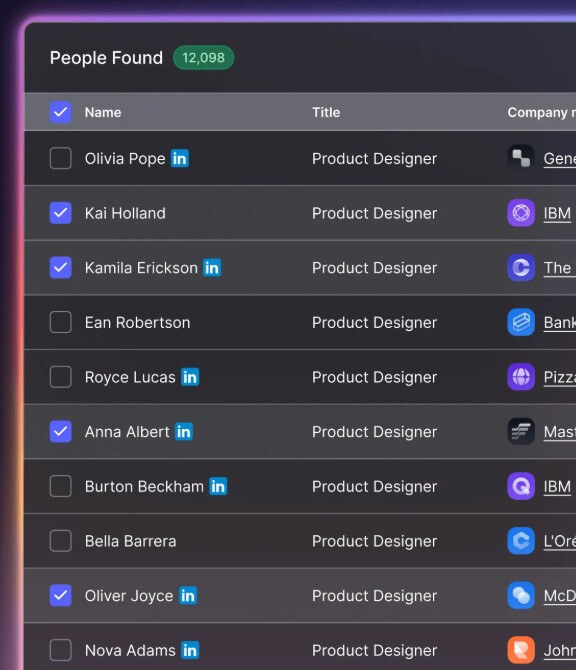
B2B Rocket gives users access to a large B2B database. The official site describes “over 4 billion prospect data points” on the main product page and also says sales development users can build lists from more than 300 million verified contacts using filters such as industry, job title, company size, and revenue.
That makes the database a major part of the platform’s appeal. Many outbound tools require users to bring their own data or connect a separate provider. B2B Rocket is more useful when a team wants prospect discovery and outreach in the same place.
Still, database access should not be treated as a shortcut for strategy. A large database only helps if the filtering is sharp. Teams should build smaller segments first, test messaging, then scale what works.
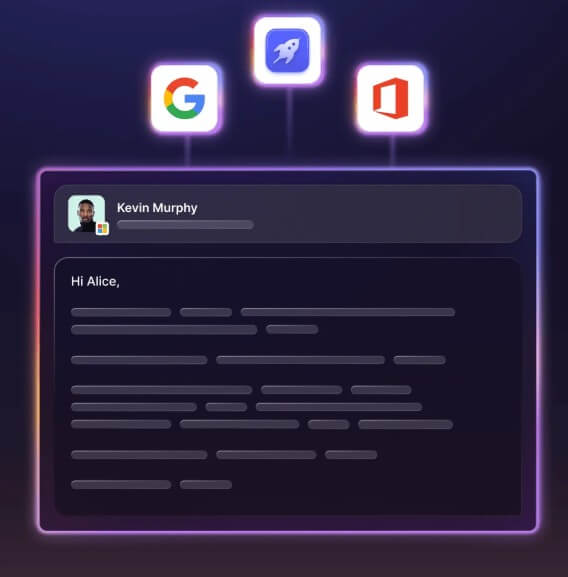
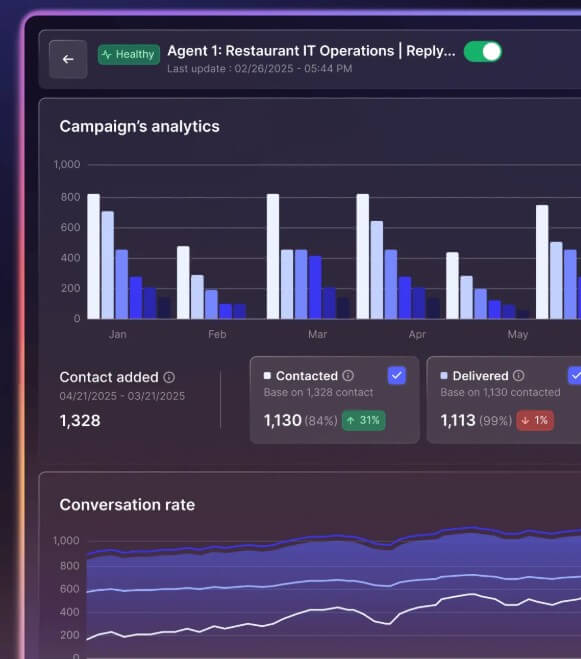
B2B Rocket supports personalized email outreach, dynamic content, spintax, inbox management, automated warmup, and reputation management. Its sales development page also mentions engagement across email, SMS, and LinkedIn, with real-time analytics for campaign performance.
The platform’s ready-to-deploy mailbox angle is worth noting. B2B Rocket says it gives access to a pool of 10,000+ pre-warmed mailboxes so AI agents can be ready for email delivery.
This is useful for teams that care about deliverability but do not want to manage every technical detail themselves. Even so, users should not confuse sending infrastructure with message quality. A campaign can reach the inbox and still fail if the offer is vague, the audience is too broad, or the personalization feels thin.
B2B Rocket also includes an AI-powered CRM. The CRM page says users can manage email, calls, SMS, and tasks from one dashboard, with a master inbox for client interactions. It also includes AI-powered workflows, multichannel communication, lead scoring, outreach automation, follow-ups, personalization, and lead prioritization.
This matters because outbound automation becomes messy if responses and deal stages live somewhere else. B2B Rocket is trying to keep sales activity, lead status, and communication history connected.
For small teams, that can reduce tool switching. For larger sales teams with an existing CRM, the key question is integration. B2B Rocket says its AI agents and CRM tools can synchronize data with existing CRM systems.
The Unified Calendar is a practical feature because the goal of outbound is usually not just replies. It is booked conversations. B2B Rocket’s calendar consolidates meetings and activities, including those from cold email campaigns, into one interface. It can also sync with email and CRM tools, automatically logging meeting details and follow-up tasks. This is where the platform becomes more complete. If AI agents can qualify interest and then help schedule meetings, users get a clearer handoff from automated outreach to human sales conversations.
B2B Rocket is best for B2B startups that need pipeline before they can build a large sales team. It also fits sales development teams that want to automate list building, cold outreach, follow-up, reply handling, and meeting booking.
Lead generation agencies may get value from the platform because it supports repeatable campaigns across multiple audiences. Marketing agencies can use it when they need outbound prospecting tied to account targeting. Mid-market and enterprise teams may use it for larger-scale outreach, though they will need tighter controls, CRM alignment, and human review processes.
The strongest use cases are outbound prospecting, AI-assisted sales development, meeting generation, campaign testing, ICP validation, lead enrichment, follow-up automation, and reactivation of cold or stalled prospects.
- Start with a narrow ICP. A broad campaign will make even good automation look weak.
- Write a clear offer before launching agents. The AI can help with outreach, but it needs a strong reason for the prospect to care.
- Use human review at first. Check AI replies, follow-up tone, and qualification logic before letting campaigns run at scale.
- Track meetings and qualified opportunities, not just sends or replies. The real test is whether the platform creates useful sales conversations.
- Keep handoff rules simple. Decide when the AI keeps engaging and when a human sales rep takes over.
- B2B Rocket’s biggest trade-off is control: The more a team automates outreach, qualification, and scheduling, the more important it becomes to monitor message quality and buyer experience. AI agents can help scale sales development, but they should not be left to invent positioning, handle sensitive objections, or overpromise.
- Another limitation is that outbound success still depends on fundamentals: market fit, list quality, deliverability, timing, offer clarity, and follow-up discipline. B2B Rocket can support those pieces, but it cannot replace them.
- The platform may also feel broader than needed for users who only want a simple email tool or a small contact database: Its real value appears when the user wants data, outreach, AI agents, CRM, inboxes, analytics, and scheduling connected.
B2B Rocket is best for teams that want to automate B2B sales development from prospect discovery to meeting booking.
Its strongest value comes from combining AI agents, prospect data, personalized outreach, CRM workflows, inbox management, and calendar scheduling in one platform.
The main caveat is that automation needs careful setup. B2B Rocket can reduce manual outbound work, but teams still need sharp targeting, honest messaging, human oversight, and a clear sales process.
TAGS: Marketing