

Share this tool:
 |
Description:
Alpha Research is an AI-powered stock research platform built for investors, analysts, and corporate strategy teams that need to search through large volumes of financial text without losing hours inside filings and transcripts. Its main strength is not just document search. It is the combination of AI search, filings, earnings call transcripts, press releases, notes, alerts, fundamentals, estimates, sentiment tools, and data visualization in one research workflow.
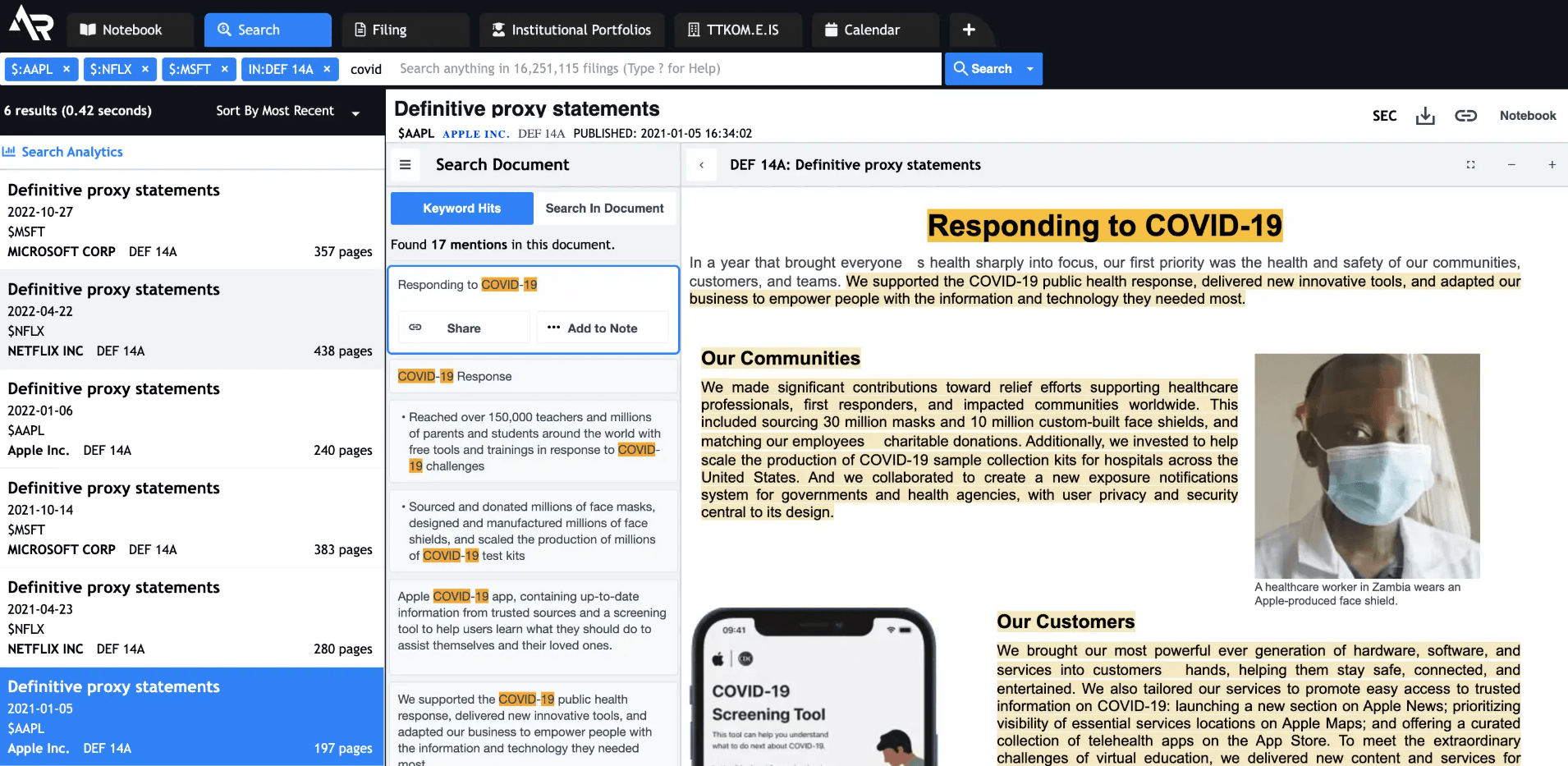
Alpha Research scans filings, transcripts, press releases, and reports to help users find specific financial insights faster.
The platform includes fundamental data, market data, news, and analyst estimates for modeling and stock research.
Alpha Research applies machine learning and NLP to areas like tone change, sentiment analysis, and management commentary.
Users can extract, export, and visualize tables from filings, which is useful when financial data is buried inside long documents.
The platform supports highlighting, referencing, note taking, and sharing research with colleagues.
Alpha Research supports real-time alerts for new filings, documents, matching search queries, company news, and press releases.
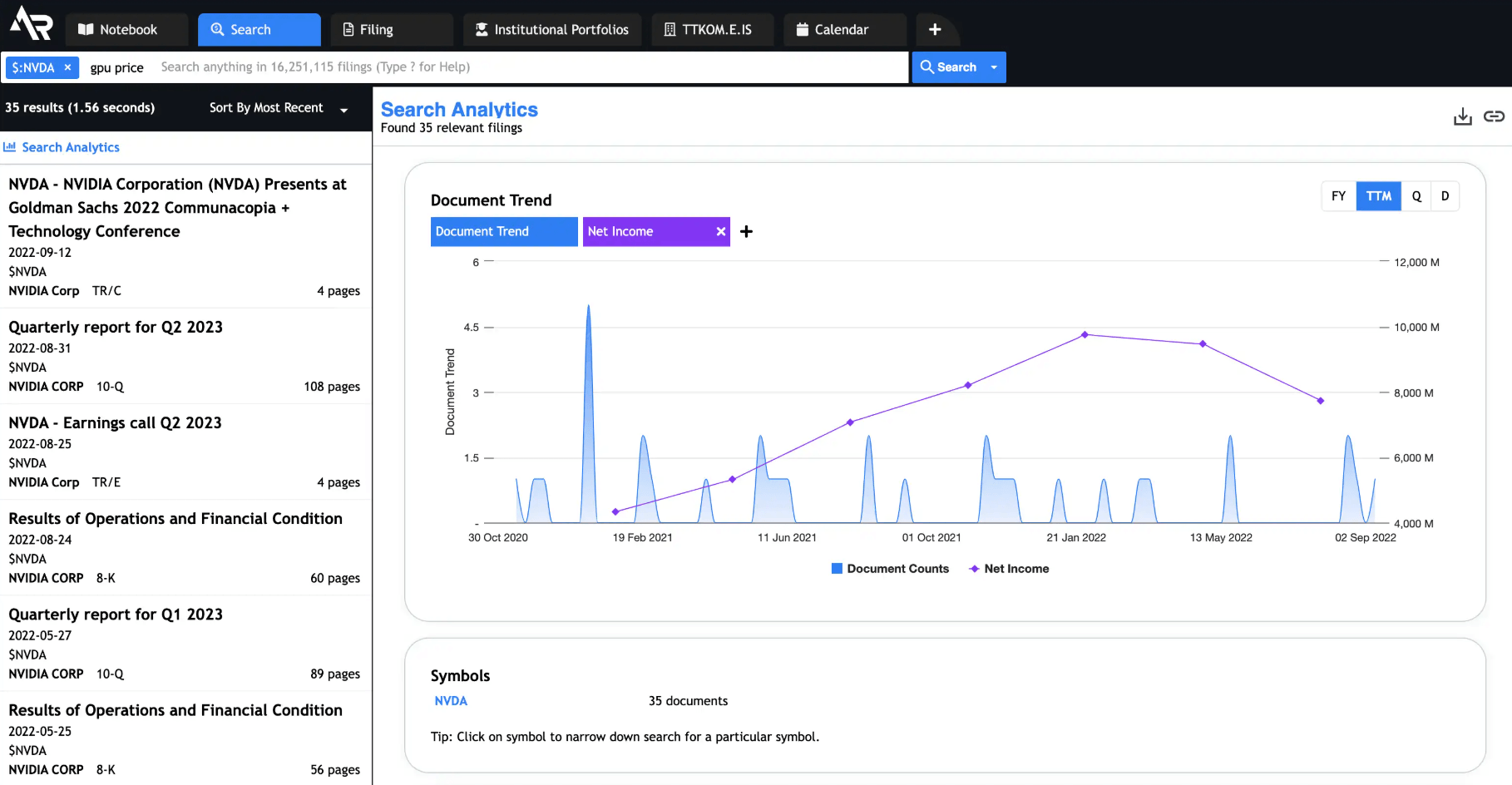
The easiest way to understand Alpha Research is as a search-first financial research workspace. It is designed for people who spend a lot of time reading company documents and trying to connect scattered information across filings, transcripts, fundamentals, estimates, and news.
That makes it different from a simple stock screener. A screener helps you filter companies by metrics. Alpha Research is more about finding the language, risks, management comments, tables, disclosure changes, and context behind those numbers.
This matters because serious stock research often gets stuck in unstructured text. A 10-K, 10-Q, earnings call transcript, investor presentation, or press release may contain the clue you need, but finding it manually is slow. Alpha Research’s core pitch is that AI search can shorten that process and help users move from “where is this mentioned?” to “what does this mean for the company?” faster.
Alpha Research is strongest when the user already has a research question.
For example, it makes sense when you want to compare how several companies discuss margin pressure, AI spending, customer churn, inventory risk, restructuring, pricing power, or demand softness. It also helps when you want to search past filings and transcripts for a specific phrase, topic, risk factor, or management claim.
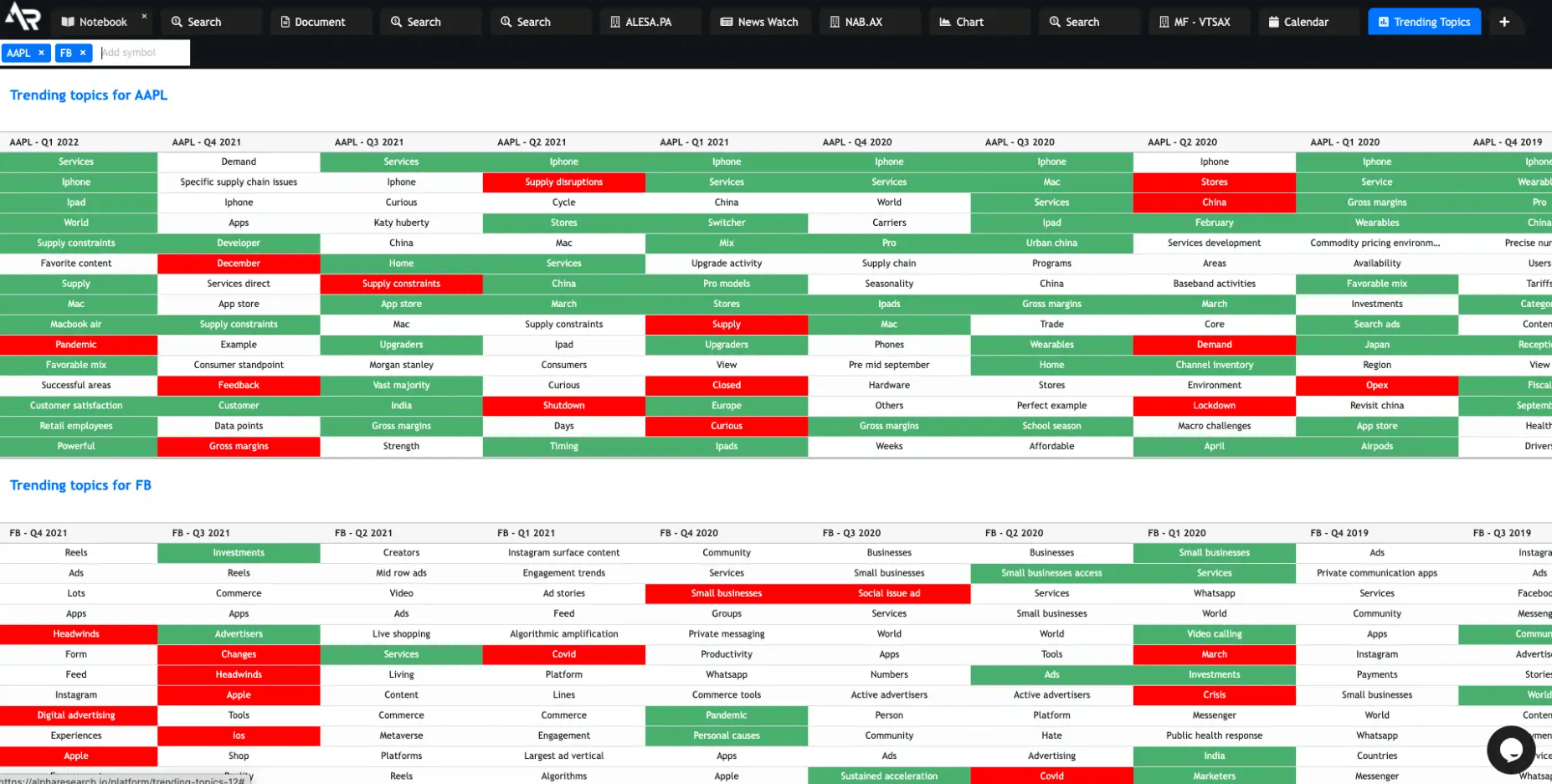
The platform is less useful if you expect it to replace investment judgment. It can surface documents, excerpts, trends, sentiment signals, and data points, but the user still needs to interpret them. That is the right balance. Financial research tools should help organize evidence, not pretend to make decisions for you.
The workflow is built around reducing context switching. Alpha Research says users can search millions of filings and text documents, highlight important passages, add references, write notes inside the platform, and share research with colleagues.
That is useful because research rarely happens in one pass. You search, read, save a passage, compare it with another company, pull a table, check the fundamentals, then return later when a new filing drops. Alpha Research supports that loop better than a browser full of separate SEC pages, PDFs, spreadsheets, and notes.
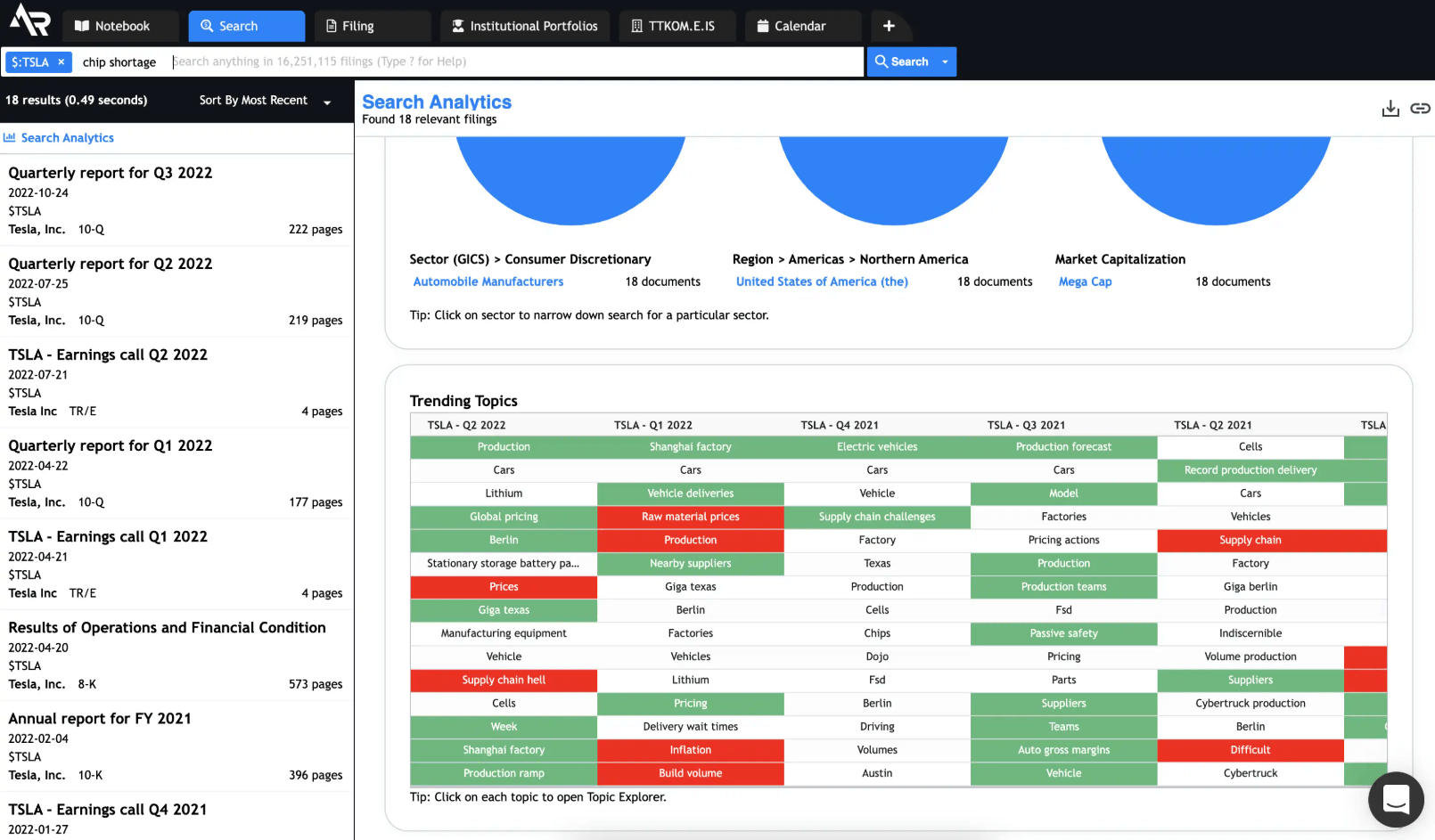
The product also includes visualization across filing insights, core financial data, and market data. That is important because qualitative research becomes more useful when it can sit beside numbers. A tone shift in a transcript matters more when you can compare it with revenue growth, margin trends, analyst estimates, or stock movement.
Alpha Research’s public FAQ says it supports global fundamental data and filings search for the US, Canada, and UK. Its homepage also lists document categories such as SEC filings, earnings call transcripts, press releases, SEDAR, Companies House, global filings, and research reports in its platform comparison area.
| Platform Area | What It Helps With | Best Fit |
|---|---|---|
| Document search | Finding text across filings, transcripts, and reports | Analysts and active investors |
| NLP analysis | Tone change, sentiment, and qualitative signals | Earnings and disclosure review |
| Fundamentals and estimates | Financial modeling and stock research context | Fundamental investors |
| Notes and highlighting | Saving evidence and building a research trail | Teams and repeat researchers |
| Alerts and filing monitoring | Tracking new documents and keyword matches | Watchlist-driven workflows |
The main takeaway is that Alpha Research works best as a research environment, not just a data lookup tool.
Alpha Research is a good fit for individual investors who read filings and transcripts before making decisions. It gives them a faster way to search company documents, monitor updates, and compare language over time.
It also fits institutional research teams that need to review many companies, track recurring themes, and collaborate around source-backed notes. Corporate strategy teams can use it to study competitors, industry language, ESG reports, patents, press releases, and market commentary. The corporate page specifically positions the platform around researching industry text, studying competitors, and making decisions with verifiable sources.
The tool is less suited to casual users who only want headlines or simple buy/sell opinions. Alpha Research has more value when the user is willing to read, compare, and verify.
- Start with a narrow question. Searching “AI” across the market may produce noise. Searching “AI capex,” “customer demand,” “gross margin pressure,” or “inventory normalization” across a specific peer group is more useful.
- Use document search and table extraction together. The text may tell you what management claims. The tables can show whether the numbers support it.
- Set alerts for recurring research themes, not only company names. A keyword alert for a topic you track can be more valuable than waiting to manually check every filing.
- Save notes with references as you go. The biggest benefit of a platform like this is not one search result. It is building a research trail you can return to later.
The first limitation is that search quality depends on the question. A vague query can still return vague results. Users need to know the business issue they are trying to investigate.
The second limitation is interpretation. Sentiment analysis, tone change, and trend signals are useful, but they are not proof by themselves. A negative tone shift in a transcript may matter, or it may reflect temporary caution, legal wording, or analyst phrasing.
The third limitation is coverage expectations. Alpha Research has useful public coverage, but users should confirm whether the markets, document types, and company universe they care about are included before relying on it for a full workflow. Its FAQ currently names US, Canada, and UK support for global fundamental data and filings search.
Alpha Research is best for investors, analysts, and corporate teams that need to move faster through filings, transcripts, press releases, fundamentals, estimates, and market documents. Its strongest value is helping users find and organize source-backed insights from financial text.
The main caveat is that Alpha Research speeds up research, but it does not replace research judgment. It works best for users who already know how to ask good investment or strategy questions and want a faster, more organized way to find the evidence.
TAGS: Finance
Related Tools:

Provides extensive analytics for trading

Delivers real-time stock market alerts and insights

Provides advanced algorithms to evaluate and score stocks

Helps users organize tasks, set reminders, and sync lists

Automates analysis of financial markets
Comprehensive digital note-taking tool