Share this tool:
 |
Description:
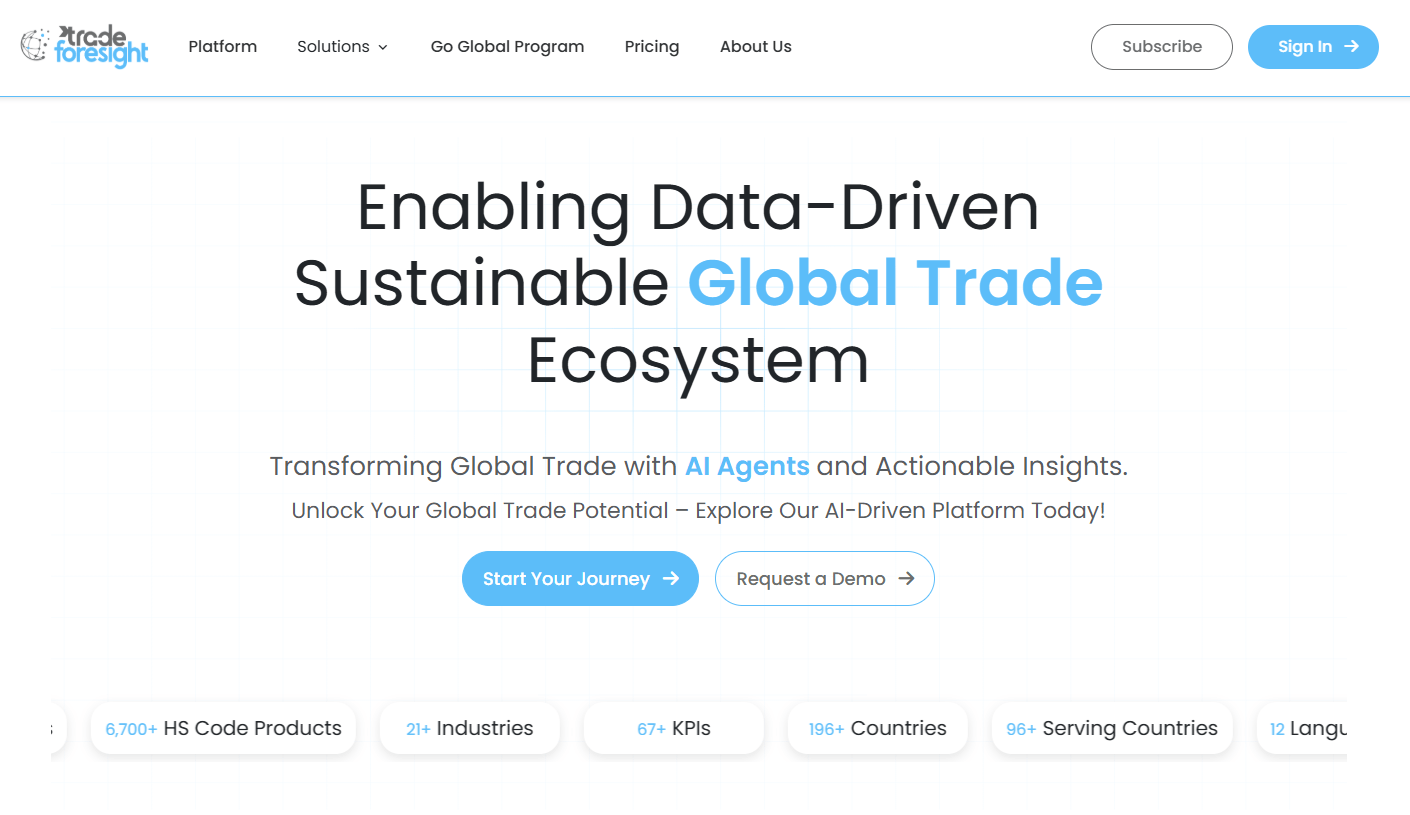
Trade Foresight is an AI-powered global trade intelligence platform for businesses, exporters, importers, governments, logistics firms, financial institutions, and trade facilitators. The important distinction is that this is not a stock trading platform. It is built around international trade: products, HS codes, markets, trade flows, tariffs, compliance, business partners, and global expansion. Its strongest value is the way it combines trade data, AI agents, dashboards, analytics, business directories, and advisory tools into one environment.
Helps identify market opportunities, support targeted campaigns, match users with business partners, and provide ongoing recommendations.
Gives users access to a large pool of traders and businesses for buyer, seller, supplier, and distributor discovery.
Supports market and country analysis, product and industry analysis, import/export flow analysis, global trade statistics, and trade reports.
Covers trade regulations, standards, procedures, tariffs, agreements, and regulatory shifts that affect cross-border operations.
Provides AI-powered guidance for import/export questions, policy impact, market strategy, regulatory risk, and product or industry-specific trade questions.
Allows organizations to connect Trade Foresight data into internal systems for more integrated trade analysis and decision-making.
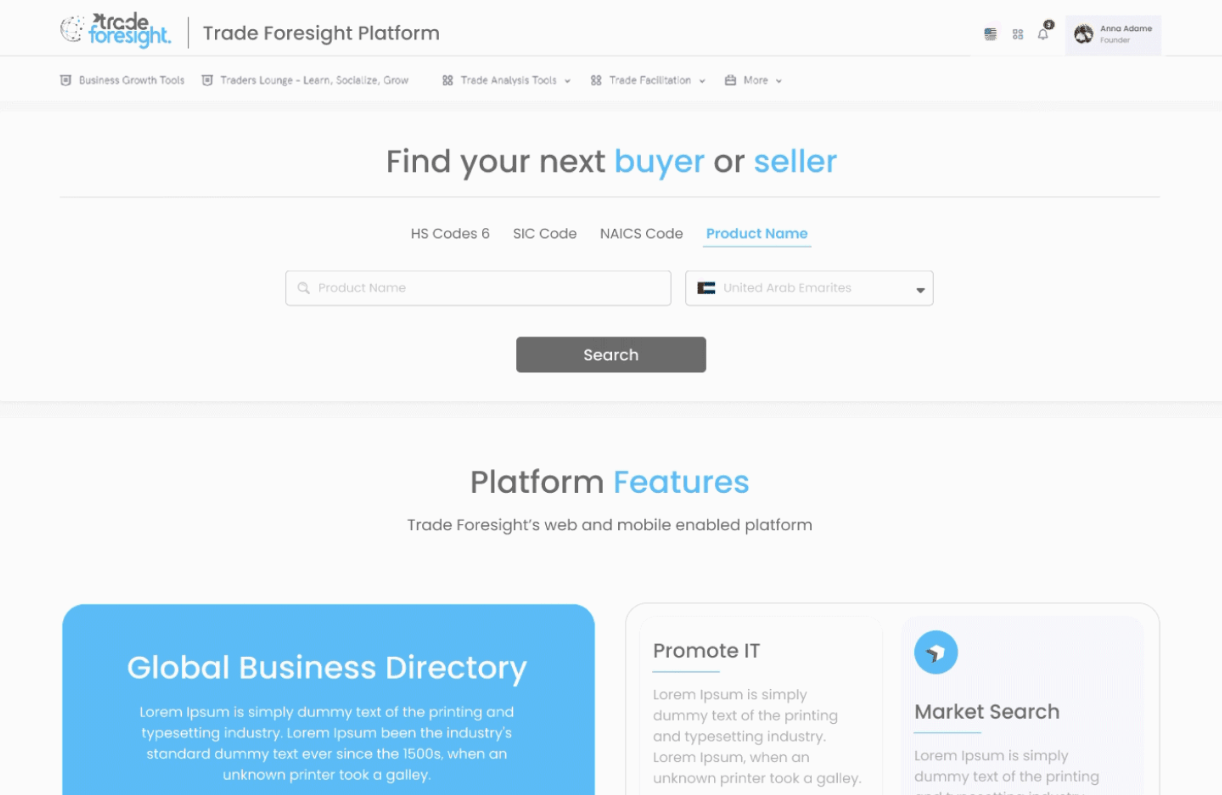
Trade Foresight is best understood as a global trade operating layer. It brings together market data, product intelligence, company discovery, trade statistics, policy signals, compliance information, and partner matching so users can make better cross-border business decisions.
The platform says it covers millions of businesses, thousands of HS-code products, multiple industries, KPIs, and country-level trade data. Its official site also says it integrates authentic trade data sources, including sources such as UN Comtrade, The World Bank, and the World Trade Organization. That makes the product more useful for structured market research than for casual business browsing.
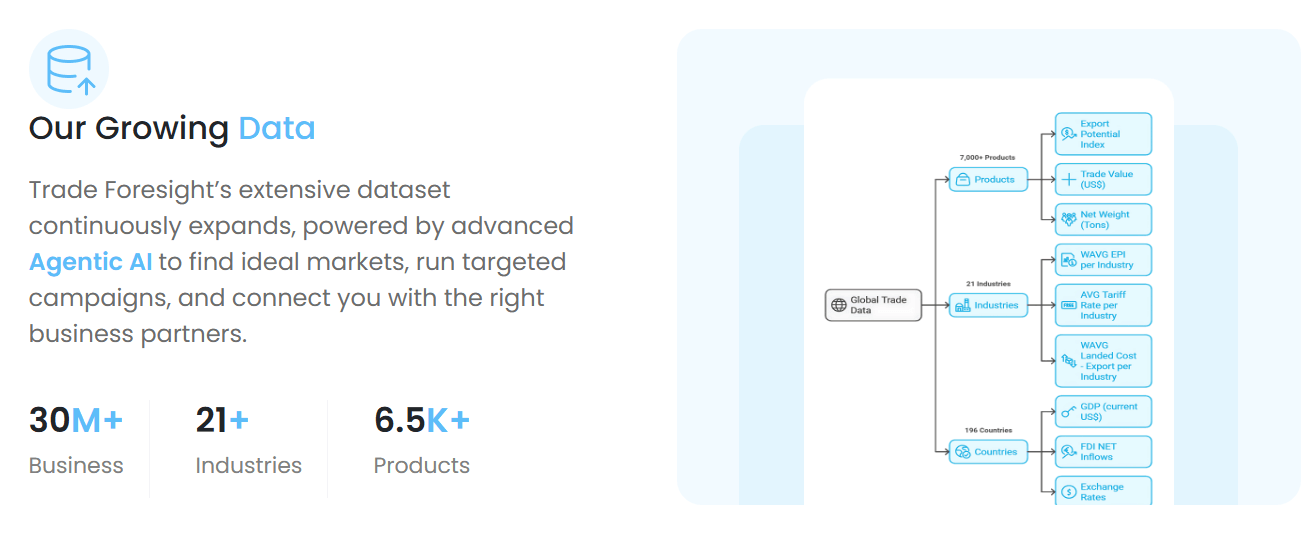
The core idea is simple: instead of searching across scattered trade databases, government portals, reports, directories, and spreadsheets, Trade Foresight gives users a central place to evaluate where to sell, who to contact, what rules matter, and which markets look more promising.
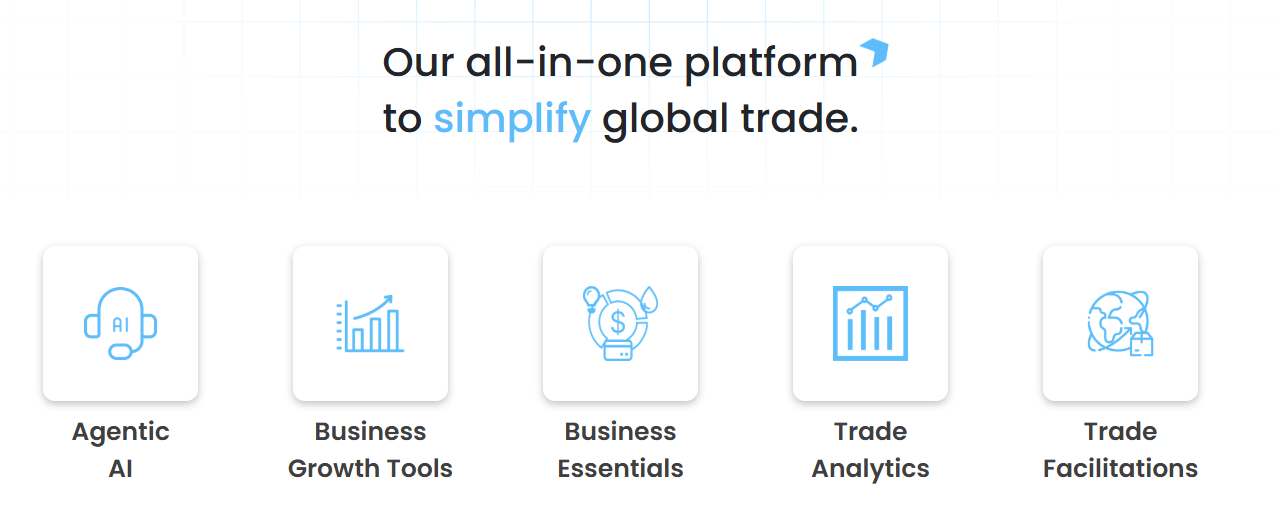
| Platform Layer | What It Helps With | Best Fit |
|---|---|---|
| Agentic AI | Market identification, campaigns, partner matching | Exporters and growth teams |
| Business Growth Tools | Directory search, product promotion, B2B matching | SMEs and trade teams |
| Business Essentials | Compliance, logistics, dashboards, trade support | Operators managing expansion |
| Trade Analytics | Market, country, product, industry, and trade-flow analysis | Analysts and strategy teams |
| Trade Facilitation | Agreements, authorities, trade watch, advisory support | Trade bodies and service providers |
This layered structure is useful because different users will care about different parts of the platform. An exporter may care most about market search and buyer discovery. A government agency may care more about dashboards, KPIs, investment insights, and trade policy. A logistics or finance institution may care about trade flow visibility, regulatory updates, and client growth signals.
Trade Foresight is strongest when a business already has a product and wants to answer practical expansion questions.
- Which countries import this product?
- Which markets are growing?
- Who are the possible buyers, suppliers, or distributors?
- What tariff or regulatory issues should we check first?
- How do we compare market demand, trade flows, and competitive pressure?
That is where the platform starts to make sense. Its official platform page describes Agentic AI that can identify market opportunities, run targeted campaigns, and connect users with suitable business partners. It also includes business growth tools such as a global business directory, Market Search, Match & Meet, PromoteIT, and Catalogue+.
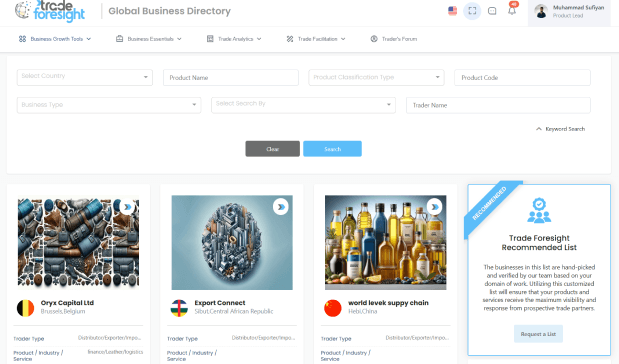
This is more actionable than a normal static trade report. Trade Foresight is not only showing data; it is trying to move users from “research the market” to “find partners and act on the opportunity.”
The workflow is more research-and-action than “ask a chatbot and get an answer.”
A typical business user would start with a product or industry, review trade flow and market demand, compare countries, inspect tariff or regulatory factors, identify business partners, then use outreach or marketplace-style tools to pursue opportunities. The platform also supports personalized dashboards, which matters for users tracking specific KPIs over time.
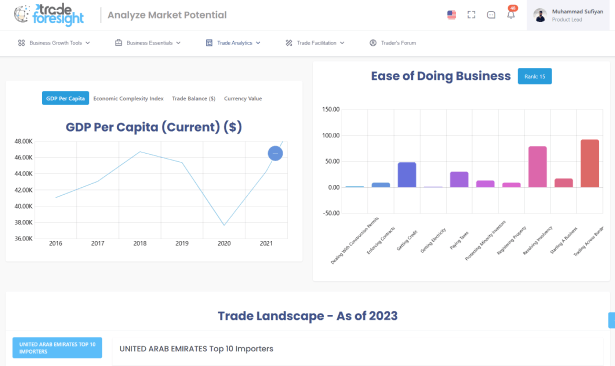
The AI layer helps reduce manual work, but users still need to know what they are looking for. Trade Foresight can surface market signals and partner options, but it cannot replace commercial judgment. A strong export manager will get more from it than a user who only types broad questions like “Where should I sell?”
Trade Advisor is one of the more important parts of the product because it makes the trade data more approachable. The official Trade Advisor page describes it as an AI-powered advisor for import/export, trade policy, global market trends, predictive analytics, customized recommendations, and regulatory risk. It also states support for more than 80 languages.
That language support matters in global trade, where buyers, sellers, agencies, and documents often cross regions. The main value is not that it replaces a legal, customs, or trade compliance expert. It is better used as a first-pass guidance layer: ask product-specific questions, understand market conditions, identify areas to verify, and prepare better questions before speaking with specialists or partners.
Trade Foresight is a strong fit for exporters looking for new countries, buyers, distributors, or market entry signals. It is also useful for importers who need supplier visibility, product trends, and country comparisons.
SMEs can use it to reduce the research burden before entering a new market. Larger enterprises can use it for market expansion analysis, supply chain optimization, benchmarking, and monitoring trade dynamics across regions. Government users can use it for policy support, trade competitiveness work, investment insights, and national trade portals. Trade facilitators, logistics firms, and financial institutions can use it to identify growth sectors, support clients, and understand cross-border risk.
The product makes the least sense for users who only need a one-time company lookup or a generic export checklist. Its value rises when trade research, partner discovery, compliance checks, and market monitoring are recurring needs.
- Start with one product and one target region. Trade platforms can become overwhelming if you begin too broad.
- Use HS-code-level research early. Product naming can vary across countries, while HS codes help keep the analysis more structured.
- Treat AI recommendations as leads, not conclusions. Use the platform to narrow markets and partners, then verify details through direct outreach, customs sources, legal advisors, or local trade bodies.
- Separate market attractiveness from operational readiness. A country may show demand, but tariffs, logistics, payments, documentation, and distributor quality still decide whether expansion is realistic.
The biggest limitation is that Trade Foresight depends on the quality, freshness, and coverage of its trade data. The platform states that its data is regularly updated and includes trade data spanning 1992 to 2024, with ongoing updates, but users should still check time periods and source context before making decisions.
The second trade-off is complexity. Global trade is messy. A platform can help organize the work, but it cannot remove the need for product knowledge, local validation, compliance review, and commercial negotiation.
The third limitation is that some official claims are broad. Terms like “AI-powered,” “predictive insights,” and “agentic AI” sound useful, but buyers should test the platform on real products, real target countries, and real partner searches before relying on it for major decisions.
Trade Foresight is best for businesses and institutions that need a practical intelligence layer for global trade. Its strongest use is connecting trade analytics, market discovery, partner matching, compliance information, and AI guidance in one workflow. Exporters, SMEs, enterprise trade teams, governments, logistics providers, and trade finance organizations are the most natural users.
The main caveat is that Trade Foresight can shorten research and reveal opportunities, but it should not be treated as a final authority. Use it to find better markets, partners, and questions faster, then verify the details before making expansion, compliance, or investment decisions.
TAGS: Finance
Related Tools:
Project management tool for software development

Visualizes workflows, automates tasks, and provides real-time analytics

Provides dynamic scheduling, resource management, and real-time tracking
Designed for creative team collaboration

Streamlines project management and collaboration
Helps teams plan, track, automate, and report on projects