

Share this tool:
 |
Description:
Lifesight is an agentic unified marketing measurement platform for teams that need a better answer to one hard question: which marketing spend is creating real incremental growth? It is aimed at brands that have outgrown platform-reported ROAS, last-click attribution, and scattered dashboards, especially teams spending across paid social, search, retail media, CTV, ecommerce, CRM, and offline channels.
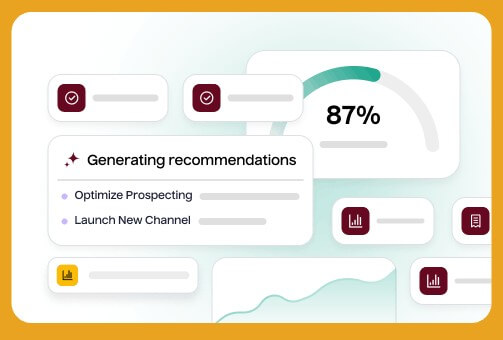
Lifesight’s main strength is that it does not rely on one measurement method. The platform combines marketing mix modeling, incrementality testing, and causal attribution to help teams compare channel impact with less dependence on cookies, clicks, or platform self-reporting. Lifesight’s own documentation describes the product as a unified marketing measurement platform that uses MMM, incrementality testing, and causal attribution to “triangulate” marketing effectiveness.
That blended approach is the reason the platform is useful. MMM gives a broad view of channel contribution. Incrementality testing helps validate lift. Attribution gives more granular readouts for day-to-day optimization, but Lifesight positions its attribution as calibrated by causal evidence rather than raw click credit.
For marketing teams, the practical benefit is alignment. Instead of finance looking at revenue, marketing looking at platform ROAS, and analytics debating model assumptions, Lifesight tries to give everyone one working view of performance.
| Layer | What It Helps With |
|---|---|
| Measure | Finds what is driving incremental revenue across channels, campaigns, and markets. |
| Forecast | Tests budget scenarios before spend is committed. |
| Optimize | Recommends budget moves based on marginal returns and guardrails. |
| Analyze | Gives teams a shared view of performance, assumptions, and business impact. |
| MIA | Adds AI agents that explain results, flag issues, and turn model outputs into decisions. |
The platform’s public site groups its workflow around Measure, Optimize, Decide, and Forecast, with MIA agents built on the causal engine. That matters because Lifesight is not only a reporting layer. It is trying to close the loop from data to decision to action.
Lifesight’s measurement workflow starts with data connection. The Measure page says teams can sync ad platforms, CRM, and sales data without requiring PII, cookies, or IDs. It then combines geo-lift experiments, weekly MMM refreshes, and campaign-level ROI views.
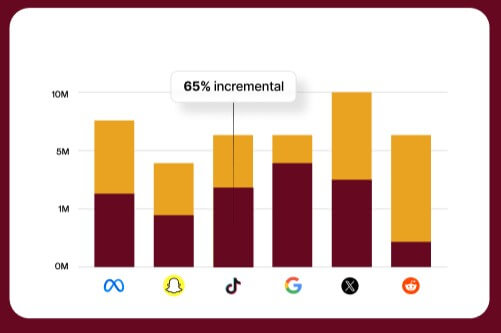
This setup fits the current marketing environment. Tracking is weaker than it used to be, platform numbers often over-credit their own role, and lower-funnel channels can look better than they are because they harvest existing demand. Lifesight is strongest when a brand needs to separate true lift from spend that would have converted anyway.
The best example is retargeting. A platform may show strong ROAS because retargeted shoppers were already close to purchase. Lifesight’s incrementality-first view is designed to expose that type of bias, then shift budget toward channels that create net-new demand.
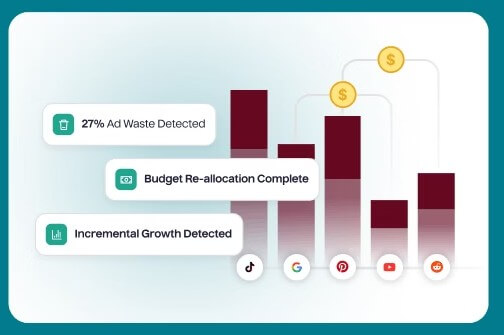
The Forecast layer is useful for teams that make budget decisions before they have perfect data. Lifesight supports scenario planning, ROI curves, seasonal planning, and non-media variables such as promotions, pricing, competitors, and other market signals.
This is one of the more practical parts of the platform. A CMO does not only need to know what worked last month. They need to know what may happen if budget moves from branded search to YouTube, from Meta retargeting to prospecting, or from performance channels into CTV.
The value depends on model quality and data freshness, but the workflow is sound. Forecasting works best when the team has clean historical sales, spend, promotion, and channel data. It becomes weaker when a brand has little history, unstable product demand, or messy offline data.
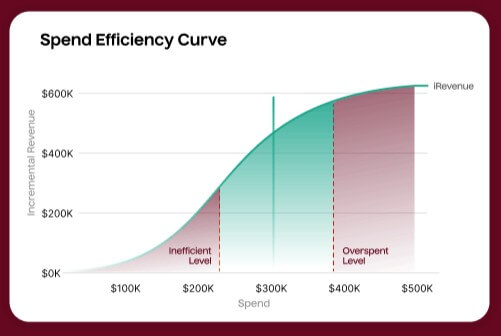
Lifesight’s Optimize layer focuses on moving money based on causal ROI curves, not just in-platform performance. The product page says recommendations can operate within constraints such as CAC, margin, brand, geo, stock, and finance limits. It also describes one-click approvals for changes across major ad platforms.
This is where Lifesight becomes more operational. Many measurement tools stop at “here is the insight.” Lifesight pushes toward “here is the move, here is the confidence, and here are the guardrails.”
That said, teams should not automate too quickly. Budget changes still need human review, especially when brand goals, inventory issues, promotions, creative fatigue, or market timing are involved. The best use is controlled optimization: let Lifesight surface the move, then let media and finance teams approve it with context.
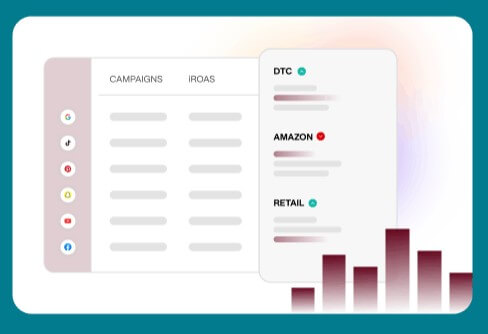
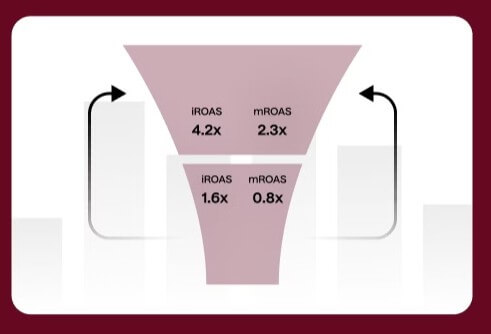
Lifesight now leans into agentic measurement. Its MIA agents are described as built into the workflow and tied to Lifesight’s causal modeling logic rather than acting as a generic dashboard chatbot. The agent layer can support scenario recommendations, budget intelligence, diagnostics, and executive-ready summaries.
Lifesight also offers MCP access so Claude and ChatGPT can query a Lifesight causal model through an authorized connection. The MCP page says it gives AI assistants live access to measurement insights, while the Lifesight workspace remains the underlying “brain.”
This is a useful direction, but it should be handled carefully. AI explanations can speed up board prep and budget reviews, but they should not replace model governance. Teams still need to understand assumptions, confidence ranges, source data, and when a recommendation is directional rather than final.
Lifesight lists many marketing and data integrations, including Google Ads, Amazon Ads, Microsoft Ads, TikTok Ads, Pinterest Ads, Facebook Ads, LinkedIn Ads, Shopify, Google Analytics, BigQuery, Salesforce Commerce Cloud, Klaviyo, Snapchat Ads, Criteo, DV360, and others.
This breadth is important because measurement platforms live or die by data coverage. A model that misses major spend, offline sales, marketplace activity, or CRM signals will produce weaker recommendations. Lifesight looks better suited to mature marketing teams than small advertisers with only one or two channels.
- Retail and ecommerce brands: Lifesight is a strong fit for teams spending across paid social, search, marketplaces, CRM, affiliate, CTV, and promotions.
- CMOs and growth leaders: The platform helps translate channel performance into budget decisions, scenario plans, and executive-ready answers.
- Finance and marketing alignment: Lifesight’s Analyze layer emphasizes shared metrics, model notes, assumptions, and audit-ready views, which can reduce budget debates.
- Performance teams with saturation problems: If lower-funnel campaigns keep showing high ROAS but growth has stalled, Lifesight can help test whether spend is incremental.
- Agencies managing multi-channel spend: The platform is useful when an agency needs to justify budget moves with stronger evidence than platform dashboards.
- Lifesight is not a plug-and-play analytics toy. It needs serious data discipline. Historical sales, media spend, channel naming, promotions, seasonality, and offline factors all affect model quality.
- It may also be more platform than a small business needs. Teams with modest ad spend, limited channel mix, or no dedicated marketing analytics process may find the workflow heavy.
Lifesight is best for growth-focused brands that need to move beyond platform ROAS and understand true incremental marketing impact.
Its strongest value is the combination of MMM, incrementality testing, causal attribution, forecasting, optimization, and AI-assisted decisioning in one workflow.
The main caveat is readiness: Lifesight works best for teams with enough spend, clean data, and the discipline to treat measurement as an operating system, not just a dashboard.
TAGS: Marketing
Related Tools:

Combines AI and human expertise for multilingual content marketing

Allows users to create precise models

Generates unique and brandable business names
Transforms product images into animated marketing videos
Removes harmful content to protect a brand’s online reputation

Automates lead generation, market research, and data processing