

Share this tool:
 |
Description:
emojis.com is a narrow, practical AI tool rather than a full creative suite. The public product is built around generating custom emojis from prompts, searching a large public emoji library, downloading and sharing results, building WhatsApp sticker packs, and plugging custom emojis into chat-heavy environments like Slack. That focus is the whole point: this is for making small, expressive assets quickly, not for doing polished brand design or full image editing.
Clean custom reaction face
Prompt:
“Create a yellow reaction emoji with one raised eyebrow, tiny half-smile, and a clear side-eye expression. Keep it simple, centered, readable at very small size, with a transparent background and clean dark outline.”
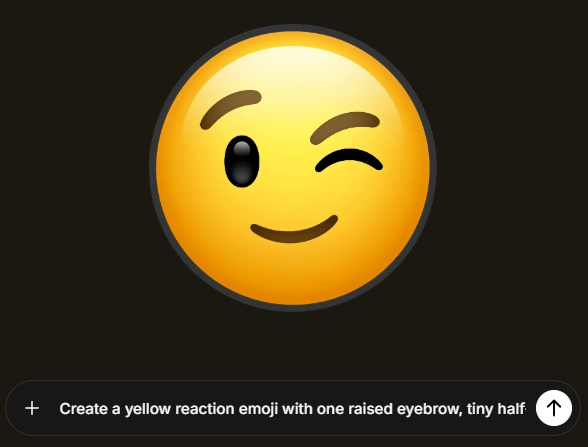
Why this is a good first test: The site is explicitly positioned around custom Slack and Discord-style emoji use, so a clean reaction face is the fastest way to judge whether the generator understands readable, compact expression rather than just decorative illustration.
Text-first team emoji
Prompt:
“Create a compact custom emoji that says ‘SHIP IT’ in bold white letters on a green rounded badge. Minimal shading, no extra objects, high contrast, readable at tiny size.”
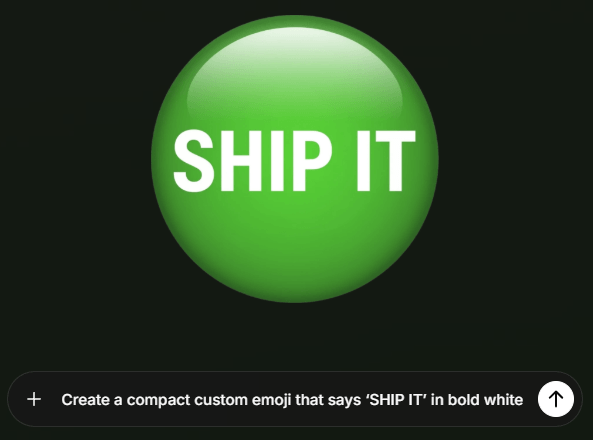
Why this matters: Public emoji pages and search results show plenty of text-led creations, and Slack is one of the product’s official integrations, so this is a realistic test of whether emojis.com can handle short, practical team reactions.
Mascot-style community emoji
Prompt:
“Create a tiny raccoon developer emoji wearing headphones and a black hoodie, excited expression, one paw raised, simple sticker style, centered subject, transparent background.”
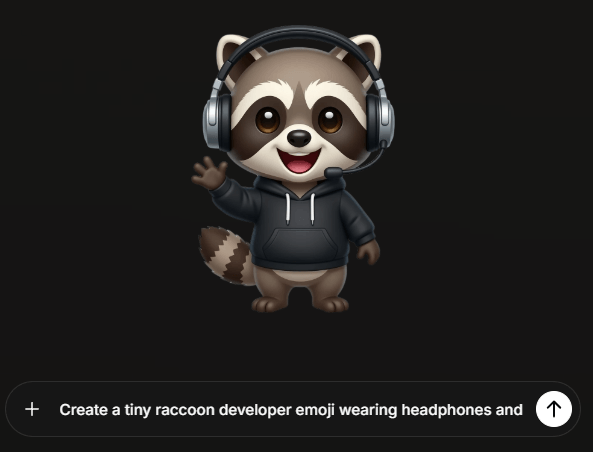
Why this is useful: A lot of the value here is custom community expression. The official positioning around Slack, Discord, public profiles, and shareable emojis makes mascot-style reactions a very natural fit for the platform.
Status icon for work chat
Prompt:
“Create a minimal custom emoji for ‘waiting on approval’: a sleepy folder with a tiny clock, muted blue-gray palette, simple rounded shapes, no background.”
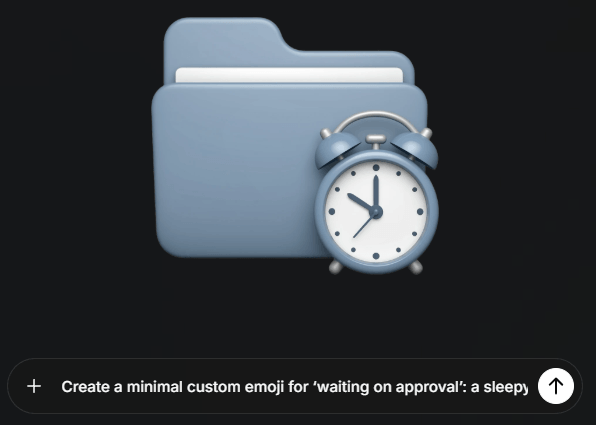
Why this belongs here: emojis.com is stronger when you ask for a single, instantly readable idea. Internal status icons and utility reactions are often a better fit than visually busy scenes. The Slack page’s example library also leans heavily toward single-subject icons and objects.
Brand-safe product symbol
Prompt:
“Create a generic iced coffee cup emoji with caramel drink, clear straw, clean app-icon style, transparent background, no logo, no brand marks.”

Why this matters: The Terms explicitly restrict prompts that use third-party trademarks or copyrighted materials without permission, so generic product-style prompts are much safer than asking for brand-copying assets.
Meme-ready custom reaction
Prompt:
“Create an exhausted office pigeon emoji with tie loosened, tiny eye bags, one wing holding a laptop, deadpan expression, simple readable silhouette.”
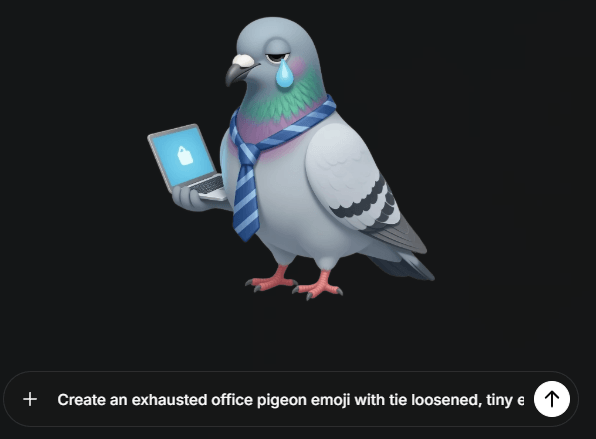
Why this is useful: The public library clearly supports offbeat, funny, internet-native emoji ideas. This kind of prompt tests whether emojis.com can stay expressive and compact without collapsing into visual clutter.
Simple celebratory badge
Prompt:
“Create a compact celebratory emoji: gold star bursting out of a blue circle with tiny confetti, centered composition, clean lines, readable”
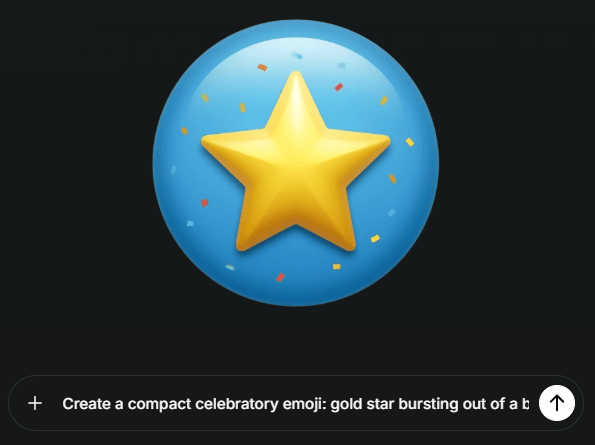
Why this is a good practical prompt: A lot of real chat use is not character art. It is approval, celebration, status, and reaction shorthand. Symbol-led badges often survive tiny display sizes better than complicated scenes. emojis.com’s own messaging focus makes this a strong everyday use case.
The core web pitch is simple text-to-emoji creation for custom reactions.
Official surfaces frame the library in the low millions, which makes reuse and discovery a real part of the product.
Surfaced emoji pages show remix/share/download behavior, which is more practical than forcing total rerolls.
emojis.com is explicitly aimed at Slack, Discord-style usage, and WhatsApp stickers rather than generic image creation.
Trending search results, maker pages, and sticker packs give the product a social layer beyond generation.
Official pages link Android, and the Slack page also links iOS app downloads.
The clearest way to understand emojis.com is as a lightweight prompt-to-emoji product with a public library attached. The homepage centers only two main actions, Generate and Search. Individual emoji pages expose share and download actions, maker attribution, similar results, and in at least some surfaced results a Remix flow. The product also extends into WhatsApp stickers and Slack integration instead of stopping at “make image, save image.”
It is also clearly community-shaped. The search page includes trending results, public emoji entries, and a browsable corpus of user-made creations. Profile pages and sticker-pack pages reinforce that this is meant to be explored socially, not just used privately. That is important because it makes emojis.com feel more like a public emoji network than a sterile prompt box.
Scale is part of the pitch. The Slack integration page says you can search and download over 2,326,036 AI emojis, and the Android listing describes search through a collection of 3,000,000+ emojis. That does not guarantee quality, but it does explain why search and remix matter so much in the workflow.
emojis.com is strongest when the goal is speed, novelty, and chat usefulness. If you want a reaction face your team uses in Slack, a weird inside-joke emote for Discord, a seasonal sticker pack for WhatsApp, or a one-off symbol that does not exist in Unicode, the product makes sense immediately. You do not need a big creative brief. You need a compact idea and a platform where that idea will actually be used.
It is also stronger than it first appears because the public library reduces blank-page pressure. Many people will get better results by searching for something close, opening an existing emoji, and remixing it, rather than trying to land the perfect result from zero. A million-plus searchable library changes the product from pure generation into generation plus retrieval.
The sticker side is another real strength. The WhatsApp page shows that themed collections are not a side project. Cozy packs, pastel packs, holiday packs, and aesthetic packs are clearly popular. That means emojis.com is not just useful for tiny reaction faces. It also works for cutout-style sticker collections where style consistency matters more than perfect technical design control.
emojis.com makes the most sense for teams and creators who actually live in messaging environments. Slack reactions, Discord community emotes, WhatsApp sticker packs, fandom jokes, creator-community inside references, and simple status symbols are the sweet spot. The product language and integrations point there directly.
It is also a good fit for people who want volume more than polish. If your goal is “I need 20 fun reaction assets for a server, group chat, or sticker pack,” emojis.com is more relevant than a heavyweight image tool. If your goal is exact brand identity, campaign-grade typography, or tightly art-directed product visuals, it is a weaker choice. That is not a flaw so much as category honesty.
- Start with one subject, one emotion, and one style cue. emojis.com is made for small-format assets, so clarity beats complexity.
- Use search aggressively before prompting from scratch. With such a large public library, the fastest route is often “find something close, then remix.”
- Ask for transparent backgrounds and centered subjects whenever possible. That keeps outputs more reusable across chat apps and sticker contexts.
- Avoid trademarked characters, brand logos, and copyrighted material unless you have the rights. The Terms are unusually explicit about that.
- For sticker packs, think in families: same palette, same mood, same shape language. The public WhatsApp collections show that themed consistency is one of the easiest ways to make the platform work well.
- The first limitation is curation. The public search page currently mixes normal cute reactions with low-quality entries, sexualized prompts, and brand-adjacent results. That makes the community layer feel uneven, especially if you want a tool that looks tightly moderated and professional out of the box.
- The second limitation is legal clarity around outputs. The Terms say outputs may not be accurate, appropriate, unique, or legally protectable. They also restrict unlicensed trademark and copyright use, and they grant the company a broad, perpetual, royalty-free license to both your inputs and outputs. For casual meme use that may not matter. For client work or commercial brand assets, it matters a lot.
- The third limitation is pricing and access clarity. The homepage says “Create for free,” but the Terms also refer to access plans, payment, billing, and rate limiting, while the public navigation surfaced here does not expose a clean pricing page. That makes the buying picture fuzzier than it should be.
- And finally, this is still a narrow generator. emojis.com looks useful because it does one specific thing quickly, but that also means you should not expect the control depth, editing confidence, or production polish of a more advanced image platform. It is best used as a fast reaction-maker, sticker-maker, and remix library, not as a full design environment.
emojis.com is a genuinely useful niche AI tool because it stays focused. It is best for people who want custom chat reactions, inside-joke emotes, themed sticker packs, and fast prompt-to-emoji generation for Slack, Discord-style communities, and WhatsApp. Its biggest strength is speed plus a very large public remixable library. Its main caveat is that the public ecosystem feels uneven: moderation is loose, rights issues require caution, and the product gives you much less control than a fuller creative platform.
TAGS: Generative Art
Related Tools:
Generates images from text prompts to create realistic visuals

Streamlines social media management and content planning
Creates artworks from prompts

Image generation and editing tool

Generates human models and product images

Offers interior design ideas